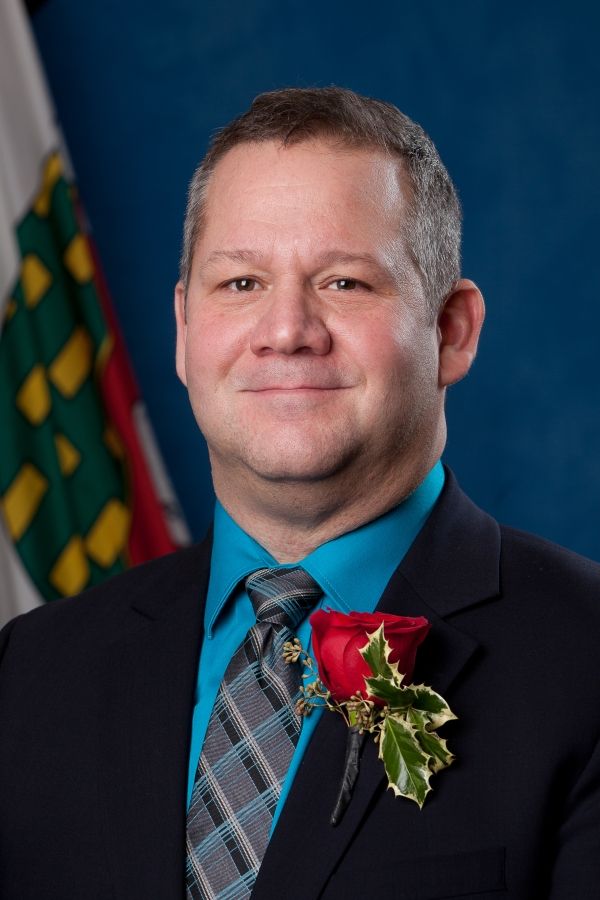
Great Slave
Mr. Speaker, the Member and the House are aware of, obviously, the fiscal challenges that we're facing, so we would have to be looking within. But it doesn't mean, Mr. Speaker, that we're not interested in doing this, but the way our current facilities are designed, some of them are more open concept, it may prove unnecessary to have cameras in some of our facilities. We need to look. We need to talk to the longterm care facilities that exist and get their ideas of where this might be appropriate and where it may be unnecessary. So it's certainly not all longterm care facilities, but we're...
Mr. Speaker, as somebody is admitted into a longterm care facility, there is a comprehensive functional assessment done of the individual to determine what their needs are. This information assessment is used to actually develop individual care plans which address the individual's mental health issues and other challenges. These are the things that we do to build individual case plans that will hopefully help us avoid violent incidents within our system. But it has happened. The Member is aware of, certainly, the incident that has recently happened, and we know from review across Canada and by...
Thank you, Mr. Speaker. I'd like to table the following seven documents entitled "Follow-up Letter to Oral Question 200-18(2): Licenses Practical Nursing Program in Tsiigehtchic," "Follow-up Letter to Oral Question 216-18(2) and Oral Question 225-18(2): Medical Travel Challenges," "Follow-up Letter to Oral Question 224-18(2): Services to Support Seniors Aging in Place," "Follow-up Letter to Oral Question 246-18(2): Contract Midwifery Services in Yellowknife," "Follow-up Letter to Oral Question 250-18(2): GNWT Campaign to Eliminate Family Violence," "Follow-up Letter to Oral Question 277-18(2)...
Thank you, Mr. Speaker. Mr. Speaker, I'm committed to moving this initiative forward. The community of Fort Simpson does need an upgrade to their health centre. We need to bring it to current standards. We are moving the planning process forward. I'm happy to move this into the capital planning process at the earliest opportunity, but it does have to compete with a number of projects across the Northwest Territories, whether it's schools, health centres in different locations, other infrastructure that are being demanded by residents of the Northwest Territories. We're doing the work. We're...
As with all the facilities that we've built, including the ones that we're currently building, there is no addition of services being added to Fort Simpson. The facilities will provide us with the ability to provide services better, more effectively, safer, given the technology requirements of our health system as it stands today. So there will be no new or additional programs being added to Fort Simpson, which is consistent with the health centre in Norman Wells, which is consistent with the health centre in Fort Res, and the one we would be building in Tulita. The one difference is the...
Mr. Speaker, there was a number of reasons that the project was delayed or rather the planning study was delayed. Part of that included our inability to obtain or secure a suitable parcel of land. Here was a significant amount of debate in the community about where the health centre should be and where it should not be, and it took us longer to get a set piece of land. That set piece of land was required before we could actually move forward with the planning study because the location helps us build the planning study.
When the parcel of land was actually approved we had to do an...
Mr. Speaker, I think, at the time, that meeting was to discuss land location and a few other things to get, actually, a confirmed sense of where that building would be located. There was some talk about some of the specifics of the building. It is going to be a level B/C facility, which is basically one of our larger health centres in the Northwest Territories, providing a larger range of services given the size and scope of the community that it's located in and the regional nature of that community.
In a sense, the facility is going to be very similar to the one in Norman Wells. There was...
Thank you, Mr. Speaker. Mr. Speaker, I'd like to recognize some students from the Tree of Peace Adult Education program. This program has been operating since 1974 and it has assisted hundreds of Aboriginal people, both access and achieve their academic goals. The students with us today are William Buggins, Annie Harry, Justin Donovan, Ernest Okian, and Marie Louise Abel. I'd like to welcome them to the gallery.
I'd also like to take this opportunity to acknowledge and welcome Steven Jackson, the executive director of Avens, and Kimberly Doyle, the executive director of the YK Seniors' Society...
Mr. Speaker, the city has already made a significant amount of progress on putting together the RIDE program. One of the challenges we face is, unfortunately, finding a location for the sobering centre, itself. We've also made a commitment to relocating the day shelter, which is also proving difficult. We have our staff currently out looking for appropriate locations in the community.
If we're able to get a location, and we're hoping to find one soon, we need a bit of time to do some retrofitting to make it suitable and we need a bit of time to do some staffing in order to get appropriate staff...
Thank you, Mr. Speaker. The Department of Health and Social Services is developing a strategic framework for mental health and addictions recovery in the Northwest Territories, which is going to include, or rather will be built from that framework, an addictions recovery action plan. As part of that plan, we are focusing on a recovery-oriented system, which does include harm reduction.
So we are looking at what's being done in other jurisdictions by way of harm reduction, on how we might be able to implement some of those harm reduction initiatives here in the Northwest Territories. Recognizing...


