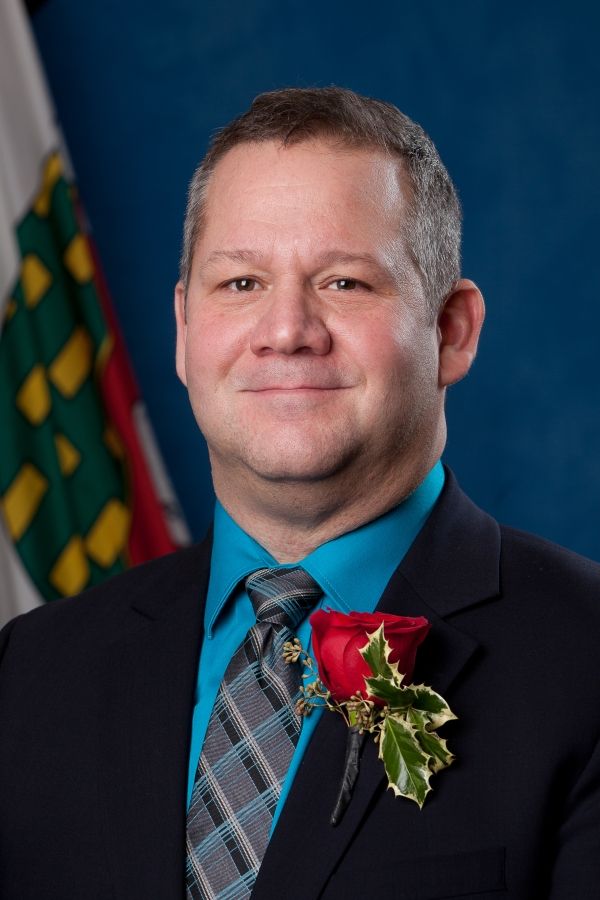
Great Slave
Not at this time.
I do, Mr. Chair.
Thank you, Mr. Chair. I do.
Thank you, Mr. Chair. I just want to take this opportunity to thank the Standing Committee on Social Programs for their thorough review and debate on this bill. I believe, as many of them have said, that this is an incredibly important bill. I really appreciate being here to help bring this bill across the finish line. I really appreciate the Members and support from all the Members. Thank you so much. We’re moving forward. There were a number of recommendations put out to us in the committee report and we will be responding to committee on all of those. Thank you, Mr. Chair.
Thank you, Mr. Chair. With me today on my right is Lisa Cardinal, director responsible for health and social services professional licensing; and on my left is Thomas Druyan, legislative counsel. Thank you, Mr. Chair.
Thank you, Mr. Chair. I am pleased to be here to discuss Bill 36, Health and Social Services Professions Act. The Health and Social Services Professions Act is a result of five years of work by the department and reflects significant feedback from professionals as well as the public. This act will provide the foundation for future regulation of health and social services professions in the Northwest Territories.
If passed, this legislation will enable the Government of the Northwest Territories to regulate numerous professions under one legislative framework. This includes modernizing existing...
Thank you, Mr. Chair. Moving forward with health transformation, we want to bring the Hay River Health and Social Services into the public service. The Department of Health and the Department of Human Resources have been given the mandate by Cabinet to enter into negotiations with the Hay River Health and Social Services Authority, the UNW as well as superann to figure out how we can move forward with that to actually make that happen, recognizing the potential costs, articulating, determining what those costs might be so that we can bring it back to the House. The work is beginning this year...
We are not challenging the Conference Board of Canada’s assessment of D minus for health outcomes here in the Northwest Territories. We acknowledge that the health outcomes for our Aboriginal people are less than our other residents in the Northwest Territories. This isn’t something that we’ve been hiding. Members in the House have been very clear about the challenges they see in their communities. We’ve been working with Members and we will continue to work with the Aboriginal governments. We have made improvements such as the Aboriginal health and community wellness division which is working...
Thank you, Mr. Speaker. One of the intents or purposes of the Conference Board of Canada’s How Canada Performs report is to provide decision-makers with tools and assessments they can use to help improve their system. We are going to take these recommendations that have been provided by the Conference Board of Canada to help improve the system. As I’ve already indicated to the Member and to the House, we are doing a number of things here to improve the results for Aboriginal people as well as all people in the Northwest Territories. We will continue to work with our Aboriginal partners, our...
I understand the Member’s point but I do have to continually remind everybody that health outcomes are primarily influenced by socio-economic conditions and it’s going to take all of us working together, all of the departments working together.
With respect to the Department of Health and Social Services, we are the lead on the Anti-Poverty Action Plan; we are a partner on Early Childhood Development Action Plan; we’re the lead on Mental Health and Addictions Action Plan. We’ve also got a number of different cancer strategies that we’re partnering with the Government of Canada to implement here...


