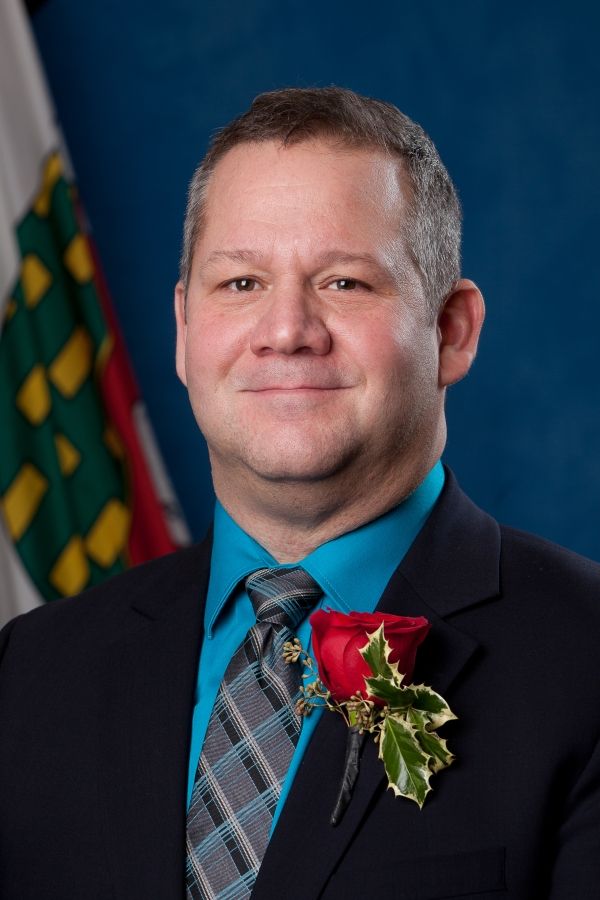
Great Slave
Thank you, Mr. Speaker. As the Member knows, the GNWT established an advisory committee to help us lead and prepare the development of a territorial action plan. They have been working throughout the summer, they’ve been working on a number of different initiatives, including the development of a plan and they’re hoping to bring the draft plan to a roundtable that we’re planning for December.
Also, over the summer with the participation of this advisory committee, the GNWT allocated the $500,000 that was supported by this Assembly to support the different anti-poverty initiatives. We had 18...
Mr. Speaker, I am pleased to provide this House with an update on the Med-Response system.
Med-Response is the first program of its kind in Canada – or anywhere else, as far as we know. Other jurisdictions have call centres to coordinate air ambulance triage and dispatch, or call centres to provide clinical consultation, but Med-Response is breaking new ground by combining these functions into one operation.
Mr. Speaker, Med-Response has the potential to transform how we provide care to patients who are injured or critically ill. Today we have a patchwork of protocols and processes that govern...
I disagree with the Member that there’s nothing in the communities. Throughout the Northwest Territories we have counsellors and many NGOs that do incredible work to support residents. We’ve got communities developing community wellness plans and trying to put in options. We are supporting on-the-land programming that is designed by the people for the people. We do have access in a timely way to southern facilities, and yes, we are looking at mobile treatment.
As I said to the Member from Inuvik, we are a little behind on making progress on the mobile treatment program. We haven’t finalized any...
This was actually an idea presented to me by committee. I believe it was the Member, during business planning. Since then I have had an opportunity to attend the federal/provincial/territorial of Social Services Ministers throughout Canada. I did have an opportunity to briefly mention the concept to my counterparts in Nunavut and Yukon. No decision has been made, but we’ve asked our officials to start having conversations about the possibilities.
I do recognize that each of those jurisdictions has plans in place for their own treatment as far as sending people south or having on-the-land or...
We’ve actually done that a number of times and it’s failed every time. Right now we have contracts with four southern facilities that have massive economies of scale and can provide programming that has never been able to be delivered here in the Northwest Territories just by the sheer size.
I do disagree with the Member. If we have a mobile treatment option that’s going to different communities at different times, anybody can go to that program at any point in time regardless of what community they’re in. But what we’ve heard is people do want to have options in their communities, so we could...
Thank you, Mr. Speaker. I’d like to recognize a constituent of the Great Slave riding and the president of the UNW, Mr. Todd Parsons.
Thank you, Mr. Speaker. I wish to table the following two documents, entitled “Government of the Northwest Territories Response to Committee Report 6-17(5), Report on the Review of the 2014 Report of the Auditor General of Canada on the NWT Child and Family Services;” and “Building Stronger Families: An Action Plan to Transform Child and Family Services.”
One hundred and ninety-six cards were mailed in error, 110 of them came back, 86 of them are outstanding. We have made efforts to get those cards back. We have notified all of the affected individuals and we will continue to monitor those cards to make sure that there is no unusual activity on those cards. Thank you.
Thank you, Mr. Speaker. One hundred and ninety-six health care cards were actually delivered to the wrong address and what happened is exactly what the Member identified, is addresses were messed up on a spreadsheet. One hundred and ten of those 196 cards were returned to us having never been opened, which means that there were about 86 that were not received back.
We, as a government, as a department, are monitoring the use of those cards and trying to make sure that they are not being used inappropriately by the wrong person. Everybody that was affected, all 196 were notified so they knew...
I think we are now talking about something slightly different than a treatment program; we’re talking about immediate response to individuals who happen to be homeless or in a different type of crisis. I heard the Member when she was giving her statement, talking about the possibility of some sort of housing or an overnight shelter for individuals in Hay River. I don’t believe that exists at this point in time, but I would be willing to talk to the two Members from Hay River about a possibility and what we can or can’t do at this time. Thank you.


