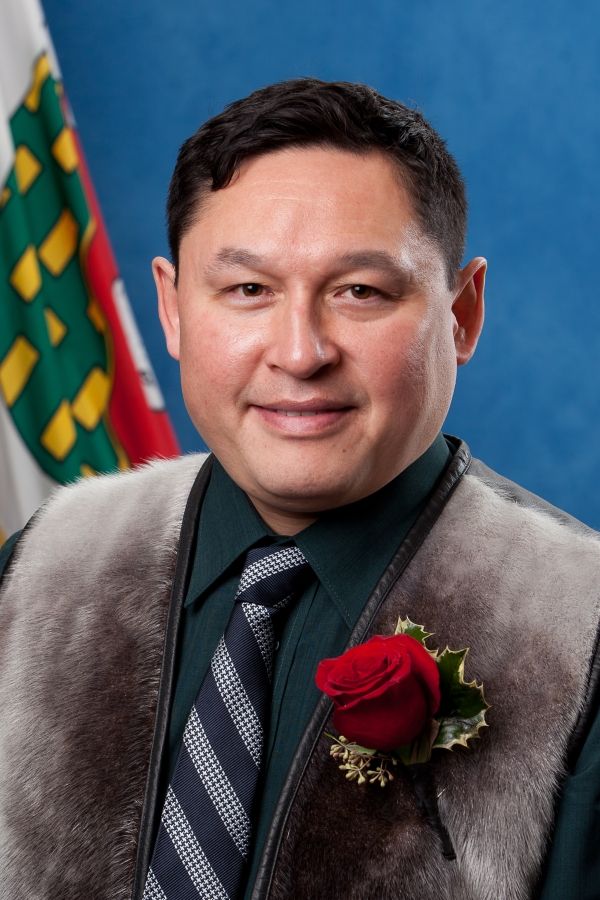
Nunakput
Thank you, Mr. Speaker. Earlier I spoke about ambulance services in Tuktoyaktuk. My questions are for the Minister of Municipal and Community Affairs. Mr. Speaker, my first question is: what role can the Department of Municipal and Community Affairs play in helping Tuktoyaktuk build up local ambulance services? Thank you, Mr. Speaker.
I appreciate the response. My second question for the Minister is: as we enter business planning and begin to prepare for the next fiscal year, how can the community of Tuktoyaktuk access funding the department provides to support community governments with the provision of ground ambulance services?
Thank you, Mr. Speaker. When someone mentions ambulance services, most people immediately think of emergency services, an ambulance with its siren blaring, quickly and easily transporting patients to the hospital. That stereotype, though, hides just how complicated providing reliable ambulance services can be, especially in small and remote communities.
Mr. Speaker, in-town services transport patients from their homes, to workplaces, to a hospital, or to a health centre, but there is also the inter-facility services, the common northern practice of transporting patients between health centres...
I appreciate the response. Mr. Speaker, I would also like to ask about service options for Inuit who have limited access to counselling in their home communities. For instance, other jurisdictions are testing facetoface counselling via secure video link. How does the department plan to use initiatives like outreach programming or new technologies to enhance and expand culturally specific services in the rural and remote communities?
Thank you, Mr. Speaker. Mr. Speaker, earlier, I spoke about suicide prevention and that the negotiations of the Department of the Executive is of critical significance to the practise of the Department of Health and Social Services. Mr. Speaker, effective, lasting, positive change must be built on a foundation of bilateral collaboration between the GNWT and Indigenous governments. Mr. Speaker, how is the GNWT working with the Inuvialuit Regional Corporation to coordinate mental health action and intervention in the Nunakput region? Thank you, Mr. Speaker.
Thank you, Mr. Speaker. I appreciate the response. Mr. Speaker, finally, building on my last question, can the Minister comment on how the department's new action plan recognizes that cultural and political health is intimately connected to individuals' physical and mental health? Thank you, Mr. Speaker.
I appreciate the response. Mr. Speaker, the Minister recently delivered a public briefing on the draft Child and Youth Mental Wellness Plan to the Standing Committee on Social Development. I know that the final plan will be coming out soon, but in the draft plan the Department of Health and Social Services set out a timeline to establish child and youth care counsellors across the Northwest Territories. Mr. Speaker, can the Minister tell us more about how these specialized counsellors will be deployed, particularly in our rural and remote communities?
Quyanainni, Mr. Speaker. Mr. Speaker, we are living in a time where mood and anxiety disorders affect Canadian youth in shocking numbers. Statistics Canada reports that those aged 15 to 24 have the highest rates of all of the groups.
First Nations and Inuit youth are even more severely impacted, Mr. Speaker. We see this in our own communities and in the communities across Canada. Among First Nations people, suicide rates are above the national average. Among Inuit it is between six and 11 times the national average.
Mr. Speaker, this is painful knowledge with real and brutal impacts on the...
I appreciate the response from the Minister. Mr. Speaker, my second question is the Department of Health and Social Services recently released the NWT Midwifery Stakeholder Engagement Report. Mr. Speaker, how will the department support the revitalization of Inuit and First Nations midwifery practice in our communities?
Thank you, Mr. Speaker. Mr. Speaker, I wish to recognize Ms. Lillian Elias, who is the Elder here who said the opening prayer. Also, she is the Inuvialuit interpreter for the Legislative Assembly, and my Auntie. Welcome. Thank you, Mr. Speaker.


