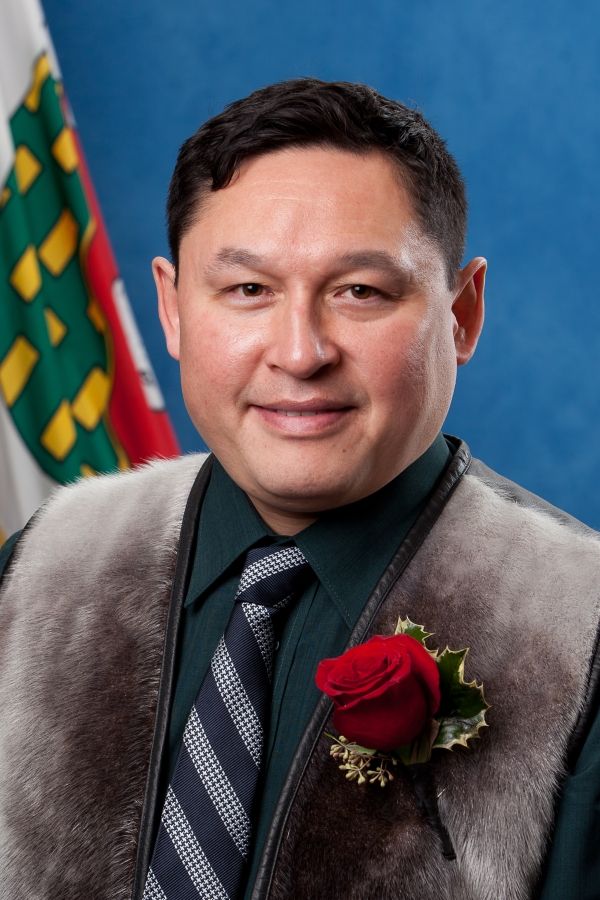
Nunakput
Thank you, Mr. Speaker. As part of Canada's commitment to a renewed nation-to-nation relationship with Indigenous peoples, Prime Minister Justin Trudeau recently announced a review of laws and policies related to Indigenous peoples.
A working group made up of six Ministers who have significant responsibilities for the relevant statutes and policies to be reviewed will examine federal laws, policies, and operational practices to help ensure the Crown is meeting its constitutional obligations with respect to Indigenous and treaty rights, adhering to international human rights standards, and...
Thank you, Mr. Speaker. I realize that my relative, Patrick Joss, and constituent from Ulukhaktok has been here all week. Welcome, Patrick. Thank you, Mr. Speaker.
Thank you, Mr. Speaker. Mr. Speaker, modern treaties, land claims, and selfgovernment agreements are a key component of governance in the North.
Mr. Speaker, the federal government has released a statement of principles on its approach to modern treaty implementation. These principles must be upheld in all our negotiations with Indigenous groups.
Modern treaties promote strong, sustainable Indigenous communities that create enduring intergovernmental relationships between treaty partners and certainly around the lands and resource ownership and management. They support a stable climate for...
Thank you, Mr. Speaker. Mr. Speaker, in 2015 the Government of the Northwest Territories signed a four-year intergovernmental agreement with the Inuvialuit Regional Corporation. That agreement exists to guide both governments working together to improve the programs and services in the Inuvialuit Settlement Region, or the ISR.
One of the issues in serious need of improvement, Mr. Speaker, is housing. It is something that has been a problem not just in the Northwest Territories but across the 53 communities in the Inuit Nunangat. Here in the NWT, though, even just in my riding of Nunakput...
The Minister has answered a couple of questions. Mr. Speaker, my final question: is the Housing Corporation partnering or otherwise assisting the IRC in housing projects going ahead, specifically for 201718?
Thank you, Mr. Speaker. Mr. Speaker, I would like to recognize a constituent and relative from Nunakput, Mr. Patrick Joss, and also a relative of mine who had been around here for a few days, Ms. Anne Peters from Hay River. Thank you, Mr. Speaker.
Thank you, Mr. Chair. I don't have much to say other than I know my colleagues talked about the cost of doing business in the North and the cost of shipping and construction in the territory, as well as maintenance. I just want to point out that the Minister, earlier on, mentioned during question period that she would be going to Inuvik to sign an MOU with the Inuvialuit, and I want to say that I am in support of that. You know, with other governments in Canada, as well, they are looking at focusing on the needs of Indigenous people all over Canada, and I think what the GNWT and the IRC are...
Thank you, Mr. Speaker. Earlier I spoke about the IRC-GNWT partnership on housing in the Inuvialuit Settlement Region. My questions are for the Minister of Housing. Mr. Speaker, my first question for an update: can the Minister speak to the Housing Corporation's plans to work with Inuvialuit Regional Corporations on seniors' units? Thank you, Mr. Speaker.
Thank you, Mr. Speaker. Mr. Speaker, the Small Community Employment Support Program provides wage subsidies to employers in our small communities. Those employers can offer work and on-the-job training to unemployed youth and adults.
That means places like small businesses, schools, local governments, NGOs, and local housing authorities can apply through their local ECE service centre for financial support to train local people in the jobs small communities need.
Last year this program was funded just $339,000; this year, we're seeing a proposed increase of $3 million in the main estimates...
No further questions right now. Thanks, Mr. Chair.


