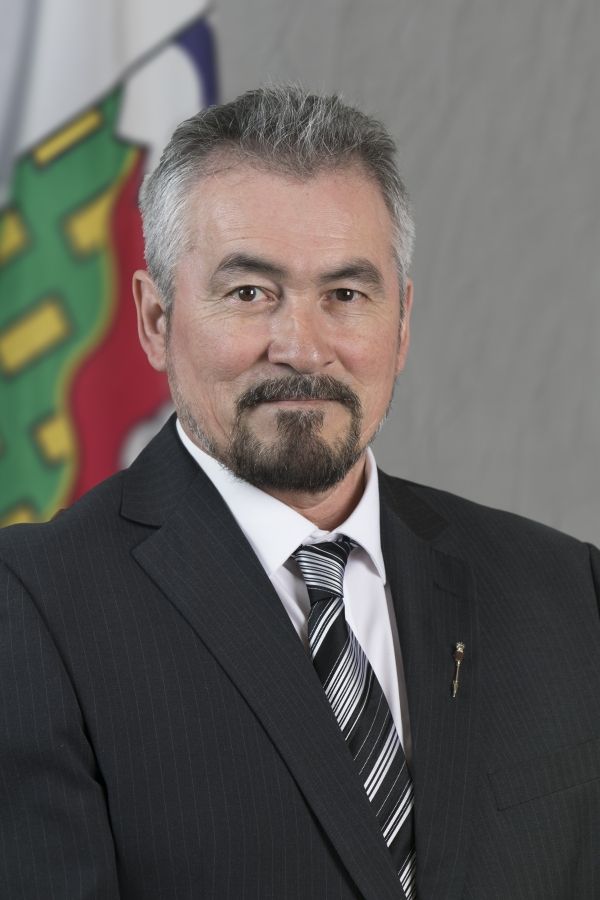
Deh Cho
Mahsi, Mr. Speaker, and mahsi to the Minister for that answer. I think she's answered my question, but I really wanted to stress that even though you say that nurses do ongoing training, I don't know we as the public here, but and I keep saying and I said it many times since I've gotten to the Assembly in 2019 that there's many times I hate using the word "misdiagnosis" but that's the only one that I can use that a lot of people been there and I'm saying it again. Like, they've been there four to five times. And I don't want to get into specifics of what happened to those people at this time...
Mahsi, Mr. Speaker. Mahsi to the Minister for that answer. She did reference at some point there referring to a specialist, but I just want the Minister to be aware that I brought it up previously and with the present case of this Deline elder, they'd been to the health centre more than once and the community, it's been four or five times. And and I'm wondering if the Minister can acknowledge at what point would a patient be referred to a specialist for their ailment? Mahsi.
Mahsi, Mr. Speaker. Mr. Speaker, I was struck by a CBC North article dated March 11th, 2022, in which a Dene says local health centre failed to detect tumour that nearly killed him. The elder stated he [audio] died because of his local health centre failed to diagnose the problem. The elder had gone to the local health centre multiple times for abdominal pain only to receive Tylenol medication. The elder then ponders the question as to why he was treated this way. And [audio] if it was because he was an Indigenous Dene.
Mr. Speaker, the saving grace in this story is the actions the elder took...
Mahsi, Mr. Speaker. Mahsi to the Minister for that. I don't think my question was really answered because I've been stating that there's many residents probably up and down the territory that go to centres for an ailment, and like four or five times. And perhaps by the fifth time, they're being medevaced out. And it's at that point. So getting where we're missing something within the health centre, the diagnosis there.
Can the Minister advise that the department has any evaluations, evaluation processes in place to determine if small health centres nursing staff will require other training...
Mahsi, Mr. Speaker. Mr. Speaker, my Member's statement alluded to problems in small community health centre nurses for having diagnosing ailments especially of the cancerous types, could be colon, prostate, breast cancer, abdominal, and back pains. (Audio) CT scan in the small community. Can the Minister (audio) the procedure used at small community health centres to diagnose cancerous tumors? Mahsi.
Mahsi, Mr. Speaker, and mahsi to the Minister. Mr. Speaker, no one is doing anything with furs in the Northwest Territories. The Fort McPherson Tent and Canvass is not using the furs in their products. The Dene Fur Cloud Shop in Fort Providence is using rabbit pelts imported from out of territory. I see potential industries for our territory in the creation of mitts, gloves, vests, coats, hats, and the list is not exhaustive. All this with the use of furs caught in the NWT.
Will the Minister take a closer look into this possibility and develop plans to making this initiative a reality? Mahsi.
Mahsi, Mr. Speaker. Mr. Speaker, I spoke at length of the need to assist many of our residents who don't know where to turn for income. The school students have the Take a Kid Trapping program, but many of our young adults, or the young men, who don't excel in school and didn't leave the community don't have the luxury of such a program. Can the Minister of ENR commit to tailoring a trapper training program for our young adults? Mahsi.
Mahsi, Mr. Speaker. And I thank the Minister for that. I'd like to suggest the Minister work with other departments to advance this initiative, and it could be more than just two departments. Even during tough times, we have to be seen as being optimistic for the future, including the fur economy.
Will the Minister commit to open dialogue with First Nation leaders to discuss the government's plans to revitalize not only the fur economy but to actively putting our residents, including the young adults, back into the working environment? Mahsi.


