Debates of May 29, 2025 (day 62)

Topics
Statements

Thank you, Mr. Speaker. We in the NWT have a tremendous amount of needs, as I heard from my colleague there, Tu Nedhe-Wiilideh, highlight the benefits of from the Jordan's Principle program and possible jeopardy. My questions are for the Premier on advocation.

My first question, could the Premier explain why the senior envoy to the Government of Canada role was created and what it is intended to achieve? Thank you, Mr. Speaker.

Speaker: MR. SPEAKER

Thank you, Member from Sahtu. Mr. Premier.

Thank you, Mr. Speaker. So I appreciate the Member's question.

So there's been a lot of focus on the North over the past year and a half, a focus like we've never seen before I would say. There's also a new government in Ottawa. And so there's momentum right now. There's attention on the North. There's a desire to make investments in Canada, build up the strength of Canada, and take advantage of our natural resources. So there's momentum, and we need to keep that momentum going. We need to capitalize on that momentum. We need to keep the NWT at the front of people's minds in Ottawa. I think about the Council of Leaders' trip that Cabinet took with Indigenous governments from across the territory. It was a great event. We went down there, and then we left.

We made waves while we were there. Everyone knew we were coming. We had a number of Ministers show up. But then we left, and then we didn't have that constant presence. And, yes, we're up here, we're making phone calls, we're sending emails. But we need to take advantage of this moment and stay at the front of people's minds. Part of our job is educating Ottawa about the North. So having someone there who can actually, you know, speak to the different offices about what's going on in the North, keeping them up to date, and then sending back intel, that's going to be important. And so that's the rationale behind this office. Thank you, Mr. Speaker.


Thank you, Mr. Speaker. And thanks to the Premier for that reply. Yes, I can understand the Indigenous government participation. Over 60 percent, Mr. Speaker, of our territory is underneath a modern treaty society.

My second question is Indigenous government support is critical to our advocacy and engagement efforts in Ottawa. Could the Premier describe the approach to include governments in the federal engagement and how the envoy position will support these efforts? Thank you, Mr. Speaker.

Thank you, Mr. Speaker. I think that that -- well, I know that that trip to Ottawa with the Council of Leaders really highlighted the importance of having Indigenous voices at the table in Ottawa. We're a small territory. Authorities are disbursed among a number of different bodies and governments and boards. And we're not going to advance unless we work together to advance, and so it is absolutely critical to have Indigenous governments support their advocacy efforts in Ottawa. We all sink or swim together. If an Indigenous government is able to go to Ottawa, get support for something, bring money into the territory, that's a benefit for the territory. And when we were down there with Council of Leaders, there were some Indigenous governments and we helped them set up meetings with federal officials, both elected and employees of the federal government, and have meetings. And in some instances, those chiefs had never had meetings with federal representatives before in Ottawa. They never -- maybe didn't know how to navigate the system, didn't have the contacts, for whatever reason, but we saw the value in that and we want to ensure that we continue to support those efforts.

So there's been a lot of positive feedback from Indigenous governments about the envoy position, and we received formal and informal requests for support in Ottawa. So I think that this is going to be good not just for the Government of the Northwest Territories but for Indigenous governments as well, and I look forward to working with them and supporting their efforts. Thank you, Mr. Speaker.

Speaker: MR. SPEAKER

Final supplementary. Member from the Sahtu.

Thank you, Mr. Speaker. And thanks to the Premier for that reply. Yes, I have talked to our Indigenous governments in my area. I appreciate that we are including Indigenous governments in this important work, Mr. Speaker. I know this envoy position is relatively new, but could the Premier advise the House of any results from this new position? Thank you.

Thank you, Mr. Speaker. And, yes, the position is new, and we're in a transition period in Ottawa where we had a federal election, now we have a new government who are, you know, trying to find out where their offices are. And so right now, we are educating ourselves, strategizing, but, yes, there have been successes. So the Endacho Healing Society, which is led by Roy and Gina Erasmus -- you probably know them from the Dene Wellness Warriors -- they recently announced that they received $7 million from the Government of Canada, and my office was supporting them through that and that money is to support the development of a trauma healing lodge. You know, it speaks directly to our mandate or the priorities of this Assembly. And I will read from an article that was published in NNSL written by Roy Erasmus, quote: I want to acknowledge the support from the GNWT during our application and more specifically the recently announced senior envoy to the Government of Canada. His support, advice, and political advocacy for our project was essential, and we appreciate the Premier's commitment to providing this type of connector to Ottawa. And that's the type of feedback we're receiving from around the territory. Thank you, Mr. Speaker.

Speaker: MR. SPEAKER

Thank you, Mr. Premier. Oral questions. Member from Inuvik Boot Lake.

Question 752-20(1): Northwest Territories Building Code

Thank you, Mr. Speaker. Mr. Speaker, in my Member's statement, I spoke about a building code for the North. I would like to ask the Minister, given the number of units that certainly we are planning on building through our housing corporation as well as all the work that's being done with the Indigenous governments in my region and throughout the territory, can the Minister update this House on the work that's being completed by the working group to datez. Thank you.

Speaker: MR. SPEAKER

Thank you, Member from Inuvik Boot Lake. Minister responsible for Infrastructure.

Thank you, Mr. Speaker. And thanks for the question. Although the Ministers have changed, the work is still continued, and we're going to continue on with the line of work that's been completed for developing and working on the national building codes for the structures. So that being said, I know we don't have the full implementation yet. However, we do have it in had our projects. When we send anything out to RFP or anything like that, it is to develop to the national building codes. So right now, we're utilizing the 2020 National Building Codes and the 2020 National Fire Codes under the Fire Prevention Act. Thank you, Mr. Speaker.
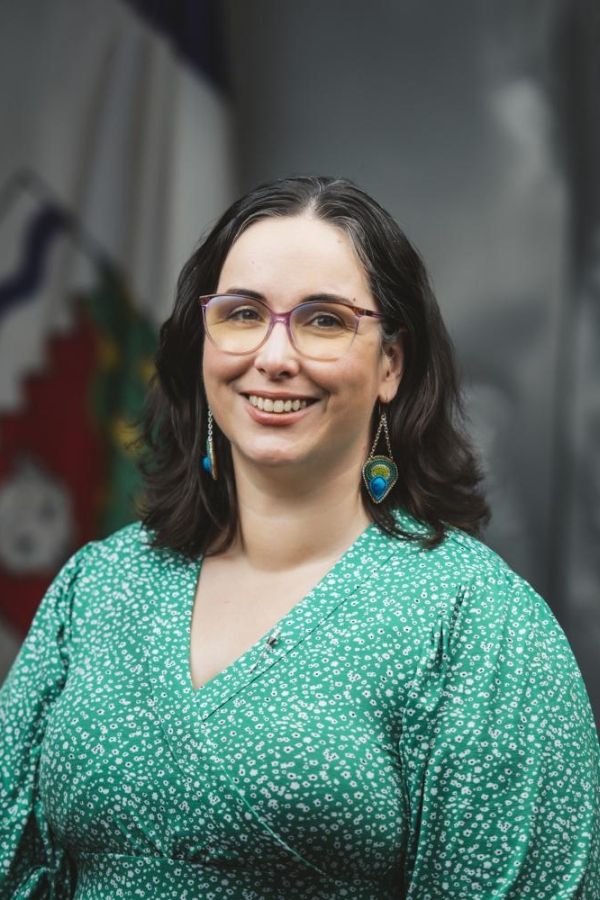
Thank you, Mr. Speaker. Yes, and I appreciate that, and I recognize that we still have guidelines that we do offer through the department; however, what we don't have is enforcement. Can the Minister commit to -- and I know the previous Minister had a plan to have a plan. Can the Minister commit to sharing that plan, workplan, once developed by the working group with the House, please. Thank you.
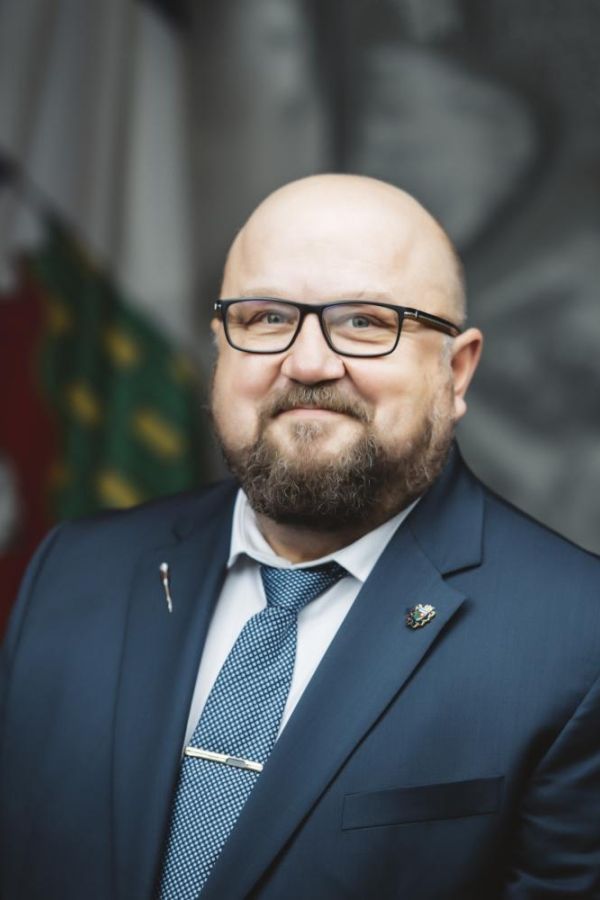
Thank you, Mr. Speaker. Yes, I will commit to that, and as soon as we have it done and ready, we will share that with the Member. Thank you, Mr. Speaker.

Speaker: MR. SPEAKER

Thank you, Minister of Infrastructure. Final supplementary. Member from Inuvik Boot Lake.

Thank you, Mr. Speaker. Since we're on the topic of commitments, we love commitments and I certainly appreciate that, can the Minister -- big, huge commitments. Can the Minister please -- would the Minister commit to, then, as the previous Minister committed to, having this building code in place when we walk out of this building at the end of this 20th Assembly. Thank you.
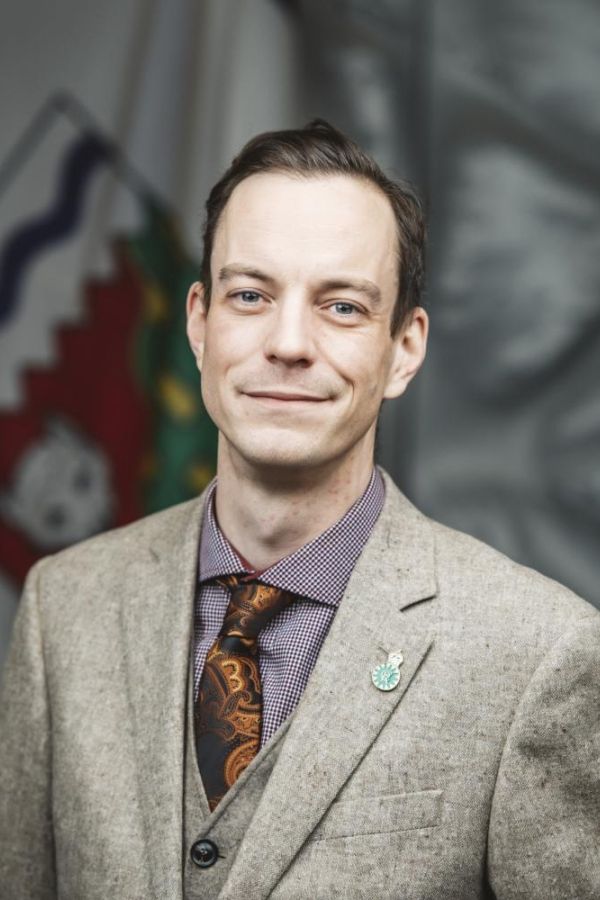
The goal is to have the -- all the policies developed by next summer. Thank you, Mr. Speaker.

Speaker: MR. SPEAKER

Thank you, Minister of Infrastructure. Oral questions. Member from Monfwi.

Question 753-20(1): Whati Transmission Line

Mahsi. Can the Minister say what plans or energy initiatives the government has in place with the Tlicho government or get Tlicho communities off diesel power? Thank you.

Speaker: MR. SPEAKER

Thank you, Member from Monfwi. Minister responsible for Strategic Infrastructure, Energy, and Supply Chains.

Better than I could do, Mr. Speaker. Thank you, Mr. Speaker, and thank you for the question. This is an area of tremendous importance. First and foremost, Mr. Speaker, any work that we're doing with or for the communities in Monfwi, we're doing in consultation and in involvement with the Tlicho government. They really are leaders here in terms of where they want to see their communities go, and it's my hope that we can just be partners to them to help enable those visions to come true. There's a couple of major things and I think, in fact, the Member already mentioned them. One of them is the transmission line to Whati. This is around a 50 kilometer stretch which will connect the community into the Snare hydro system, and the hope and expectation is that it will be a project that goes to the partnership that built the same -- that built the TASR highway so -- or the Tlicho highway. That is mainly the Tlicho-Kiewit partnership. Beyond that, Mr. Speaker, that will work very well with a hydro project if there is a Lac Le Martre Hydro Project. This was many years now in the making, but we're bringing that back hopefully to life. We're going to see if we can bring that up and move it forward to a stronger feasibility and get that on to the system as well. It adds -- it will add in not only for Whati, it will add into the whole system. Thank you, Mr. Speaker.
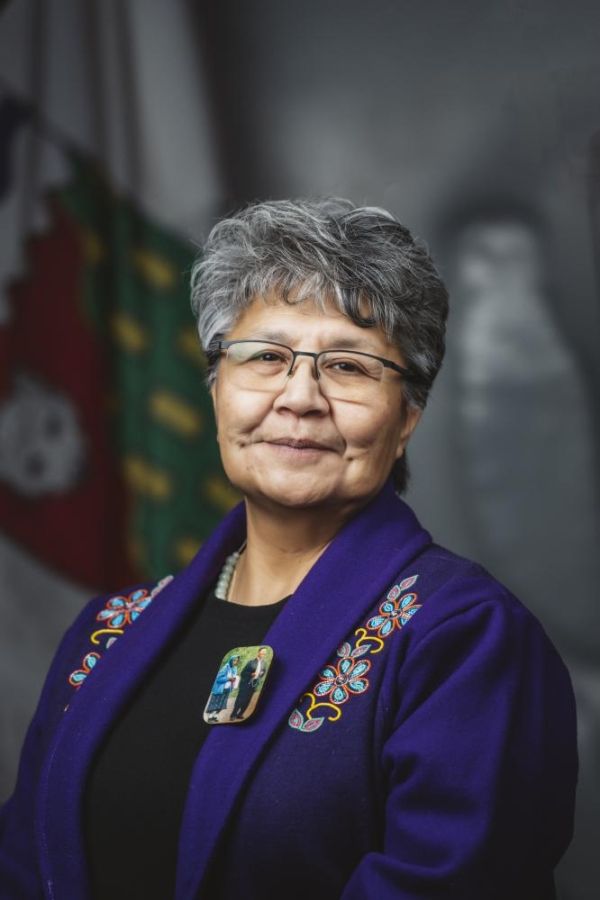
Okay. Can the Minister provide a status update on the Whati transmission line?

Yes, Mr. Speaker. Happy to do so. The only -- what we -- the stage we were at, Mr. Speaker, is we're negotiating -- there is, of course, the infrastructure cooperation agreement with the Tlicho government, and so we were working with them to negotiate the final stages of a design contract. That may well even be signed by now, but certainly the last time I had checked in on it, we were at the final stages of that. That will go to design, and then from there, we will be hopefully jointly going to help get some funding to see this project to its completion. Thank you.

Speaker: MR. SPEAKER

Thank you, Minister responsible for Strategic Infrastructure, Energy, and Supply Chains. Member from Monfwi.

Mr. Speaker, women and girls are often overlooked and disrespected in terms of the trades. Will the work on the Whati transmission line lead to the creation of new GNWT jobs in the Tlicho region and if this is the case, what sort of positions would be tailored for young Indigenous female apprentices? Thank you.

Thank you, Mr. Speaker. Mr. Speaker, I don't have an answer here. What I would like to suggest is that I'm going to commit to get an answer, and a proper answer. I think that's an exceptional question. Typically, when a project comes forward of this magnitude, there will be some analysis done about potential jobs that are created, and it would include an analysis under GDA, plus it would include an analysis of whether or not there's a gender component to it in terms of who gets affected or who may benefit. So in the current cases, Mr. Speaker, I would suggest this is the exact time where I'll commit to bring back to the House further information so that we can, in fact, commit properly to making sure that the community is fully engaged and that every Member and every resident in the Tlicho region can see themselves reflected in this project. Thank you.
Speaker: MR. SPEAKER

Thank you, Minister responsible for Strategic Infrastructure, Energy, and Supply Chains. Oral questions. Member from Yellowknife North.

Question 754-20(1): Aurora College Community Learning Centres

Thank you, Mr. Speaker. I have questions for the Minister of Education, Culture and Employment. So last March, before the end of our last sitting, the Minister committed in this House with regard to the future of community learning centres, and quote, we're going to provide a critical path and the timeline, and we're going to do that by the May sitting, Mr. Speaker, which is a pretty quick turnaround, but it is an important item and we're happy to make that commitment.

So can the Minister explain what is the status of this critical path and timeline that was promised with regard to the community learning centres? Thank you, Mr. Speaker.

Speaker: MR. SPEAKER

Thank you, Member from Yellowknife North. Minister of Education, Culture and Employment.

Thank you very much, Mr. Speaker. Mr. Speaker, as we were all gearing up and packing up our computers to walk in here today, Members would have received an email from me with a letter that outlined what that critical path and timeline is. And in addition to that, there is a deadline in the letter by which time I would appreciate feedback from committee so that we can further this conversation together. Thank you.

Thank you, Mr. Speaker. So my next question is when will funding be confirmed for programs to be able to move forward? If they are to move forward, how soon can we confirm that and get things going. Thank you, Mr. Speaker.

Thank you very much, Mr. Speaker. Mr. Speaker, within that critical path, there are some items that Education, Culture and Employment is able to fund from within through money that they retained through the MOU that they did have with Aurora College, and there are additional items that would require additional funding. Thank you.

Speaker: MR. SPEAKER

Thank you, Minister of Education, Culture and Employment. Final supplementary. Member from Yellowknife North.

Thank you, Mr. Speaker. So how is the Minister prioritizing continuity of access to programs, such as the Literacy Outreach Centre in Yellowknife? In other words, when will staff and students know whether programs will be offered again this September? Thank you, Mr. Speaker.

Thank you, Mr. Speaker. So, Mr. Speaker, the letter that I've sent to committee outlines both a short-term response acknowledging that, you know, adult learning is very important in communities, and then also longer term conversation about solutions that would take us far beyond our short-term solutions. So in terms of what that looks like, I am asking committee first to respond back to the letter so I can garner their thinking and their perspectives on this. I need to reach out to Indigenous governments to advise them of short term and long-term solutions that we're looking at here, and then from there, we'll go out publicly and be able to share it with everybody. So I'm hoping that all of this can happen in short order and hoping that committee can also prioritize responding to the letter as well. Thank you.

Speaker: MR. SPEAKER

Thank you, Minister of Education, Culture and Employment. Oral questions. Member from Frame Lake.

Question 755-20(1): Research and Innovation in the Northwest Territories

Thank you, Mr. Speaker. Mr. Speaker, the federal government is looking to build Canada into the world's leading hub for science and innovation. What opportunities does the Minister for ECE see for the NWT in that ambitious commitment? Thank you.

Speaker: MR. SPEAKER

Thank you, Member from Frame Lake. Minister of Education, Culture and Employment.

Thank you very much, Mr. Speaker. So, Mr. Speaker, I'd say in everything that we've heard come out of the new Prime Minister, there is an undercurrent of an education foundation, whether we're talking about trade, whether we're talking about bolstering our economy or our production across Canada. All of that has an educational foundation to it and a diverse expectation for our education system as well.

In addition, Mr. Speaker, to infrastructure funding, we also heard about the importance of economic resilience, growth, and also supporting reconciliation in the words from this new government and from our Prime Minister.

So there are multiple ways that our post-secondary education system can support the federal mandate, and I very much look forward to having that same undercurrent in education in all of my conversations that happen next week. Thank you.

Thank you, Mr. Speaker. Mr. Speaker, the Minister perfectly segued into my next question. I was going to ask, Mr. Speaker, how is education going to figure in our upcoming federal engagement knowing that this changed mandate has come about; how are we going to centre our post-secondary education and education system in general in our negotiations with the federal government? Thank you, Mr. Speaker.

Thank you very much, Mr. Speaker. Mr. Speaker, certainly any time that we are writing to the federal government, speaking to the federal government on the phone, or having virtual conversations with Ministers -- I hosted a virtual FTP earlier today with a federal Minister on the line, two federal Ministers on the line, and so any of these opportunities are great for relationship building, and we carry those forward in conversations about post-secondary as well.

Mr. Speaker, in addition to that, the Aurora College board of governors does have a deliverable mandate item that's found in the mandate agreement that is due in 2025, and that is their federal engagement strategy. And I have offered to support them in that any way that I can, including travelling with them to Ottawa. But a lot of our post-secondary institutions also have their own relationships with the federal government and have been very successful in garnering investment in the territory with their relationships. Thank you.

Speaker: MR. SPEAKER

Thank you, Minister of Education, Culture and Employment. Final supplementary. Member from Frame Lake.

Thank you, Mr. Speaker. Mr. Speaker, I note that Aurora College has a newly appointed board chair. Mr. Speaker, I appreciate the Minister talking about the mandate. Mr. Speaker, how does the Minister plan to work in concert with the new chair to promote post-secondary investment in our territory? Thank you.

Thank you, Mr. Speaker. And thank you to the Member for the question. So, Mr. Speaker, the new board chair and I do have a very close working relationship. We are only ever a text message away, and I can say we are not shy to text one another often. We've already met multiple times since he assumed this role, and I very much appreciate his energetic drive and the vision that he brings to this role. I really look forward to working with him and the entire board of governors as we advance the mandate agreement for the transformation of Aurora College. Mr. Speaker, I can say that the board chair is not shy about forming their own relationships and has a long history of doing so, both in business and through their other involvement with different organizations. Thank you.

Speaker: MR. SPEAKER

Thank you, Minister of Education, Culture and Employment. Oral questions. Member from Range Lake.

Question 756-20(1): Supporting Northern Businesses Affected by Tariffs