Debates of February 4, 2026 (day 73)
Prayer or Reflection
Ministers’ Statements
Minister’s Statement 168-20(1): Sessional Statement
Mr. Speaker, we gather today at a significant moment for our territory and for our country. It is a moment of change and uncertainty, but for the Northwest Territories it is also a moment of opportunity.
The world is rapidly changing before our eyes. We can no longer count on the traditional international rules, norms, and alliances that have helped Canada prosper over the past 80 years. We are witnessing unprecedented efforts at economic coercion and foreign interference in our political systems, a blurring of lines between allies and enemies, and internal threats to our national unity on multiple fronts. At the same time, advances in artificial intelligence are poised to reshape sectors of the economy in ways that are yet to be seen.
Understandably, the change and uncertainty in the world can leave people feeling anxious or scared. However, Mr. Speaker, when I look around the territory at our infrastructure deficit, the lack of economic opportunities in many communities, the high cost of living, availability of housing, access to health care, and public safety concerns, I am less concerned about change and more concerned about continuing the status quo.
There was a time, in the very recent past, when it felt like the North was an afterthought, if it was thought of at all. Today, the eyes of the world, and the attention of the federal government, have shifted northward. The strategic importance of the Northwest Territories to national security, to critical mineral supply chains, to energy security, and to Canada's very future as a strong and independent country has come into sharp focus over the past year.
Our mission now is to ensure that we take full advantage of this moment for the benefit of the people of the Northwest Territories. We must transform the attention from the federal government and industry into economic opportunities, more homes, better access to basic health care, supports for healing, and safe, healthy, and thriving communities. In the same way that Canadians must remain united to face down external threats, Northerners must be united if we are to capitalize on these opportunities. We need to work together, make strategic and informed decisions about things we can control, and remove any self-imposed barriers to success. The contributions of each and every resident are important to advancing these goals.
Mr. Speaker, there is an urgency to this work, and we feel that urgency every day. Economic changes across the territory, such as the decision by Imperial Oil to cease hydrocarbon production in Norman Wells and the instability in the diamond mining sector, mean that many residents not only feel the urgency but are being impacted in very real ways. We must ensure that those residents whose livelihoods are negatively affected are supported and that there are new economic opportunities available to them. We believe in empowering Northerners to work, to contribute, and to create strong and vibrant communities.
Mr. Speaker, this government is committed to ensuring that the Northwest Territories plays its full role as a cornerstone of a secure, prosperous, and united country, and we can only do that if we have an economically stable and healthy territory. To do that, we are making pragmatic choices grounded in principles and done in partnership.
The work ahead is serious, but so is our confidence in the people of this territory and in the future of this country. Together, we will continue moving forward while grounded in our values, clear in our purpose, and focused on delivering real results for Northerners. At the same time, we will continue strengthening Canada's presence and asserting sovereignty in the Arctic, now and for generations to come.
Mr. Speaker, a strong economic foundation is essential to enhancing personal and community wellness and to promoting self-sufficiency. Together with our partners, we are advancing major projects that will shape our economy for decades to come. Work is advancing quickly on the Mackenzie Valley Highway and the Arctic Economic and Security Corridor. These nation-building projects will strengthen Canada's Arctic sovereignty, connect our communities to markets, and support the responsible development of critical minerals and energy resources, all while improving connectivity and lowering the cost of living and doing business in the North. We are also moving forward with the Taltson Hydro Expansion to improve long-term energy security and help power tomorrow's economic opportunities.
We are also continuing to enhance our existing transportation infrastructure. With support from the Government of Canada, construction is underway on the Dehk'e Frank Channel Bridge replacement project near Behchoko. This project will improve safety, remove restrictions on heavy loads, and strengthen a critical transportation link. This project also supports economic growth, critical mineral development, and the Arctic Economic and Security Corridor and is creating opportunities for Indigenous employment and participation.
The NWT's strategic location in the Arctic means that we are poised to see significant investments related to national defence. An advance procurement notice shows this investment could exceed $10 billion over the coming years. That spending comes alongside the federal government's stated commitments to reconciliation, creating opportunities for Indigenous businesses and communities through contracting, employment, and training. This is a transformational opportunity for local economic business development, and one that we intend to maximize in partnership with the federal and Indigenous governments.
Looking beyond direct investments in military and dual-use infrastructure, we must remember that the NWT boasts a wealth of resources that can support global economic transition and further enhance our sovereignty and security at home. We are among the most resource-rich places in the world, Mr. Speaker, with an abundance of precious metals, critical minerals, and oil and gas deposits to help fuel Canada's economy and secure a domestic supply of strategic resources. These natural resources place the NWT at the forefront of Canada's economic potential and, with strategic investment, will create great opportunities for our residents and businesses, and for all Canadians.
Mr. Speaker, a strong economy must translate into stability at home. Jobs, infrastructure, and growth can only deliver real results if people have safe, suitable, and affordable places to live.
This government is taking action across the full housing continuum with a focus on community partnership and results.
In Inuvik, the homeless shelter has entered a new chapter of community leadership with the responsibility for shelter operations transitioning from Housing NWT to the Inuvik Homeless Shelter Advisory Board. This reflects a long-standing community goal to have homelessness services guided by local voices while ensuring uninterrupted services for those who rely on them.
In Yellowknife, a new transitional housing facility opened in December operated by the Yellowknife Women's Society. With space for 24 individuals, it provides a safe, stable place to live while accessing the programming and support that will help bridge the gap between homelessness and permanent housing.
We are also accelerating housing supply through strong partnerships with Indigenous governments. Housing NWT has entered into construction agreements with Indigenous partners in Fort Smith and Fort Good Hope, and recently signed a memorandum of agreement on housing with the Acho Dene Koe First Nation in Fort Liard. This agreement sets out how we will plan, buy, and deliver housing together, so the homes we build reflect what the communities actually needs.
Since the start of the 20th Legislative Assembly, 81 housing units have been replaced, another 155 are currently under construction, with an additional 64 in planning or procurement bringing us to a total of 300 units across the housing continuum to be delivered during this Legislative Assembly. Together, these actions reflect a clear commitment: More homes for Northerners, better housing, and community-driven solutions that deliver dignity, stability, and opportunity.
Mr. Speaker, economic strength and housing stability mean little if people do not feel safe, or if communities are not well prepared when emergencies strike. Keeping Northerners safe, supported, and informed is a core responsibility of this government.
Over the past five years, the Northwest Territories has faced some of the most challenging emergencies in our history - floods, wildfires, and repeated evacuations - that have tested our systems and our communities. We've listened, we learned, and we acted.
In response to after-action reviews from 2022 and 2023 and to lessons learned in real time, we have strengthened our emergency management system. We are working with the NWT Council of Leaders and community partners to review the Emergency Management Act. We have updated the NWT Emergency Plan to clearly define roles and responsibilities. We have enhanced training for community governments, invested in emergency communications, and improved how resources are pre-positioned so help arrives faster when it is needed most, and so communities are more protected than ever before.
Safe communities are also built through strong planning. That is why we launched the NWT Community Planning Framework. This framework gives community governments the tools they need to guide growth, protect the environment, and plan for the future, while reflecting local priorities and Indigenous knowledge. It supports housing and infrastructure development while integrating climate change considerations to help communities build long-term resilience.
In addition, we are supporting community and Indigenous governments with flood mapping to inform emergency preparedness and land-use planning.
We are also supporting practical, community-driven safety initiatives. Safe growth pilot projects are underway in Hay River, Fort Providence, and Fort Smith, working with residents to apply crime prevention through environmental design principles. We are also providing law enforcement and communities with more tools to combat crime by advancing multiple pieces of public safety legislation this term. Whether through stronger emergency preparedness, thoughtful community planning, or more effective enforcement, this government is focused on ensuring safe communities for Northerners.
Mr. Speaker, health care is one of the few systems that touches every resident, no matter our age, income, or circumstances, and the quality of our health care experience comes down to three things: Access, respect, and reliability.
Access challenges are felt most strongly in our smaller communities. We are strengthening the community health nurse-led model used in small communities while making it more flexible to respond to ongoing staffing pressures. That includes expanding the role of licensed practical nurses and paramedics in community health centres, supported by nurse practitioners and expanded virtual care, so that residents in small communities can access more essential services closer to home. In larger centres, we are working to improve access to services for those who need them most. Service integration teams have been created in Inuvik, Hay River, Fort Simpson, Behchoko, and Yellowknife to identify and remove barriers to access and to improve coordination among service providers. For now, these teams are focusing on supporting residents who are experiencing, or who are at risk of, homelessness. But the lessons we learn through this initiative will help us move closer to our ultimate goal of creating a culture of person-centered service delivery across government.
Mr. Speaker, the healthcare system must be grounded in trust, respect, and cultural safety. To ensure these values are reflected in the services we provide, we are working directly with Indigenous governments and communities through shared governance, co-design, and the integration of traditional healing and local wellness priorities, guided by frontline staff, elders, and families.
When care is not available close to home, residents rely on medical travel. Dealing with medical issues can be stressful enough on its own; medical travel should not add to that stress. That is why we are modernizing the system to make it more consistent, efficient, and easier to navigate. We are streamlining processes, improving communication, setting clear service standards, and developing practical tools, including a medical travel manual, to ensure residents experience a more reliable and less stressful journey for care. This work is a priority, and it is happening now. These are a few of the ways we are working towards improving access to basic health care to support healthy people and communities across the territory.
Mr. Speaker, Canada takes pride in being a northern country and an Arctic nation. However, Arctic sovereignty is not something that can be declared; it has to be asserted through presence and investment. It is built through the people who live, work, and stay in the North. It is built through resilient communities, reliable infrastructure, and public services that work in northern realities.
Northerners will soon turn their attention to another powerful expression of Arctic presence and identity. Next month, Team NT will represent the Northwest Territories at the 2026 Arctic Winter Games in Whitehorse, the world's largest circumpolar multi-sport and cultural gathering.
More than 600 Northerners from over 20 communities came together in January to earn the chance to represent the territory. Up to 355 athletes and cultural participants will compete in 18 sports, including Arctic Sports and Dene Games: Traditions rooted in survival, skill, and connection to the land.
This is more than competition. It is continuity. It is culture. It is the next generation carrying forward who we are; visible, capable, and present in the Arctic.
Mr. Speaker, sovereignty is built by people who belong to the land and who are supported to stay on it. It is built by communities that are healthy, safe, and connected. It is built when governments choose to invest in the North. That investment is coming, and we must capitalize on it for the benefit of all Northerners; for those who are here today, and those who will lead us into the future.
Thank you, Mr. Speaker.

Minister’s Statement 169-20(1): Notice of Budget Address
Thank you, Mr. Premier. Ministers' statements. Minister of Finance.
Mr. Speaker, I wish to advise the House that I will deliver the budget address on Thursday, February 5th, 2026. Thank you, Mr. Speaker.
Members’ Statements
Member’s Statement 806-20(1): Congratulations to New Inuvialuit Regional Corporation Chair Erwin Elias
Quyananni, Mr. Speaker. Mr. Speaker, I rise today as the Member for Nunakput to congratulate the newly elected chair and CEO of the Inuvialuit Regional Corporation Mr. Erwin Elias.
Mr. Speaker, I look forward to working together in collaboration for the benefit of Inuvialuit and our constituents. I would also like to take this opportunity to thank Mr. Duane Ningaqsiq Smith for his ten years of service as the Inuvialuit Regional Corporation chair. Quyananni, Mr. Speaker.
Thank you, Member from Nunakput. Members' statements. Member from Range Lake.
Member’s Statement 807-20(1): Global Political and Economic Situation
Mr. Speaker, the world today is very different from when we took office two years ago. Our once stalwart ally and partner, the United States, continues to violently dismantle the prosperity and security we once built together. Last month, Prime Minister Carney captured this moment clearly in his address at Davos. We are in the midst of a rupture, not a transition.
As Northerners, instability has long been our reality. We are all familiar with the instability of climate change as the North warms three to four times faster than the rest of the world. Our permafrost is thawing, sea ice melting, and natural disasters of unprecedented scale and frequency are being unleashed upon our communities.
Yet, climate change has always exposed us to the ambitions of great powers, Russia, China, and now the United States, have set their sights squarely on our abundant resources and strategic territory. President Trump's strategy of divide and conquer is a clear effort to bully us into handing this land over and, foolishly, some believe they can play along with his corruption. Separatists in Alberta, in their misguided admiration of his greed, are flirting with treasonous sedition convinced that tearing the country apart is some kind of game.
Mr. Speaker, Canadians stand united against any threat to our sovereignty, and we stand ready to welcome new allies who will join us in building an alternative to chaos and authoritarianism. To our friends in Greenland, a NATO ally and fellow Arctic nation committed to self-determination of their Indigenous people, I say this: We've got your back. But to this government, however, I say it's time to follow in the Prime Minister's lead and step up. A strategy of reckless optimism, blaming others for inaction, and waiting for a rescue from the federal government is no way to realize our destiny on our own terms. Now is the time to harness our potential and take our rightful place as the first and foremost leader in the circumpolar world. There is no middle way between our choices of survival or surrender. Will this Premier choose a true North strong and free? Thank you, Mr. Speaker.
Thank you, Member from Range Lake. Members' statements. Member from the Sahtu.
Member’s Statement 808-20(1): Mackenzie Valley Highway
Thank you, Mr. Speaker. Welcome back, colleagues. Norman Wells' oilfield closure, another nail in our NWT coffin on the economic side:
Mr. Speaker, I rise today to speak about the matter of profound urgency for my home community and the entire Sahtu region, a matter that strikes at the very core of our economic survival and our ability to exercise true sovereignty in Canada's North.
Last week, our Premier, Mr. Simpson, appeared before Standing Committee on Foreign Affairs and International Development. His message was clear, Mr. Speaker: Sovereignty is not merely claimed through words. It is exercised through development, investment, and presence through the thriving communities and robust infrastructure.
Mr. Speaker, for a century, Norman Wells has been an oil and gas town, a beacon of prosperity for the entire Sahtu region. People made a living, built futures, raised families with hope and dignity. Norman Wells was a showcase for the resource-rich region and the NWT. Imperial Oil's announcement on shutting down production this year is nothing less than an economic sword through the very heart of the Sahtu. There are families left wondering if they have a future, youth residents asking whether there's any future here in the region, elders watching a century of community history come to a devastating close, the business community left with costly mental stress and hard reality of decisions, Mr. Speaker, but even in crisis, there is opportunity.
We stand on the threshold of building the famous Mackenzie Valley Highway, a project that represents connections, access to markets, and the very sovereignty our Premier spoke about. The Sahtu deserves a fighting chance at economic prosperity. The federal government speaks often about Arctic sovereignty and northern development. Well, Mr. Speaker, here is the chance to put words into action. Thank you, Mr. Speaker. Later, I'll have questions for the appropriate Minister. Mahsi.
Thank you, Member from the Sahtu. Members' statements. Member from Yellowknife North.
Member’s Statement 809-20(1): Northwest Territories Illiteracy Rates
Mr. Speaker, as this term goes on, the list of challenges facing the territory keeps getting longer. It's so tempting to keep piling more and more demands on our public servants. Save our economy, decent housing for all, get crime under control, health care, addictions, graduation rates, build roads to every community and mine. Just a few simple asks. Oh, and solve everything faster because we only have a year and a half left. And cheaper because our debt's out of control.
Amidst this overwhelm, I am going to risk sounding like a lunatic or hopelessly naive because I want to first talk about literacy. Literacy. Come on, we're a modern society, everyone's literate. Except for maybe a few folks with disabilities, right?
Well, a study from 2003 found that almost half of our youth aged 16 to 25 could not read or write well enough to fully participate in society. Almost half. 70 percent of Indigenous adults and 30 percent of non-Indigenous adults were found to not be functionally literate. Struggles with math skills were even worse. Since then, we stopped even trying to measure literacy rates amongst either students or adults.
So picture a child who is struggling to read in the early grades. Maybe other students are picking it up naturally, but this child is not. So they get the idea early on there's something wrong with them. As they get older, school keeps getting harder. Maybe they skip school or act out and they get labelled as a troublemaker. After grade 9, they either just drop out entirely or get really good at faking it and manage to slip through without the basic skills to enter further training or schooling.
There's so much shame and embarrassment around illiteracy, people are good at hiding. So they're going to avoid trying for a driver's license or trying that trades entrance exam, avoid filling out applications, avoid applying for jobs. They're stuck, bored. They're likely to turn to crime, addictions. Their housing will be at risk. Even if they decide to go to a treatment program for addictions, they're likely to drop out because it involves reading and writing.
What if we tried to find out how many of our unemployed youth and adults are functionally illiterate? How many of those in our criminal justice system? How many of those needing addictions treatment? Mr. Speaker, I ask for unanimous consent to conclude my statement.
---Unanimous consent granted
Thank you, Mr. Speaker and to my colleagues. Mr. Speaker, we have got overwhelming problems, and we've got to find threads we can pull on that can lead to transformational change. I believe literacy is a key thread that we've been ignoring and plan to speak more about it this session. Thank you, Mr. Speaker.
Thank you, Member from Yellowknife North. Members' statements. Member from Frame Lake.
Member’s Statement 810-20(1): Attendance at AME Roundup
Thank you, Mr. Speaker. Mr. Speaker, last week I had the privilege of attending the AME Roundup Conference in Vancouver as the representative for the Standing Committee on Economic Development and Environment. The conference gave me the opportunity to observe our Cabinet colleagues at work and attend numerous informative meetings and sessions. I wanted to share some of my high-level takeaways from my experience at the conference.
The first thing that stood out to me was the incredible amount of work and time our Ministers, Premier, and staff put into advancing the interests of the NWT. It was a very busy week, packed with meetings from morning to night. The Minister for ITI was my host for the conference, and one meeting that stood out to me in particular was the Western Mining Ministers Summit where Ministers signed an MOU on developing a Western Canadian mineral strategy. I noted that our Minister commanded a lot of respect at that table and was impressed at how prominently the North stood out in the discussion with Ministers from bigger jurisdictions. It was obvious our southern neighbours saw the importance of featuring the North in this strategy, so that was really encouraging.
Something else that stood out to me was the importance of the territory coming together and speaking with one voice at the national level. I had the opportunity to chat with someone who could be a funder for major projects here in the NWT, and they emphasized the need for a cohesive message and all the players pulling together towards a common goal. When competing for funding with many other worthwhile projects, if we aren't all pulling together we'll lose out to projects that are more cohesive. So I think it was really encouraging to see our government sign an MOU of cooperation with the Tlicho and Yellowknives Dene and see our Indigenous governments working together. Watching Chief Ernest Betsina deliver an opening address for YKDFN at Tlicho Night felt like a historic moment.
When we set our priorities for this Assembly, we emphasized that we are stronger together. I stand by that message, Mr. Speaker, and really believe it is the key to our success. The territory is facing difficult challenges but also has some big opportunities we can grasp if we work together for common good. So while I know this sitting is going to involve tough questions and tough conversations, I will continue to approach my work in a collaborative way as you have encouraged us to do, Mr. Speaker, as I really do think that is the key to our success. Thank you.
Thank you, Member from Frame Lake. Members' statements. Member from Great Slave.
Member’s Statement 811-20(1): Importance of Testing for Radon
Mr. Speaker, Happy New Year and welcome back. Mr. Speaker, in 2022, a work colleague and neighbour reached out and asked me if I had ever heard of radon. I was able to say yes, I had. My father had told me to get our home tested not long before we had our conversation. My neighbour told me that her family's home basement was testing high and that she was going to investigate mitigation measures.
In 2023, I purchased my own battery-powered radon monitor as my home has a crawlspace. After a year's worth of testing, I found that although my house is not experiencing extreme readings, it is still high enough to consider mitigation.
Mr. Speaker, much of the NWT is in a high radon hazard zone. Radon is an invisible, odourless, radioactive gas produced by the breakdown of uranium in soil. Radon gas is the second highest contributor to lung cancer after smoking. Just before this session, CBC News reported on this silent threat that is present in much of our country.
Since 2024, I have been talking to several ministerial colleagues about radon and what the GNWT is doing in this space. In essence, Health has a website outlining health concerns, Housing NWT is working on monitoring and mitigating radon levels in public housing, and every homeowner who receives an EnerGuide home energy evaluation from Arctic Energy Alliance receives a report that includes a health and safety overview highlighting radon as a concern for households. And well, that's about it.
The good news is that testing is not hard. Small portable devices are easily purchased and shared amongst neighbours. It helps to have a longer timeframe of testing but especially getting winter readings when doors and windows are closed as radon readings are higher as a result of trapped air. While getting readings is relatively easy, there is not a lot of local capacity in the NWT to install passive radon mitigation systems. In essence, these systems are a way to vent the gas from basements or crawlspaces. These systems range in price but are not cheap one-offs.
In speaking with the Minister of MACA before the holiday break, he agreed that radon is a concern in the territory and noted that he has seen high levels of radon in his region. Later today, I will table a jurisdictional scan of what provinces and territories are doing to test and mitigate radon for their residents. I will have questions for the Minister on what supports we can offer our NWT communities in taking on this health hazard. Thank you, Mr. Speaker.
Thank you, Member from Great Slave. Members' statements. Member from Monfwi.
Member’s Statement 812-20(1): Importance of Day of Recognition for Truth and Reconciliation
Mahsi, Mr. Speaker. Mr. Speaker, [Translation] Mr. Speaker, today the thing I want to talk about is regarding British Columbia legislature. In November, the National Day for Truth and Reconciliation, they are talking about doing without the National Day for Truth and Reconciliation. We celebrate that day, and it's a very important day for us. [Translation Ends].
Mr. Speaker, although these remarks were made in another jurisdiction, their impact reaches across this country including here in the Northwest Territories where the legacy of residential schools is deeply felt and where reconciliation is an ongoing and essential commitment.
The National Day for Truth and Reconciliation was established in response to the Truth and Reconciliation Commission's Calls to Action. It is a day dedicated to honouring survivors, remembering the children who did not return home, and advancing public understanding of the history and intergenerational impacts of residential schools. Statements made in the BC legislature denying this history and calling for the repeal of the day are deeply troubling. The National Day for Truth and Reconciliation is not about assigning shame. It is about acknowledging truth; truth documented through thousands of survivors' testimonies, including many from the Northwest Territories. It is about recognizing that the harms of residential schools were real, profound, and lasting.
Mr. Speaker, acknowledging this history does not detract from the achievements Canadians are proud of. Rather, it strengthens our national narrative by ensuring it is honest and complete. Reconciliation is not an accusation. It is a responsibility. It reflects our collective commitment to healing, respect, and a better future for all who share this land.
Mr. Speaker, instead of retreating from this commitment, we must continue to uphold it. Truth is not divisive, and reconciliation is not optional. It is a path forward for our territory and our country. Mr. Speaker, I will have questions for the Premier.
Thank you, Member from Monfwi. Members' statements. Member from Inuvik Boot Lake.
Member’s Statement 813-20(1): Northwest Territories Economy
Thank you, Mr. Speaker. Welcome back, colleagues. I, too, would like to congratulate Mr. Erwin Elias on his election as IRC chair and the chief executive officer. As well, to thank Mr. Duane Smith for his 10 years of excellent leadership in the region as well.
Mr. Speaker, as the Premier stated, the eyes of North America and, indeed, the world continue to be focused on the Arctic. With the recent federal procurement notice of up to $10 billion in spending in the northern operational hubs of Inuvik and Yellowknife, we have the potential for a huge economic benefit.
Mr. Speaker, this is more than just infrastructure. This can be a gateway to further economic opportunities, much-needed resource development, LNG, critical minerals, roads connecting our territories and bridges, Mr. Speaker. We have to be ready. And as the Premier said, there's an urgent need to get work done. We have work to do. We have to resolve the issue around land transfers so communities like Inuvik can be prepared when land is required to build this infrastructure.
Mr. Speaker, we have to ensure that our ongoing infrastructure projects, such as runway expansions and bridges and gravel sourcing, are on track and completed without delays. We have to ensure that our federal government has the confidence in our government that we are ready to meet this challenge, Mr. Speaker, that we are engaging with our Indigenous government partners to ensure we are working shoulder to shoulder.
On the heels of this procurement announcement, now is the time to convince and lobby our federal government that the Mackenzie Valley Highway is a true nation-building project and that funding it and connecting the two northern operational support hubs will be significant for defence and sovereignty, Mr. Speaker. Mr. Speaker, we're all pulling on the same rope on this one but we, as a government, as my colleagues in this building have to ensure, that we are, indeed, pulling hard enough. Thank you, Mr. Speaker.
Thank you, Member from Inuvik Boot Lake. Members' statements. Member from Mackenzie Delta.
Member’s Statement 814-20(1): Successful Graduate of Indigenous Training Initiative with Canadian Coast Guard
Thank you, Mr. Speaker. Welcome back to the staff, interpreters, and all my colleagues in the Legislative Assembly. Today, I would like to start the session off on a positive note. It is evident that we do have a lot of residents throughout the Northwest Territories who have the potential to succeed in their career paths, whether they are from Yellowknife, one of the regional centres, or one of the smaller communities.
Mr. Speaker, one success story of an Indigenous woman from the small community of Tsiigehtchic has made her dream come true. Her real intentions were to get a ticket to work on the Louis Cardinal Ferry for seasonal employment, but she excelled in her studies and is now part of the Canadian Coast Guard team.
Mr. Speaker, I would like to read an excerpt that speaks to the accomplishment of this young Indigenous woman from Tsiigehtchic, and I quote: First Indigenous woman deckhand hired through the Canadian Coast Guard Arctic Region's Indigenous participation and training initiatives. We're thrilled to announce the milestone of the Canadian Coast Guard's Arctic Region's Indigenous participation and training initiative. Amanda Andre-Niditchie has become the first Indigenous woman deckhand, a pro-graduate of the Western Arctic marine training program from Tsiigehtchic, Northwest Territories. Amanda is now based in the Canadian Coast Guard Western Region and sails aboard the Canadian Coast Guard ship Tanu. Having completed two 28-day rotations, she is embracing life at sea with enthusiasm. Welcome aboard, Amanda. End quote.
Mr. Speaker, I would like for all my colleagues and the residents of the Northwest Territories to applaud the accomplishments of this young Indigenous woman from the small community of Tsiigehtchic on her milestone career path with the Canadian Coast Guard. Thank you, Mr. Speaker.
Thank you, Member from Mackenzie Delta. Members' statements. Member from Tu Nedhe-Wiilideh.
Member’s Statement 815-20(1): Treaty Rights in the Northwest Territories Related to Healthcare
Thank you, Mr. Speaker. Mr. Speaker, we signed treaties to secure enduring promises of continual livelihood and survival. Those treaties define our ongoing relationship with the Crown, and then the Crown's presence in the North has grown from RCMP patrol to Canadian coast deliveries, a sprawling network of department of public institutions. Amongst the most crucial to our people are the services they ensure: access to health care.
Responsibility for administration of health services eventually transferred from Ottawa to Yellowknife, Northwest Territories, with the responsibility of care, sacred duty to ensure these services honour the treaties and fulfill the promises made to our people.
Health is a treaty right, Mr. Speaker; however, health and social services continues to fail in providing essential services and medical transportation. In an emergency situation, our people are often forced to pay out of pocket to travel for care that is urgently needed. A recent example is painfully clear. A Tu Nedhe-Wiilideh constituent was flown to Yellowknife by air ambulance and was expected to leave her newborn baby behind. If this had been a scheduled appointment, her young family may have been accommodated with a room but emergencies which makes up a significant portion of medical travel allow no such consideration. Emergency medical travel falls outside the program's scope.
This family was on their own. This is far from an isolated case. The problem is so severe that this Assembly was forced to pass a motion calling on the government to fix this policy gap, yet there's still no commitment to develop a compassionate medical evaluation policy. This is a clear failure to uphold treaty rights. Health and social services appears not to be honouring the Crown's obligation to the health of our people. If the Minister will not act on the consensus of this Assembly, she must act on the consensus of our people in the spirit of reconciliation.
The government must fully implement UNDRIP as a mandate by the last Assembly and implementing UNDRIP is not optional. It is a core feature of our own mandate letter, along with our own duty to work with Indigenous governments on medical travel policies. If the GNWT cannot administer health care in a way that honours the Crown's obligations to our people, constituents are left out asking the question: Should the GNWT be administering the health care policy? Thank you, Mr. Speaker.
Thank you, Member from Tu Nedhe-Wiilideh. Members' statements. Member from Yellowknife Centre.
Member’s Statement 816-20(1): Training Programs for Private Security
Thank you, Mr. Speaker. A single moment in a Yellowknife apartment building not long ago has ignited an overdue conversation. While the courts will handle the specifics of that particular incident, the truth is undeniable. The NWT is standing at a crossroads of public safety.
Mr. Speaker, for years people have operated in a legislative shadow, in a dark place. Time has come to put the private security industry into the light. Mr. Speaker, the opportunity is here. Look across the map of Canada, from the Pacific to the Great Lakes. Canada has already got gold standard legislation. We're not reinventing the wheel of security legislation. We're just joining the movement, Mr. Speaker.
British Columbia has mandated rigorous licensing, criminal record checks, and a strict code of conduct. Alberta, our southern neighbour, built a powerhouse system of discipline, of oversight, and accountability. Sounds great to me. Ontario has set the bar, Mr. Speaker, with a province-wide training in de-escalation that the legal forces use to ensure people's safety.
So currently, Mr. Speaker, as we all know the Northwest Territories has zero territorial legislation system in place. There's no mandatory training. There's no formal oversight. There's nothing. Our security guards are on the frontline, sometimes high-stakes situations, dealing with mental health crisis issues, they're dealing with complex public safety issues, and yet left without the legal compass to help guide them.
Mr. Speaker, this isn't about red tape. This is about empowerment. We need bold vision, a made-in-the North process. But, Mr. Speaker, on that note, there'll be more.
Mr. Speaker, what we're looking for is we're looking to give workers protection, the public protection and confidence, and prevention through proactive solutions. Mr. Speaker, key legislation could help here. What am I talking about? Well, allow me to expand.
Mr. Speaker, under the Dennis Patterson government, in 1991 they enacted a law called the Locksmiths Security Guards and Security Occupations Act, but it was never proclaimed. What a shame. Mr. Speaker, I'm prepared today, tomorrow, or even during this session, whether it takes a Private Member's bill, a motion, it's time we get this existing act on the books actually into action protecting Northerners. Mr. Speaker, I'll have questions later today. Thank you, Mr. Speaker.
Thank you, Member from Yellowknife Centre. Members' statements.
Member’s Statement 817-20(1): Celebration of Life of Twyla Isaiah
Colleagues, with great sadness I want to celebrate the life of a remarkable young lady Twyla Isaiah who was born on November 18, 1999, in Yellowknife to Robert Hardisty and Eileen Isaiah, and who left us suddenly on November 9, 2025. Though her time with us was far too short, the warmth, laughter, and love she gave will live on forever in our hearts.
Twyla was more than a daughter, sister, auntie, cousin, and friend. She was a beacon of light for everyone blessed to know her. With seven siblings - Trish, Natasha, Preston, Jordan, Carson, Wesley, and Jarrett - Twyla grew up surrounded by love and lively energy. Even in her big family, she found ways to stand out, shining through her kindness, humour, and the effortless way she made you feel valued. There are moments so small yet so powerful that they tell you everything about a person's heart. For Twyla, it was something as simple as stopping her dad on the street just to give him a hug and say, I love you, Dad. That small act would brighten even the darkest day. Her love for her parents was endless. The way she showed care for her mom was unmatched, and her selflessness was something that everyone witnessed time and time again.
I had the pleasure of knowing this young lady personally, sometimes asking her to house-sit, sometimes running into her at the store or on the street for a quick, cheerful catch-up. No matter how brief those moments were, one thing never changed: Twyla's presence made you feel special and loved. She had that rare gift.
Colleagues, I can tell you Twyla faced life's challenges with kindness and grace. She reminded us that even when obstacles appear, we have the power to meet them with love. She showed us how to love our parents unconditionally, to care for others selflessly, and to lead with compassion. Today, as we remember her, let us carry forward those lessons, to love as openly as she did, to be gentle yet strong, and to bring light into the lives of those around us.
Twyla's spirit will live on in every person she touched and in her family, her friends, and the community that had the privilege of calling her one of their own. Her legacy is one of compassion, selflessness, and love, and qualities that will continue to guide us every day.
Being respectful of the time, I would like to have the remainder of my speech be deemed as read and printed in the Hansard.
Rest peacefully, Twyla. Your light will never fade.
During the service, her father provided some childhood and adulthood stories that I would like to share here today.
Twyla came into this world on a snowy, wind-blown day in Yellowknife, a sign perhaps of her strength and resilience. As the youngest sister, she always looked up to her older siblings and was eager to tag along wherever they went. From a young age, she developed a love for learning reading books and soaking up every bit of knowledge she could find. Many nights, she'd sneak out with her cousins and friends, gathering them together so she could read aloud to them, long after bedtime. Those early signs of curiosity and compassion were already shining through.
As Twyla entered adulthood, her deep care for others became her calling. Whether someone was struggling or celebrating, she was there offering comfort, laughter, and unwavering support. During tough times, Twyla helped bring her friends and family together creating a sense of belonging that many needed. She didn't just stand beside her loved ones; she lifted them up.
We will miss Twyla's joyful spirit deeply, but we are forever grateful for the time we had with her, for the laughter she brought into our lives, and for the memories that will continue to comfort and inspire us.
At the end of the beautiful service, her father, family, and friends shared their most cherished memories. There was a lot of laughter and a few tears during this time. I believe this is how Twyla would have wanted it.
The family would like to thank everyone who offered support during this difficult time. They are deeply appreciative.
Members' statements. Member for Kam Lake.
Member’s Statement 818-20(1): National Girls and Women in Sports Day
Thank you, Mr. Speaker. Mr. Speaker, today is National Girls and Women in Sports Day. When girls play sports, they're not just chasing a ball, crossing a finish line, or scoring a goal. They're chasing dreams, climbing over barriers, and scoring victories that last a lifetime. Sports teach courage, discipline, and the unshakable belief that no challenge is too big. These lessons are life changing. Every sprint, every jump, every game builds confidence, grit, and leadership, qualities that carry them far beyond the field and take a lifelong outlook from "I can't" to "I can" and "I will."
Studies show that girls in sports are healthier, more confident, and often perform better academically. But beyond numbers, sports give girls the strength to stand tall and the courage to keep going when life gets tough. They often come with built-in community, mentors, and support networks. Yet too many girls still face barriers, and those barriers look different across the Northwest Territories. Fewer opportunities, less support, and outdated stereotypes that ultimately serve none of us.
We must break down these walls, create opportunity, and stay involved. And when we give girls the chance to play, we give them the chance to lead, inspire, and yes, change the world. It doesn't need to be elite Olympic style training either. Getting out snowshoeing, lifting weights, join the ping pong team, but watch out for Fort Providence; they're deadly.
Mr. Speaker, sport requires champions. Volunteers are the fuel that move our kids, and I am so thankful for the support, the sport champions across the territory, like Shakita Jensen, award-winning hockey coach with no kids of her own but out there consistently leading youth. Like Caitlin Fabian Farrell, creating safe spaces for girls to learn strength training. Like Toby Taylor, who coaches every sport the school offers. Alex Malakoe, who with young kids of her own and a busy job, continues to show up as a coach and travel for Special Olympics. Like Veronica McDonald who routinely dominates in Arctic sports, inspiring the next generation of northern athletes to dig in. And moms like Aurora Kodakat who live by example. I'm not sure where Aurora gets her energy, but she's an inspiration with an endless battery life.
So let's cheer loud, let's invest more, and make sure every girl knows that the court, the track, the field, the gym, and the trails are hers too because when girls rise in sports, they rise in life, and when girls rise, we all rise. Thank you, Mr. Speaker.
Recognition of Visitors in the Gallery
I get the pleasure of recognizing my constituent assistant Deborah Richards who has graced us here with her presence this week, and I'd like to thank her for being here today. She's just keeping track of me, that's all.
Recognition of visitors in the gallery. Member from Yellowknife South.
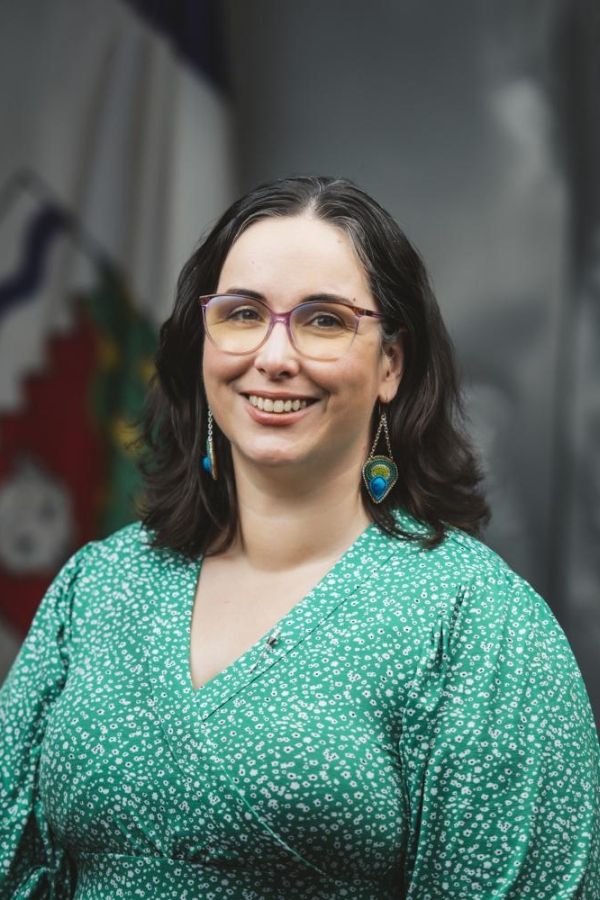
Thank you, Mr. Speaker. I am very pleased to have two pages from Yellowknife South with us this week, Celestia O'Brien and Joshua Costache.
Recognition of visitors in the gallery. Member from Nunakput.
Mr. Speaker, I'd like to recognize Julie Thrasher. Julie is a constituent of Yellowknife but a member of the Mackenzie Delta, and we're both from Aklavik. Thank you, Mr. Speaker.