Debates of February 6, 2026 (day 75)
Thank you, Mr. Speaker. As I will not be in the chamber next week, I took the opportunity of sharing my reply to the budget. But from yesterday's three presentations by my colleagues, I couldn't have said it any better so I will echo their replies in addition to emphasize our declining economy. To some degree, the level, and as mentioned by our business Minister this morning, the North needs capital. We've already seen that. So it's inspiring to see the defense spending allocated for the North in the billions of dollars. That is going to be welcoming news to our commerce community. And I see a need similar to my declining economy with the closure of the Norman Wells production oil field. In this community, we have the declining closure of the diamond clients. So I would emphasize in deliverance of the budget allowance for readiness, marketing of the opportunities to come.
A good example to do that is to have a town hall in our Great Hall. That would inspire and have an open door policy to the invited guests of our commerce community to share what's coming. I can't wait for that day when the Mackenzie Valley Highway is not only a contributor to this territory but a contributor in a number of benefactor ways, taking the bondage of isolation on the communities down the Valley. You put that into perspective, it will bring nothing but prosperity to the income support clients, to our residents. Now you've got productive choices. You can take your U-haul and go to Grand Prairie and load it up with affordable groceries.
As one colleague said, as a senior, seasoned Member of this Assembly, I've never seen our North in a desperate state as I see it today. Some areas are a little bit lower than others, but we have the final negotiations to design this budget to reflect what we need, and I look forward to those deliberations. But making allowance to sustain today's society which is plagued by so many problems that spin off and create poverty and mental stress on our residents. Gee, I really want to afford Christmas presents, I heard a number of times, but I don't have the money for my children. Now that brings stress to the father and mother of that home.
Those are examples we hear out in the small communities, Mr. Speaker. And now I think this year is a welcoming year for prosperity. We've just got to showcase that and design our budget to reflect and giving allowances to have revitalization workshops in the Sahtu, in other parts of the region, sharing what our government is doing to the people of the Deh Cho. So we take our message to the communities.
As our chair of the AOC mentioned, we are resource rich and cash poor. There's a cry for critical minerals. Why aren't we looking at reforming our regulatory process to streamline that and make it better? Yes, I agree, our Resource Management Act is underway with finalization of the regulations. But could it be speeded up? You ask those questions of progress and progress to achieve our mandate, execute more importantly these projects. And these projects will justify the Minister of ITI's statement earlier, the North needs capital. We need capital, and we need to execute that capital to build infrastructure.
As I mentioned in my statement, the best social program is a job. Now that job income is going to build and eliminate mental stress to the family in isolation. Repeatedly, we've talked about the cost of living in the Northwest Territories. Yes, there's solutions to that. Let's take isolation and throw it away and replace it with affordable access, and affordable access will attract investment. Resource development will escalate.
So, Mr. Speaker, I don't want to take too much of the time other than what's been said. I totally agree, but I just emphasize to the 20th Assembly, for the latter half of our term we need to make decisions and set deadlines to achieve that schedule that's going to create capital to the North. Mahsi.
Thank you, Member from the Sahtu. Replies to the Commissioner's Address, day 2 of 7. Member from Yellowknife North.
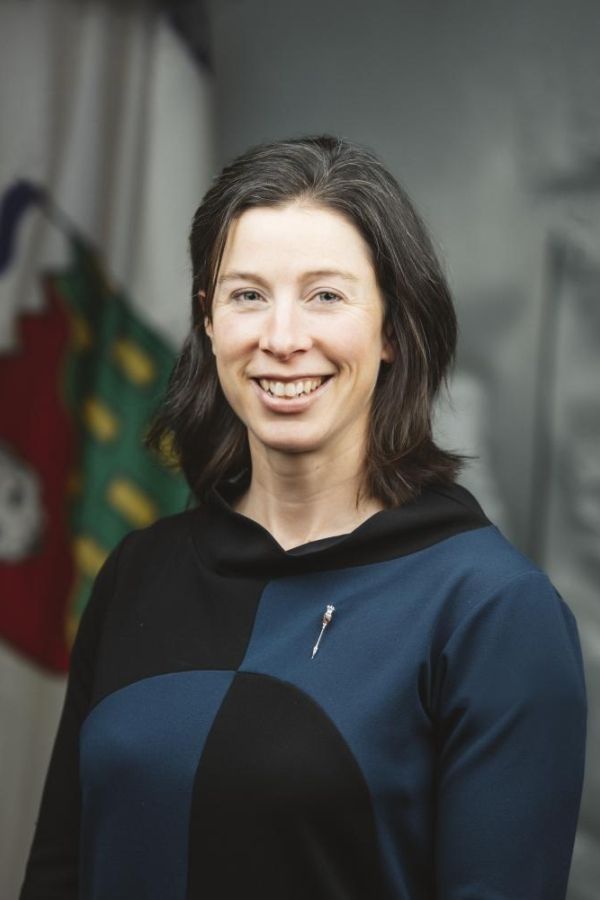
Reply 24-20(1): Reply by Ms. Morgan
Thank you, Mr. Speaker. Mr. Speaker, we heard several speeches yesterday about this budget. Even though there were some notable contrasts amongst the speeches, there were also some common themes that I agree with, that the North faces both great challenge and great opportunity at this moment in history and that we must take more decisive action quickly and build momentum by strengthening our economic and social foundations. However, I also heard a theory that I vehemently disagree with, the theory that the main thing holding us back as a territory is the, quote, tail wagging the dog, that our Cabinet Members are being led blindly by a powerful group of bureaucrats behind the scenes who are actively resisting any real change. These, and I quote, well-connected insiders who live fat off government procurement instead of innovating their own businesses.
Now, I understand that many people looking from the outside, who are not part of government decision-making, perceive that the tail is wagging the dog. They're frustrated that they so rarely see any dramatic change in direction. They're frustrated that things seem so slow. So tail wags the dog is the best explanation that they can come up with.
Point of Order
Point of order. Thank you, Mr. Speaker. Mr. Speaker, the Member appears to be given a reply to my budget address and in doing so is making allegations or accusing me of making allegations against public servants and undermining confidence in government, etcetera, etcetera, etcetera. My words speak for themselves, Mr. Speaker. They were put in context. And, again, this is a reply to the budget address, not a reply to my address, and I have not heard that from the Member so far. Thank you.
Member from Yellowknife North.
Thank you, Mr. Speaker. I understand that the purpose of our work here in this House is to respond to the discussion and deliberations that is happening amongst all of us, and I have not referred to anything that -- I don't believe I referred to anything falsely in terms of things that were not said. So I believe that this is all relevant in terms of responding to the budget address. Thank you, Mr. Speaker.
Thank you. I don't see a point of order; however, I was going to do this on Tuesday, but I am going to do it today: Let's focus on the budget, let's focus on what we're trying to achieve here. People are getting close to that line, and we could be moving over that line, which I don't want to be the parent, the coach, the referee, that has to address it all the time. So please, let's be very respectful of each other, please reply to the budget, and let's move forward.
Member from Yellowknife North.
Mr. Speaker, I am not here to defend government, and I am not here to defend Cabinet. What I am defending, unapologetically, is public servants. I would never pretend that the GNWT is a model of a well-functioning institution.
My first job when I moved here almost 18 years ago was with the GNWT, and I found myself in a little unit that was such a terrifyingly dysfunctional place that I quit after only a few months. And I never went back. I swore I did not want to work for government. But I did fall in love with this place and especially its people. This community and communities across the NWT are made up, in large part, with government workers, everyone from renewable resource officers to nurses to teachers, and yes, even the policy makers and program staff in departmental offices that we are funding through this budget all play a necessary part in keeping this territory running and putting all the supports and services in place that most of us take for granted every day.
Look, so government often moves slowly. We heard a lot about that yesterday. We all know that, and we agree it's not good. But to change it, we first need to be clear about why it moves slowly.
As far as I can tell, it's not because there is any conspiracy. It's because decision makers tend to be really bad at reaching agreement amongst ourselves on the right path forward. Sometimes leaders even think it's supposed to be that way, that the right way to be a leader is always to be angry and disagree with anything the other side says. And then if those types of leaders are quick to get really mad when a bold decision is taken they disagree with, Ministers and public servants alike, especially those on the front lines, feel vulnerable to shaming and blaming while trying to implement something that some folks don't like. So the constant incentive is for government to not do anything different, out of fear. If leaders cannot agree on what to do, the safest option always appears to be don't rock the boat, don't do anything too different that you could get blamed for.
Mr. Speaker, this budget, it moves away from the primary objective of fiscal restraint and towards a focus on shifting resources towards things that will shore up our foundations and prepare us for a possible big influx of federal investment around northern security. So I think that has broad consensus. And when you zoom out, it becomes obvious, though, that the actual amount of resources being shifted around towards our priorities is relatively minor; however, there are some notable initiatives that in themselves will make a big difference, and I want to point those out.
I think that the plan to expand lab and diagnostic services at Stanton to a 24/7 model will make a huge difference both to patients and to the efficiency and effectiveness of our healthcare system. I am pleased to see that significant new resources are being allocated to transitional and supportive housing projects as well as towards the stabilization of emergency shelters across the territory.
But as a group, we have struggled to come up with a common idea of the changes that we actually want to see in this particular budget or any GNWT budget. My main objectives are not related to any specific budget line but require achieving a clear vision for how we're going to build a stable and well-supported healthcare workforce and identifying concrete things that are holding us back from building a robust labour force, including basic education and literacy.
Mr. Speaker, in conclusion, I will continue to emphasize the need to have the tough conversations amongst us leaders that could actually lead to consensus on a bold path forward rather than focusing on the divisions because I believe that that is the most significant thing holding us back, that if we can address it we can allow this government to make more progress faster. Thank you, Mr. Speaker.

Oral Questions
Question 952-20(1): North Slave Power Grid Modernization
Thank you, Mr. Speaker. My questions are for the Minister for the power corp. Mr. Speaker, what has the Minister and power corp been doing to stabilize our power system and possibly even reduce power rates north of the lake? Thank you, Mr. Speaker.
Thank you, Member from Frame Lake. Minister responsible for NTPC.
Thank you, Mr. Speaker. Mr. Speaker, I know that the Member is implying something other than talking about Taltson, but I can't emphasize enough that not being connected to the North American energy grid, not having our grids connected, leaves us very vulnerable. And so we wind up having outages more frequently when there's only one line that runs to a single generating source -- a single hydro generating source. Typically, we'd be able to bring the diesel back online but if that doesn't happen quickly, we wind up in the situation we found ourselves in yesterday.
So, Mr. Speaker, some of the things that we are doing, and one in particular, was with respect to past -- this past spring when we issued a whole list of directives out to the public utilities board, that included with the integrated systems planning. The fact that we don't have integrated systems planning in the North, in my mind, is very urgent. I am always happy to speak about this. It is a serious issue that, as I understand it, lingered for a decade before we got this out to the public utilities board to action. And I know they are actioning it. I've been checking back in with colleagues, with my colleague for the public utilities board, and this is moving forward so that engagements are happening right now on all of those directives, including this one. We need to have an integrated plan that looks at our entire system and what we're going to do to make it better. Thank you.
Thank you, Mr. Speaker. And I appreciate the Minister's points there. I guess where I was trying to go with this was just ensuring that our infrastructure investment is not just focusing on this southern grid tie-in because it's such a big project, and it's got -- it requires so much funding. I am just wondering are we focusing on smaller solutions as well? So infrastructure investment north of the lake, policy, or legislative change. As I said in my statement, Mr. Speaker, let's pull out all the stops and focus on what we can do to help reduce power rates in the NWT. Thank you, Mr. Speaker.
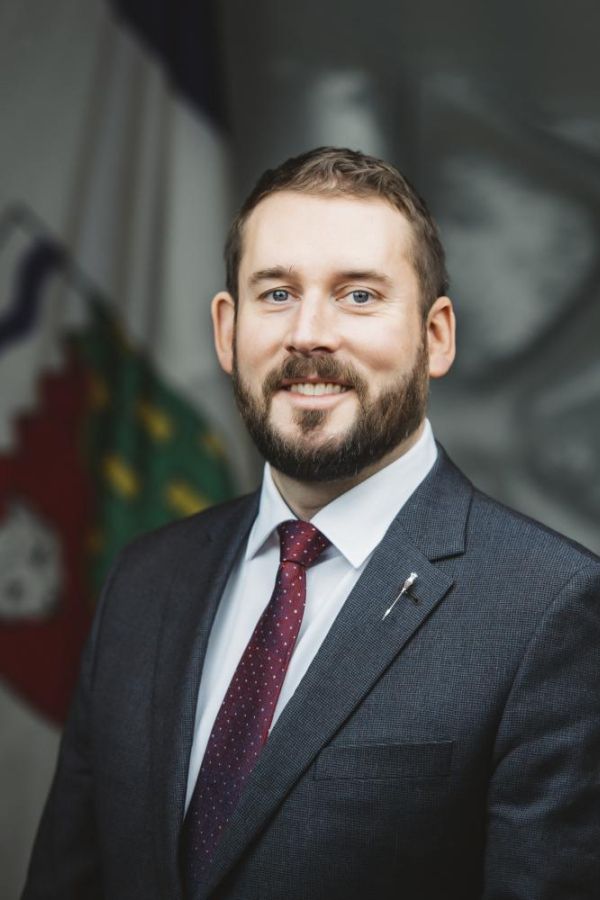
Thank you, Mr. Speaker. Mr. Speaker, my struggle is I am not going to be able to keep this down into the short answers that I know you're looking from us. So I -- my first comment would be this may be an appropriate topic to have a public briefing on. There is a lot to be said. Another thing happening on the Snare -- on the north side of the lake is a Snare grid modernization project. Again, could have happened years ago. It's happening now. We need to get to a place where a grid system and a generating system that was built in the '70s is modernized, that the transmission lines are brought up to speed, that it is -- that we don't need to question whether or not, you know, something is out of date or old, that it's new, that it's modern. And frankly, the announcements that we're seeing about potential procurements coming in from DND is an opportunity. They would be a big customer for the power. That can then as an industrial customer allow us to do the investments that don't have to go on ratepayers. So, again, a lot is happening right in this moment but that grid modernization could well put us into a position that -- and would also better integrate renewables into the system, alternative renewals beyond the hydro system, add to the grid and bring some stabilities and some redundancy. Thank you.
Thank you, Minister responsible for NTPC. Final supplementary. Member from Frame Lake.
Thank you, Mr. Speaker. Again, I appreciate the Minister's answer there, and I certainly hope in our federal engagement on military investment, we're raising our power infrastructure as a concern.
Mr. Speaker, does the Minister have any idea for us what kind of timeline we can expect this North Slave grid modernization to take place. So when can residents expect to start seeing those improvements come online and help stabilize our system? Thank you, Mr. Speaker.
Thank you, Mr. Speaker. The challenge we find ourselves in is wanting to ensure we do good planning, so the integrated systems planning that's being led across the territory by the public utilities board, the Snare grid modernization which is focused here, and doing that at the same time that there is also a five-year capital plan for Northwest Territories Power Corporation. So we need to keep upgrading the systems immediately. We also do want to be doing this in the context of having a plan. So there is a five-year plan that is rolling out. There are improvements that are taking place every year, and we see them during the capital planning process here. But at the same time wanting to make sure that we do that as we're building out this plan. So those changes are happening already. There are -- again, I don't have -- and I don't have the capital plan in front of me, Mr. Speaker, but there -- that capital plan, as I said, it already has been put forward. I believe it's been tabled as a document as it does get every year, and I'd be happy to provide an update, perhaps, as to what has happened in the last capital planning year and what is upcoming for this year. Thank you.
Thank you, Minister responsible for NTPC. Oral questions. Member from Range Lake.
Question 953-20(1): Power Outage in Yellowknife
Thank you, Mr. Speaker. Mr. Speaker, there was a nearly four-hour blackout yesterday in the city of Yellowknife. The Minister's well aware. She was -- and very thankful to have her engagement and receive updates from her through that. Can the Minister just speak to -- clearly to the citizens of Yellowknife, Dettah, and N'dilo, what happened to cause the power outage and how was it resolved? Thank you.
Thank you, Member from Range Lake. Minister responsible for NTPC.
Thank you, Mr. Speaker. And, Mr. Speaker, again, I'll just -- I'll put it back the other direction, that it is helpful when people are getting information out to the public. I would always direct people back to NTPC's Facebook page, if they're on social media that is the first point of call. But everyone that was participating -- and that makes it easier for residents to know where to look, where to find information. So that is helpful that we're all out there.
Mr. Speaker, we ultimately were able to identify that this was an issue at the Jackfish substation. And they were -- the crews that were out there were trying to get the system back online using both hydro and diesel. The challenges, and where typically our power outages get resolved fairly quickly, because we can go from hydro to diesel, in this case it was difficult to get the diesel units up and going, and that led to further delays. Eventually, they got the Bluefish back online. But there does take some time to go from where the staff are stationed out to Bluefish. So between all of those things and different efforts, it took longer than has been typical for us. The first customers got their power back around 8:20, and the later customers by about 10:20. Thank you.
Thank you, Mr. Speaker. Mr. Speaker -- and thank you to the Minister for that and also updates from Naka Power and the City of Yellowknife were very helpful as well. So thank you to everyone who worked hard to get that information out to the public.
Are there not contingency or backup systems to prevent this kind of thing? I know this was a difficult technical issue to solve, but it seems like these -- when these -- many of these power outages are getting longer and longer to resolve. So are we looking at investing in more contingency and backup so when these faults do occur, they're shorter, they're resolved quicker, and they bear less costs to citizens and businesses. Thank you.
Thank you, Mr. Speaker. So, Mr. Speaker, having access to a diesel generating facility and hydro does create generally a redundancy for the city of Yellowknife. And as such, Yellowknife, in general -- certainly last year, last calendar year -- although we had more frequent outages than other parts of Canada, we actually were well under the average in terms of our restoration time. Obviously last night was certainly an exception to that. And as I just mentioned in my previous response, Mr. Speaker, part of the problem there was because we couldn't get what is the typical backup diesel to be up and running as it was expected to. So that is unusual circumstance. I mean, there's certainly how many layers of backup to backup are necessary. If there was a grid connection that provided a redundant system, then you can move power more seamlessly between the different grids. We don't have that here. And in the interim, Mr. Speaker, we certainly want to make sure that the systems that we have, both the hydro and the diesel, are up functioning and as modernized and as up to speed as they can be. Thank you.
Thank you, Minister responsible for NTPC. Final supplementary. Member from Range Lake.
Thank you, Mr. Speaker. Well, I mean, I guess if we're pretty good at getting it back on, then we need to prevent the frequency of them. So that's the million-dollar question, probably the billion or even trillion-dollar question. So how much is it going to cost to fix this and when is it going to happen? Because Northerners cannot keep living through this. I can't tell you how many messages I received of people saying enough is enough, I am looking to leave the North. And not just tonight, but for many -- over the months leading up to this session, it's getting unbearable, and we need something, and the solutions need to come now, and there needs to be a plan, and there needs to be progress. Thank you, Mr. Speaker.
Thank you, Mr. Speaker. Mr. Speaker, I agree that for the course of maybe 20, 30 years, there ought to have been integrated systems planning, a Snare resiliency study done, and a connection of our grids. In the absence of that, Mr. Speaker, we are now trying to do all of those things at the same time in the course of this government so that we can deliver on the kind of plan and the kind of intentional plan that this community and the whole of the Northwest Territories needs. We cannot afford as a territory to be behind. It is an issue that I raise frequently with federal counterparts from funding perspective. Interties are on the radar of the federal government. They need to come here and help support this. Because if you want to know the costs, we are in the hundreds of billions of dollars to replace the entire system. That's not reasonable. So what can we do in the meantime? We need to be doing as many things as we can. So a line out to Whati, a line around to Fort Providence, connections of the two grids, building in its systems planning, replacing battery systems, making them so you can integrate your renewables, making it so that you can integrate your home renewables, making it so that communities can have renewables. All of this needs to happen. As I say, Mr. Speaker, those things are moving forward. They are going to take some time, but they are moving forward now. Thank you.
Thank you, Minister responsible for NTPC. Oral questions. Member from Inuvik Boot Lake.
Question 954-20(1): Economic Development Opportunities with the Inuvialuit Regional Corporation
Thank you, Mr. Speaker. Mr. Speaker, in my Member's statement, I talked about opportunities lost but that's in the past. Let's look at our bright future given the announcements of the infrastructure spending that's coming through DND. My question is for the Minister of ITI. Given, again, what I spoke about the work that's on going with the Inuvialuit Regional Corporation in the Beaufort Delta as well as the LNG we have up there, has the Minister and her department been in contact with the newly elected chair to discuss the ongoing projects that they're working on up there right now? Thank you.
Thank you, Member from Inuvik Boot Lake. Minister for ITI.
Thank you very much, Mr. Speaker. Mr. Speaker, the Member also spoke about hope, and I share the same hope that he spoke about in his Member's statement and that desire to see strong economic engines for the Northwest Territories. I have a meeting with the new chair of the IRC this month. Thank you.
Thank you, Mr. Speaker. And thank you, that's excellent news. Sooner rather than later, I would hope.
Can the Minister commit in that meeting -- and I spoke about now is the time to do an actual robust feasibility study. I understand there's likely funding out there for that so we can likely get that either funded through like an organization like CanNor or the major infrastructure projects office to get now, obviously led by IRC to engage -- when she engages with the chair of IRC to talk about the potential of a feasibility study, a robust feasibility study. Thank you, Mr. Speaker.
Thank you, Mr. Speaker. Mr. Speaker, I can assure the Member that I have not stopped talking about the Mackenzie Delta LNG opportunity. I've talked to federal Ministers about it, Alberta Ministers about it. I've talked to the major projects office. I've talked to the Canada Infrastructure Bank. I've talked to businesses about it, ambassadors, Consul Generals. And so I am definitely along with some of my Cabinet colleagues consistently making sure people both have the pre-feasibility study and idea of the economic potential that exists there. Having those conversations alongside the chair of the IRC would be an incredible opportunity, and I very much look forward to having more conversations about that. Thank you.
Thank you, Minister of ITI. Final supplementary. Member from Inuvik Boot Lake.
Thank you. And I expect no less, Mr. Speaker. And it's really good news. I just -- I didn't if I got -- she mentioned a pre-feasibility study. But my question was is she willing to look to do -- this government to do a -- in partnership with IRC, a full, robust feasibility study on the heels of that 2021 study. Thank you.
Thank you very much. So, Mr. Speaker, all of the entities that I've mentioned are ways that I am looking to work together to have that funded. We would also need to make sure that we're doing this work in concert, not just with IRC but also working with the significant license holders of that region of which there are five. And so continuing those conversations to pursue that feasibility study is what I am trying to get done here. That is the next step that we need to tackle to make this idea, this opportunity, a reality. Thank you.
Thank you, Minister of ITI. Oral questions. Member from Mackenzie Delta.
Question 955-20(1): First Nations and Inuit Policing Program
Thank you, Mr. Speaker. With the First Nations and Inuit policing program being implemented and seen as a success within other communities within the NWT, will the Minister of Justice look at implementing this program in the community of Tsiigehtchic in the near and foreseeable future. Thank you, Mr. Speaker.
Thank you, Member from Mackenzie Delta. Minister of Justice.
Thank you, Mr. Speaker. Mr. Speaker, currently, there are -- the FNIPP program has 22 members that we've added in the Northwest Territories, and five of those members are stationed within the Beaufort Delta, one specifically in McPherson that does support the community of Tsiigehtchic. Currently, there are conversations going on with Public Service Canada. There are community tripartite agreements that help to guide the work with all of the communities across the NWT. There are also 33 agreements that have been signed to work on a collaborative approach to how the FNIPP program will be delivered across the territory. So that work continues, Mr. Speaker. Thank you.
Thank you, Mr. Speaker. Not what I was looking for, but. Okay, for the immediate future, the community identified that they do have a residence where the RCMP can stay for an extended period of time. Will the Minister look at having the RCMP members from the Fort McPherson detachment conduct prolonged stays within the community of Tsiigehtchic for their safety. Thank you, Mr. Speaker.
Thank you, Mr. Speaker. Mr. Speaker, a couple of points to raise here. I think the day-to-day operation within the G-division of the RCMP is at the sole discretion of G-division. Having said that, Mr. Speaker, the 33 agreements that were signed with the communities also help to guide how that participation happens within those communities. So specifically for Tsiigehtchic, between January and October of 2025, there were 39 visits to the community as established patrols which were -- I don't have the specifics of the time of -- that they were actually in the community but there were 33 instances. A couple other sort of areas of interest here I think is that there were -- across the NWT there were 3,000 positive proactive patrols to communities that currently do not have detachments. So I think that's a positive number. And that the engagement within the communities is certainly part of that agreement process and having the communities be more directly engaged into how those policing priorities are determined within each of those communities. Thank you, Mr. Speaker.
Thank you, Minister of Justice. Final supplementary. Member from Mackenzie Delta.
Thank you, Mr. Speaker. These agreements are all good but being implemented is another thing. The community of Tsiigehtchic is holding meetings on their safety. They want to know what can be done. They're trying to work with each other to see how they can make this happen. Will the Minister commit to visiting the community of Tsiigehtchic and answer questions on the status quo decisions for a permanent RCMP presence within their community? Thank you, Mr. Speaker.
Thank you, Mr. Speaker. Mr. Speaker, I am happy to commit to visit the community of Tsiigehtchic to meet with the residents and the Member to discuss the policing challenges that they're facing. It would be my great honour. Thank you, Mr. Speaker.