Debates of February 6, 2026 (day 75)
Thank you, Minister of Justice. Oral questions. Member from Great Slave.
Question 956-20(1): Supports for Fertility Treatments
Thank you, Mr. Speaker. Mr. Speaker, my questions today are for the Minister of health.
Mr. Speaker, the Minister has previously replied to a written question that the health services administration office will address patient files through a process called prior approval when the patient's cause of infertility is not readily known. This seems like a good touch point to capture voluntary data from residents who are struggling to conceive. So my question is can the Minister investigate that touch point, and any others that may make sense to her and her department, as a place to start collecting voluntary resident data to identify -- to start to identify the need -- the extent of the need -- pardon, for fertility supports in the NWT. Thank you, Mr. Speaker.
Thank you, Member from Great Slave. Minister of Health and Social Services.
Thank you, Mr. Speaker. Mr. Speaker, at this time health and social services does not explicitly track that data, however, we are anticipating -- you know, and I think this is one of the areas that we struggle with within our system is that we're not able to pull that data, and we're hoping that -- well, you know, with the new electronic health record, that is an item that's been designated that needs to happen, is to be able to extract data from the electronic health medical records. So until that happens, then we'll be able to better track different types of data within our health system. Thank you, Mr. Speaker.
Yeah, thank you, Mr. Speaker. And thank you to the Minister for that. It gives me all the more reason to ask for questions about electronic health records.
Mr. Speaker, can the Minister of health tell me if her department is studying the Yukon's approach to medical travel supports for NWT residents seeking fertility treatment. Thank you, Mr. Speaker.
Thank you, Mr. Speaker. Mr. Speaker, at this time we are not contemplating that. The reason what we're doing right now is we are -- we are doing a system review of a lot of our health services and our insured services, our non-insured services that we are providing through the health sustainability unit, and so we need to complete that task before we decide to -- you know, to implement new services. Right now, the health and social services every year has a deficit and so trying to review and implement something new at this time is not something that we are looking at. However, we do provide medical travel. And I think I've mentioned this before, that we do provide the medical travel when it covers the insured services, like the diagnostics that need to happen that may be causing the infertility. And if there's insured services, if there's procedures that they may have that might be caused by this; however, it doesn't cover the treatments themselves at this time. Thank you, Mr. Speaker.
Thank you, Minister of Health and Social Services. Final supplementary. Member from Great Slave.
Yes, thank you, Mr. Speaker. And, yeah, I recognize going down the road of trying to capture all fertility interventions as insured services is not one that the health Minister is willing to do at this juncture. So I guess I am just asking her to be bold and in her process can she identify the potential costs for providing medical travel for a non-insured service and if that is, indeed, something that she will be looking at. Thank you, Mr. Speaker.
Thank you, Mr. Speaker. And, you know, and I appreciate the questions on these, and I do have a running list of things that I have that I would really like to look into and to add to our system; however, the things that we are currently providing we do not even -- in some of the areas that we're providing them, we do not have the right amount of funding to do those programs as it is. And I know that this is important to many residents in the Northwest Territories and, like I said, I have a list of things that I would like to be able to bring forward; however, at this time, you know, all I can commit to is adding this to that list and making sure that it's on that list and that the department is aware that as we finish the health sustainability work and we look at how we're funding our programs and services and what programs and services that are important to the residents of the Northwest Territories that we can take a look at, you know, the other lists that the residents need. Thank you.
Thank you, Minister of Health and Social Services. Oral questions. Member from Monfwi.
Question 957-20(1): Housing Shortage in the Tlicho Region
Thank you, Mr. Speaker. Mr. Speaker, my question is for housing. Mr. Speaker, GNWT received various auditor general's reports, education, social program, and housing all gave a failing grade. With that in mind, Mr. Speaker, Tlicho region is in housing crisis with severe overcrowding in Tlicho communities. What immediate steps is the Minister of Housing NWT taking to build new houses in the Tlicho region rather than relocating families to Yellowknife. Thank you.
Thank you, Member from Monfwi. Minister responsible for Housing NWT.
Thank you, Mr. Speaker. And thank you to the Member for the question. I think in terms of housing in Northwest Territories, again the concern in the Tlicho region is a concern throughout the Northwest Territories. We have 32 communities that we're providing housing for, public and social housing. We have over, like almost 3,000 units that we're providing supports to. With $150 million investment over the next couple of years, we're going to have a significant new build throughout the Northwest Territories and also mentioned in the capital statement we are repairing over 600 homes throughout. Thank you, Mr. Speaker.
Thank you, Mr. Speaker. Mr. Speaker, I am aware in all the NWT but the auditor general's report did mention Tlicho region with the highest need. We're in housing crisis. I am going based on the report that's before us.
So with that in mind, Mr. Speaker, the homeownership program is intended to help residents achieve stability yet many homes are in poor conditions and require costly repairs that low income families cannot afford. What changes will the Minister make to ensure this program supports success instead of setting people up for failure. Thank you.
Thank you, Mr. Speaker. This is an important program. We provide $10 million a year throughout the Northwest Territories for home repairs, seniors home repair, senior aging in place, emergency home repair. And, again, this is a program that's fully subscribed. With the auditor general's report and the notes in the auditor general's report, the recommendations with the report, I've asked Housing Northwest Territories to do a fulsome review of the homeownership program to see what we can do and how we can deliver this better because within the report, it talks about some caution and recommendations and some services that we need to do better. So thank you, Mr. Speaker.
Thank you, Minister of Housing NWT. Final supplementary. Member from Monfwi.
Thank you, Mr. Speaker. Mr. Speaker, the auditor general's report shows that housing issues have persisted for over a decade with little progress. How will the Minister ensure accountability and deliver a clear, measurable plan to address overcrowding, improve housing quality, and prevent this crisis from continuing for another generation. Thank you.
Thank you, Mr. Speaker. Work that Housing Northwest Territories is doing at this time, again like I mentioned a fulsome review, but we also need to look at all the programs we're offering in the Northwest Territories, in our communities, and with our local housing organization who are integral to housing in the community. So we need to provide them updated systems, more training, more monitoring, how are we allocating units, how are we working with the tenants to make sure that we have tenant succession plans in place, the work we're doing with our territorial housing needs assessment. Because we need to base this on data and statistics and also visits into the community to see the housing conditions ourselves. These are really important tools that we need to put in place. But there's an opportunity, Mr. Speaker.
Mr. Speaker, we have proposal that will go in with Build Canada Homes. And that's probably a once-in-a-lifetime opportunity with the federal government, and it could change housing in the Northwest Territories. We could add more units, and we also could repair what we have. So thank you, Mr. Speaker.
Thank you, Minister responsible for Housing NWT. Oral questions. Member from Yellowknife Centre.
Question 958-20(1): Supports Following Power Outages
Thank you, Mr. Speaker. My questions will be directed to the Minister responsible for the power corp. Does the Minister acknowledge that the three-and-a-half hour power outage at minus 25 poses a serious risk, an impact on families, public safety, and businesses? And if she does recognize this is a serious issue that has serious impacts, can she be specific as to what she's directing the power corp to do to mitigate these risks and impacts? Thank you.
Thank you, Member from Yellowknife Centre. Minister responsible for NTPC.
Thank you, Mr. Speaker. Mr. Speaker, in response to the power outage last night, we will be doing a follow-up to review the outage events. There was a couple of different -- as I already detailed this morning, there's been a couple of different events that led to the extended period of time of the outage, one being that the hydro plant couldn't just have backup diesel relied upon. The backup diesel units didn't start as expected, and then the time that it took to get the hydro back up. So as I said, we'll be doing a follow-up to review that, what took place at all those junctures, whether there are other processes that can be put in place, whether there are other pieces of equipment that could be available. Some things -- you know, like, the time it takes to get to the facility can't be varied. But the things that can be varied and are under our control will be reviewed so that we can ensure that similar things don't happen again. Thank you.
Thank you, Mr. Speaker. Mr. Speaker, the system is supposed to be uninterruptible and although we know that that's worth what it's worth, that statement, that said it's not meant to be three and a half hours to four hours.
Mr. Speaker, I proposed in my Member's statement today creating a business mitigation and recovery fund that would help businesses who are stung hardly on these initiatives --it affects fried equipment, lost revenue, and insurance nightmares -- with some solutions. Would the Minister be willing to look at those solutions I've proposed? Thank you.
Thank you, Mr. Speaker. Mr. Speaker, there are significant costs that can occur when there's an extended power outage. We certainly see that as I -- you know, certainly to businesses, to residents, but also the government sees those impacts as well, and government services and government buildings. So certainly well aware that they can have significant impacts.
Mr. Speaker, across Canada, public utilities often experience outages and, in fact, as I said earlier, our utility typically -- or is under the Canadian average for the amount of time it takes to get back online. Others typically experience far longer outages, some in fact for days if not weeks. And there are provisions within the approach of utilities not to provide any kind of compensation in those types of events. Typically, there may -- I shouldn't say typically. There may be occasions that insurance is available. Obviously not everyone can access it. So this isn't an area where governments would generally set up funds or provide public funds for those purposes. Thank you.
Thank you, Minister responsible for NTPC. Final supplementary. Member from Yellowknife Centre.
Thank you, Mr. Speaker. Mr. Speaker, the corporation is the only game in town. So I'll give two clear -- we have the land titles system that has an assurance program. They're responsible in case there's a mistake in the system that has impacts. Mr. Speaker, the auto industry takes responsibility when something goes wrong and they try to make it right, Mr. Speaker. And lastly, Mr. Speaker, I am suggesting an insurance program of some sort that creates reimbursements for no -- for damaged equipment and operating loss credits of some form, Mr. Speaker. Would the Minister be able to look at these types of solutions to be innovative because the impacts of these power outages fry equipment and cause a lot of serious damage. Thank you, Mr. Speaker.
Thank you, Mr. Speaker. I appreciate the long, creative list that was put there just now. I'll certainly -- I will certainly commit to going back and to ensuring that the folks at NTPC have a look at it and ensure there's nothing in there that I am not familiar with that could be made functional. But, again, Mr. Speaker, at this point there is a significant amount of work in this territory that needs to happen to modernize our grid, to modernize our system, to bring our facilities up to modern standards so that we can better integrate renewables, have more resiliency, have more redundancy. That work is urgent. That work needs to get done. And at the moment, that is the focus of both our resource -- human resource efforts and our funds. Thank you.
Thank you, Minister responsible for NTPC. Oral questions. Member from Tu Nedhe-Wiilideh.
Question 959-20(1): Treaty Rights to Healthcare Access
Yeah, thank you, Mr. Speaker. In the last three days, I've been talking about the health of my constituency, and I get calls all along from the chiefs and the Metis leaders about their issues and community issues as well, so. And then what I thought about was, you know, we have our treaty right to health and we have UNDRIP legislation, and I am trying to figure a way as to how we can look for solutions to some of the problems we're having and, in particular, that NIHB is also a federal legislation. And the Government of Canada also has a fiduciary obligation to implement the treaties, and health is part of that. So the GNWT here, we also are the Crown. So my question would be to the Minister of health.
If medical travel modernization is focused on clarity, information, and navigation, is the Minister suggesting that the only problem with medical travel lies in residents' understanding of the policy rather in the policy themselves? Thank you, Mr. Speaker.
Thank you, Member from Tu Nedhe-Wiilideh. Minister of Health and Social Services.
Thank you, Mr. Speaker. Mr. Speaker, within the Northwest Territories, all travel for medical is provided through many different insurances, and the way that we fund for First Nation and Inuit that don't have any other employer insurances is through the non-insured health benefits. Non-insured health benefits is the payer of last resort, which we administer through their policy. However, when we -- you know, I've heard on the floor now for a couple of days, you know, with specifics to providing healthcare services to Indigenous people, First Nation, and Inuit, we provide health services to the patient. We provide the medical travel for the patient through the medical travel policy that is created and it's a policy, a federal policy that we administer. We have to be able -- we follow their rules. We advocate for the changes. I as well as Indigenous leaders of the Council of Leaders have gone to Ottawa, have sat with the Minister, and stressed our issues with this policy as well and asked them to modernize it for betterment of our residents of the Northwest Territories, to look at our demographics, to look at our geographics, and how we have to -- the complicated issues of moving people around. However, we never stop from allowing a medical travel patient -- the patient, I want to be clear -- to get and access care. Where my office gets many, many concerns and BFs and especially from, you know, the Member's raised from his riding, are when it relates to escorts. Escorts, under the medical travel policy, the NIHB policy, is very clear in the criteria of the escort criteria. But when it comes to medivacs and air ambulance and ground ambulance, there is no policy either within GNWT's medical travel policy or with the NIHB. And those are the things that we're doing through the medical travel modernization. Thank you, Mr. Speaker.

Yeah, thank you, Mr. Speaker. I am aware of the lobbying efforts that you've made with the Government of Canada. I know that the Tlicho and Deline were part of that delegation to advocate for NIHB. Maybe a different approach could be maybe we could do it again with all the chiefs together, and that way here it gives more weight to lobbying to support the changes we need.
But, Mr. Speaker, if cultural safety is also focused on medical travel modernization, does the Minister acknowledge that at the heart of cultural safety are the government's policies that provide Indigenous people with support when they require care in urgent situation. Thank you, Mr. Speaker.
Thank you, Mr. Speaker. Mr. Speaker, I as part of the Council of Leaders, Cabinet is part of Council of Leaders, I know that we are planning an upcoming -- you know, another fall meeting to go to Ottawa to lobby the -- with all of the Indigenous leaders as well as us, you know, and I encourage the Member's leadership to attend that and advocate with me on these issues. However, right now, and to the comments that have been made about cultural -- and this is why I said it's within the medical modernization, we are completing phase one, and phase one was more of the logistical pieces, clarifying, making sure that we update in clear, plain language for residents and for staff, practitioners who are signing off on these medical travel referrals. The piece in the phase 2 we are looking at is expanding that escort criteria. But this is going to come with money. It's going to have -- it's going to need resources. So we have to make sure that we have to do it in the processes that we have in consensus government where we have to analyze it, we bring it to committee, we go through Cabinet, and then we decide whether or not this is where we can allocate funds to. Thank you, Mr. Speaker.
Thank you, Minister of Health and Social Services. Final supplementary. Member from Tu Nedhe-Wiilideh.
Thank you, Mr. Speaker. Mr. Speaker, a couple days ago, I brought up the issue of constituents and elders taking it upon themselves to go south for treatment because we're understaffed and the doctors are all busy. If not, they're -- it's the time wait on these to get help for our people is really long. And then on top of that, we have gaps in our system that are prohibiting our young people that need help sitting on the sidelines until NIHB approvals are done. My question would be to the Minister.
Knowing all what we know now, is there any way where we could create a line item maybe to help in cases where on the weekend where we're waiting for approval for NIHB for patients, is there anything we could do there in collaboration and working together so that we don't leave anybody out, we don't leave people on the streets homeless, regardless how we look at it? But I think we could work together trying to figure that one out. That's what I would like to see. Thank you, Mr. Speaker.
Thank you, Mr. Speaker. Mr. Speaker, when it comes to NIHB, that is not -- I guess where it is is when the patient needs services, there is no waiting for NIHB, whether it's after hours, weekends. The only time that there is is when it's an exception to what NIHB's escort criteria is. And so at this point right now, we already have a pocket of money that we don't -- we're overspending every year millions of dollars on medical travel. And you see it on the floor of the House every time we sit down that there's a supplementary appropriation for medical travel. It's because this area has been growing and growing and growing. The chronic diseases, the access to care, as the Member has stated, and this is why we've taken many different areas where we're trying to focus on bringing care closer to home. We've done the Deh Cho journey and we're working through that to look at how we provide care to communities without health centres, nursing staff in that community. We're looking at physicians, base care that are servicing, like in the Fort Good Hope pilot project. We are starting -- we are going to be doing more in medical travel in moving of patients in this next couple of months. There's so many things that we are behind the scenes that are focused on that as a Minister I -- you know, I could just be called the Minister of medical travel because that is what I've been focusing on. Thank you, Mr. Speaker.
Thank you, Minister of Health and Social Services. Oral questions. Member from Yellowknife North.
Question 960-20(1): Affordable Housing and Northern United Place
Thank you, Mr. Speaker. As I was mentioning in my statement, Northern United Place in Yellowknife has been able to sustain 125 affordable housing units for 50 years without government subsidies based on a model where various GNWT departments, and most recently Aurora College, has acted as the anchor commercial tenant. So my questions are for the Minister of housing.
Is the Housing NWT office, or is the Minister and her staff, aware of the value of Northern United Place as a major provider of affordable housing in Yellowknife and the potential consequences in terms of increased homelessness and pressure on government services if this business model collapsed? Thank you, Mr. Speaker.
Thank you, Member from Yellowknife North. Minister responsible for Housing NWT.
Thank you, Mr. Speaker. Mr. Speaker, yes, Housing NWT is very much aware of the contribution of the Northern United Place providing affordable housing in Yellowknife. And we're very grateful for it. Housing NWT has a close working relationship with the NWT Community Services Corporation for many years, and Housing NWT has continued to meet periodically with NWT Community Services Corporation to discuss their planned upgrades to extend the service life of the Northern United Place building and realize added energy savings over the long term. There have been detailed discussions and have included commitments to support the corporation's renewal project. Thank you, Mr. Speaker.
Thank you, Mr. Speaker. So given discussions around a potential new campus for Aurora College in Yellowknife, is there a role for Housing NWT in brokering discussions between the NWT Community Services Corporation and other GNWT departments, or Aurora College, about being able to use that space as a new anchor tenant? Thank you, Mr. Speaker.
Thank you, Mr. Speaker. The space is currently not available, and Aurora College currently has the lease, so no discussions have been committed at this time. Should this situation change, the GNWT would reassess whether discussions are needed. Thank you, Mr. Speaker.
Thank you, Minister responsible for Housing NWT. Final supplementary. Member from Yellowknife North.
Thank you, Mr. Speaker. And I certainly understand that. But certainly there would need to be time to make arrangements, and I am wondering if Housing NWT can get some -- try to get some commitment I guess from Aurora College in terms of giving a long heads up if they intend to relinquish that lease in order to leave many years' time to be able to negotiate or broker a new commercial tenant from a GNWT agency. So the question there is can Housing NWT broker some sort of commitment from Aurora College to give enough time to be able to make those arrangements? Thank you, Mr. Speaker.
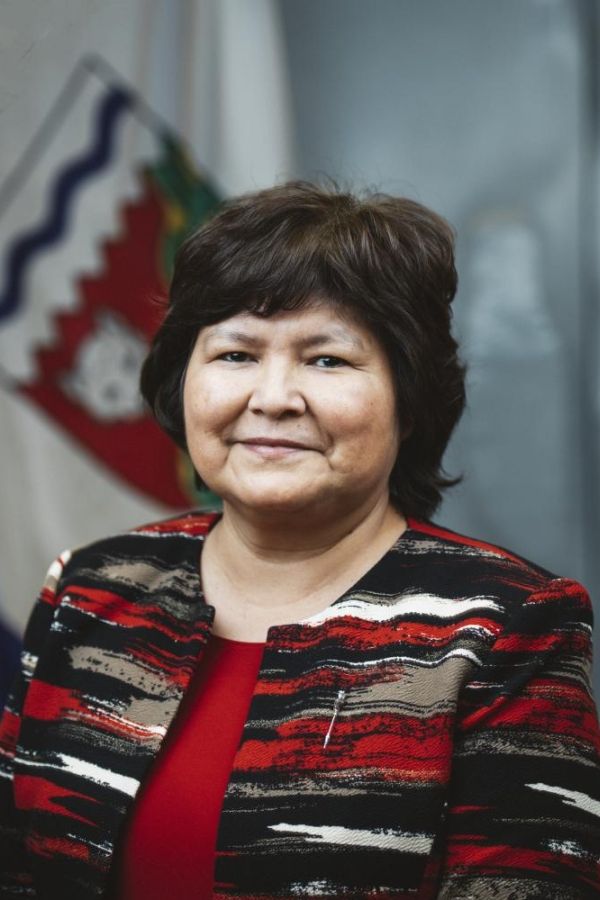
Thank you, Mr. Speaker. Again, Mr. Speaker, we have a strong relationship, and this relationship is already established and working well. So senior officials from Housing NWT have held meetings and have been in regular conversation with the president on the Community Services Corporation's project. And we will continue to support the corporation as the details of their renewal project are solidified. It's important to note, however, that when decisions are made regarding the Aurora College, they will need to be redirected to the Minister responsible for Aurora College or any other responsible Minister. Thank you, Mr. Speaker.