Debates of February 9, 2026 (day 76)
Thank you, Mr. Speaker. It's been 126 years since the treaty was made, 59 years since the territorial council was created and taken on the responsibility of health. Health does not have no boundaries as I mentioned earlier. In this case, in Lutselk'e last fall, the community made it clear that they were frustrated being asked to have the band pay for escorts for residents in hospitals down south. Does the Minister believe that limited resources our First Nation governments are meant to fulfill the GNWT treaty obligation and they should be reimbursed for the costs they incurred; would the Minister agree to that. Thank you.
Mr. Speaker, I can't speak to the specifics. There are many instances where residents of the Northwest Territories end up in hospitals in the south. Many of them have come to the floor of this House. If people are leaving the territory on their own for a vacation or out of territory visiting and they end up in hospital, that -- you know, there is -- and we've -- I've shared the information that, you know, people leaving the territory should assume travel insurance when -- because anybody leaving the territory that's not referred out of the territory by medical travel, then there's no medical travel support. For escorts, again, the focus of our health -- making sure that we provide health care to every resident in the Northwest Territories is the patient is -- making sure the patient has that care. When it comes to escorts, we have the policy that we have for scheduled appointments. You know, we follow that because it's equivalent to NIHB's policy. So that way, everybody in the territory that is getting service has the exact same. It's the same. So, you know, when these issues come up and they come to my office, we respond the best that we can. Thank you.
Thank you, Minister of Health and Social Services. Final supplementary. Member from Tu Nedhe-Wiilideh.
Thank you, Mr. Speaker. Mr. Speaker, Jordan's Principle is a child-first legal requirement that says when a service is available to all children is needed for First Nation child, the government of first contact must provide it immediately and resolve any payments disputes afterwards. The question I have, Mr. Speaker, is why, then, does the GNWT try to make families access Jordan's Principle first instead of fulfilling its own responsibility to provide health care without delay? Thank you, Mr. Speaker.
Thank you, Mr. Speaker. Mr. Speaker, in the Northwest Territories, under the Canadian Health Act, whenever this is an insured service that's available, when there's a non-insured service available, those are -- you know, we cover most of those services in the territory, whether you're First Nation or Inuit or not. The other part around -- you know, if it's medical travel, when children travel there's always an escort provided when it's the child that's the patient. When it comes to discrepancies and whether it falls outside of health, within health, you know, if there is certain issues that the Member is speaking to, I encourage him to bring those to my office so that we can look at those individual cases. Thank you, Mr. Speaker.
Thank you, Minister of Health and Social Services. Oral questions. Member from Monfwi.
Question 971-20(1): Approval Status for Establishment of Dinaga Wek???ehodi Protected Area
Thank you, Mr. Speaker. Mr. Speaker, my question is for Premier.
Mr. Speaker, can Premier confirm the current legal status of Dinaga Wek'ehodi and the specific steps remaining to advance from candidate area to full designation under the Protected Areas Act? Thank you.
Thank you, Member from Monfwi. Mr. Premier.
Thank you, Mr. Speaker. I will do my best. This is more of a question for the ECE Minister but I understand, you know, from the Member's statement why she's directing this to me. So I will say that currently the area is protected under a land withdrawal until 2028 I believe, and there are a few steps that need to take place before it can move from a candidate to a protected area. The majority of those are internal to the working group. There's a number of Indigenous governments and the GNWT who are all part of this process, and there needs to be some agreement, as the Member mentioned, on the number of seats allocated to each party on the eventual management board. And that seems to be the big hurdle. So addressing that is really the big step that needs to be addressed, and the rest seem like they would be relatively easy. Thank you, Mr. Speaker.
Thank you. Thank you for the answer. So, Mr. Speaker, what step is the government taking to expedite the work required to establish Dinaga Wek'ehodi as a protected area as contemplated under legislation. Thank you.
Thank you, Mr. Speaker. So from what I understand, a lot of work has been done. There hasn't been I guess delays to the work for the sake of delays. Any delays are the result of some disagreements on the composition of the management board, and the other work that can happen has happened. So going forward, the ideal would be that we would have consensus from all of the groups involved on how that management board would be established and its composition. And so we really need to get through that process, and the GNWT has very limited ability to accelerate that type of collaboration and cooperation and consensus building among the group, but we'll continue to try. Thank you, Mr. Speaker.
Thank you, Mr. Premier. Final supplementary. Member from Monfwi.
Thank you. Will Premier commit to working with the relevant stakeholders to expedite this process so as to ensure that Dinaga Wek'ehodi is an established protected area before the end of this current government? Thank you.
Thank you, Mr. Speaker. I will have a conversation with the Minister of Environment and Climate Change who has oversight of this file and see what can be done. But, again, it's a matter of people working together and coming to a consensus in order to conclude this. Thank you, Mr. Speaker.
Thank you, Mr. Premier. Oral questions. Member from Yellowknife North.
Question 972-20(1): Equitable Access to Primary Care
Thank you, Mr. Speaker. I have more questions for the Minister of Health and Social Services.
So currently in Yellowknife we have four primary care teams. Each team is funded to include the full-time equivalent of three physicians and one nurse practitioner; however, I know we have struggled to keep that level of physician and NP staffing on every team.
So my first question is, for the Minister, on average, across the four teams, how many regular physicians and how many nurse practitioners do we actually have that live here and they work on staff? Thank you, Mr. Speaker.
Thank you, Member from Yellowknife North. Minister of Health and Social Services.
Thank you, Mr. Speaker. Mr. Speaker, I don't have that number offhand so I would have to get back to the Member. Thank you.
Thank you, Mr. Speaker. I am not sure if the Minister will have this either, but I know we're also bringing in a lot of non-resident locums to fill in shifts for our primary care physicians. So I am wondering if she has any estimate for once you include in the locums, are we filling up the full-time equivalent of three physicians on each of our primary care teams here in Yellowknife. Thank you, Mr. Speaker.
Thank you, Mr. Speaker. Mr. Speaker, currently regular physician staffing average about approximately 1.4 full-time equivalent positions per team supplemented by locum coverage. So we can have, you know, another two locum physicians on any given day. There is one dedicated full-time equivalent position for locum coverage for same-day access across the program. And nurse practitioner ranges from point-8 to 1 based on certain accommodations with the full-time staff. And we continue recruitment to achieve full complement remains a priority. Thank you.
Thank you, Minister of Health and Social Services. Final supplementary. Member from Yellowknife North.
Thank you, Mr. Speaker. Okay, so it sounds like even with bringing in locums, we're still not managing to achieve the full-time equivalent of three physicians per team. And if we fund the health authority for that, can the Minister explain what is done with the extra money that's apparently not going towards those three regular full-time positions. Thank you, Mr. Speaker.
Thank you, Mr. Speaker. Just to be clear, we are funding the vacancies with locums. So to have the three -- the three physicians. And the funding that's not being used for the full-time physicians that -- because many of our physicians -- a majority of our physicians in the territory don't work full time. They work quarter time, half time. And so it makes -- you know, it's like a puzzle putting them all in. And some of them work general practitioners, some of them are pediatricians, some of them are emergency room doctors, some of them are obstetrics. So trying to do that and making sure all of the areas are complemented. And then everything else -- all the other funding goes to pay for locums to fill in all the other spaces and wherever they're needed. Thank you, Mr. Speaker.
Thank you, Minister of Health and Social Services. Oral questions. Member from Yellowknife Centre.
Question 973-20(1): Medical Travel Policies regarding Escorts
Thank you, Mr. Speaker. I have more questions for the Minister of health with respect to the medical travel challenges, more particular to the escorts.
Mr. Speaker, I am going to give certainly her a softball question, and this is the very first one so we can get right down to the nitty-gritty. She's been hearing how our concerns are.
Mr. Speaker, can the Minister speak to this House to help everyone understand the barriers, the challenges of the medical escort policy, and the approval process. Thank you.
Thank you, Member from Range Lake. Minister of Health and Social Services.
Could I use 20 minutes? So the medical travel policy, because it's not an insured service, we don't get funding for this and so what we do is we support, through our medical travel office that we fund currently, is we manage insurances. So behind the scenes, we try to manage insurances.
So if you're a GNWT resident, then you go through medical travel, your form goes in, then necessary decisions are made based on can this service be provided in the Northwest Territories in your home community, in the regional centre, in the capital, and if not, in Edmonton and where, and then that gets approved. And then once that's approved by the -- through that process, then that goes to the insurances. So if it's GNWT, as I mentioned, it goes back to the benefits office. If it's NIHB, then we follow their travel policy. And then if you don't have any other insurances that somebody may have, if you don't have insurance, then it's based on your income. So if you're low income, then you would fall under our medical travel policy -- well, high income/low income base, and then if you are over the threshold for income, then you have to pay -- you know, you're on the cost for your own hotel. We pay the flight but we -- you know, and we reimburse you $50 a day and $18 for meals. If you're under the threshold, then you can -- we can approve you to stay in the boarding home in the -- if there's travel involved. So that's kind of -- hopefully I answered some of that. Thank you, Mr. Speaker.

Thank you, Mr. Speaker, and I appreciate it. I was trying to get a context on the record here because the next questions are when my colleague for Tu Nedhe-Wiilideh talks about families, including infants, being left in the cold -- I am not going to go through all the examples -- but the examples here really talk about the criteria for non-medical escorts such as breastfeeding infants, elderly people, people with language disabilities, etcetera, etcetera, Mr. Speaker. The question is why are these people still not -- you know, if they meet the qualification of the four-page policy -- and that's all it is, four pages -- why are we still getting phone calls repeatedly about them not getting the non-medical escort through this process? Because it should be pretty clear. Thank you.
Thank you, Mr. Speaker. Mr. Speaker, I am not going to speak to specifics on any -- you know, on what any MLA has brought to my office. But raising the concern is the medical travel policy is for scheduled appointments and many of the issues that come through my office are for escorts for the patient. So when the patient is medivaced from community A to community B, there is no escort policy because the escort is the medical escort. And so when the patient arrives, then it's based on the practitioner and then we can get based on if there's decision-making, you know, if the patient is intubated and can't make decisions for themselves, then that's what goes to an exception request and our medical advisor, who is a doctor, not me, not the Minister, that makes that decision that says, yes, this is adequate and we can approve this. Thank you, Mr. Speaker.
Thank you, Minister of Health and Social Services. Final supplementary. Member from Yellowknife Centre.
Thank you, Mr. Speaker. And my happenstance, she led right into the last question I was going to have, so I will take those circumstances as a blessing.
Mr. Speaker, in the medical travel policy -- and for those following along, on page 4 -- it says the attending physician basically can prescribe and recommend a non-medical escort to participate in the treatment program of the individual. Mr. Speaker, in short, why is a policy maker somewhere behind the scenes -- acknowledging these requests have to be pre-approved -- I am acknowledging that. But why is a policy maker behind the scenes rewriting doctors direction? Thank you.
Thank you, Mr. Speaker. Mr. Speaker, yes, the doctor is the one that has to sign the patient travel escort requirement. The requirement under the guidelines, they are to make sure that they -- when they order the escort that it falls within. It's their -- they're the ones who are supposed to order the escort based on the criteria in the medical travel for scheduled appointments. That medical travel policy that the MLA is referring to is for medical -- for scheduled medical, not air ambulance, not ground ambulance; it's for scheduled appointments. When somebody has a specialist appointment, then they're booked, then they -- if they meet that. If they don't meet any of those requirements and they have to put the fulfilled answer as to why that it would entail a non-medical escort and then that's what gets put in as an exception request and, you know, there's many different reasons that they do get approved and the ones that don't get approved. Thank you.
Thank you, Minister of Health and Social Services. Oral questions. Member from Range Lake.
Question 974-20(1): Medical Travel Policy and Ministerial Exemptions
Thank you, Mr. Speaker. Mr. Speaker, I do have some specifics more or less. I won't use names, but these are files that have come across my desk that I have asked for exceptions for on their behalf.
I have a constituent whose husband passed away, and she was dealing with the grief and trauma of learning to become a new single mother. She needed medical travel, and she was told because her kids were under the age of 18, the medical travel system would be providing her with free child care. This is wrong on so many levels, and it prevented her from getting an extremely necessary diagnostic appointment until she gave in and bought the tickets herself. She needed to have her children with her. She struggles with child care and needed them to provide emotional support after an extremely traumatic event. If this is not something that could be given the exception, I don't know what is. So will the Minister reimburse her, apologize, and recognize the sensitivity of families who are grieving from the loss of a loved one in this policy? Thank youb, Mr. Speaker.
Thank you, Member from Range Lake. Minister of Health and Social Services.
Thank you, Mr. Speaker. Mr. Speaker, I am not going to speak to specifics on the floor of this House when it comes to patients' health information and any issues that have come to my office. I am more than welcome to have that conversation with the Member. Thank you.
Thank you, Mr. Speaker. Mr. Speaker, I've already asked the Minister to deal with this. I've already had that conversation.
Mr. Speaker, I've got another constituent. The mother was sick. Stanton had to fly -- has always had to fly her out with kidney stones but they got so bad and she was told to wait. She went into septic shock and almost died. They refused to get her son to go as an escort. Instead, they had to pay thousands for hotels and accommodations, and medical travel ultimately paid for the days that they would send him down to pick her up and take her home but wouldn't pay for the weeks he was by her side. Will the Minister reimburse the full amount for that constituent for the moment they landed to the moment they left and provide support and relief for this family that's still struggling financially because of this discompassionate policy. Thank you, Mr. Speaker.
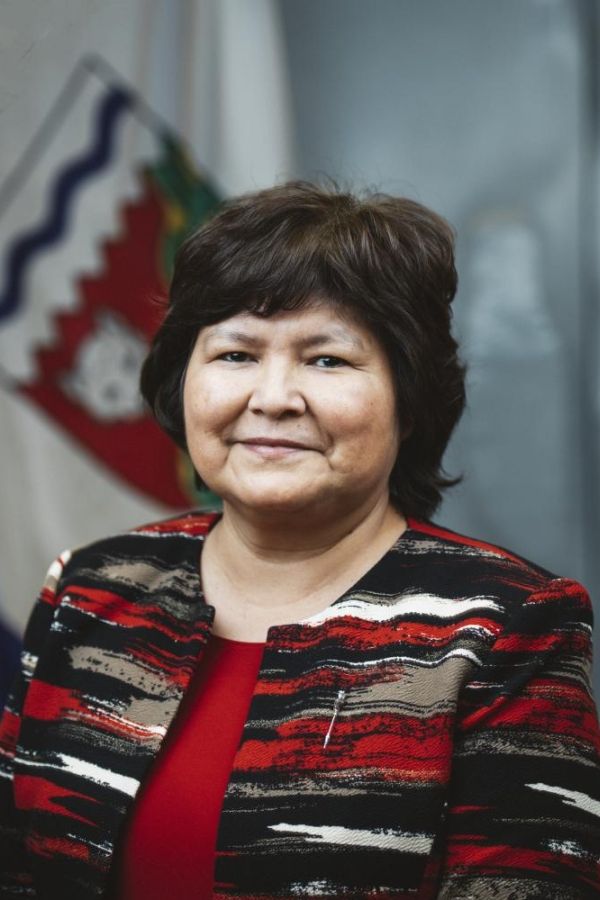
Thank you, Mr. Speaker. I am going to take that question on notice. Thank you.
Thank you, Minister of Health and Social Services. Oral questions. Member from Tu Nedhe-Wiilideh.
Question 975-20(1): Non-Insured Health Benefits Coverage
Yeah, thank you, Mr. Speaker. Mr. Speaker, the 20th Assembly priorities speaks clearly, access to health care and addressing the effects of trauma.
Mr. Speaker, I went through the Premier's letter to the health Minister on her mandate letter. I looked at UNDRIP. I looked at the treaties, etcetera. But, Mr. Speaker, as I went through the mandate letter, it talks about working with -- sorry, intergovernmental governments -- sorry, Indigenous governments to advance modernization of the medical travel policy based on treaty.
Mr. Speaker, my question to the Minister is medical travel patients waiting for NIHB approval -- my question to the Minister can she write a policy so that she has a pot of money for emergency cases so that we are able to help out treaty Members who need our help. That would be my question. Thank you, Mr. Speaker.
Thank you, Member from Tu Nedhe-Wiilideh. Minister of Health and Social Services.
Thank you, Mr. Speaker. As I stated all last week to the Member, the NIHB policy -- you know, I can take this back and next time I meet with the Indigenous Services Canada Minister that if there's a way that they could provide a pot of money. But right now, GNWT is sitting in a deficit every year for medical travel. And so we already are providing a pot of money that's not being reimbursed when we approve exceptions and according to the processes that we use. Again, you know, we as a government are providing healthcare coverage to the patients when they need it when, you know -- and there are healthcare professionals that are making those calls. It's not a political call. It's not something that we're going to decide in this House. So, you know, when it comes to patient care, you know, I respect that the physicians and the healthcare providers are making the best decision with what they're -- with the patients that they're seeing. Thank you, Mr. Speaker.
Yeah, thank you, Mr. Speaker. I am deeply concerned. Mr. Speaker, you know, when I got sworn in to this Assembly, I agreed -- I will just read out the oath for the record. Oath of loyalty: I, Richard Edjericon, do swear that --
(audio).
(audio) we took oath of office to uphold the treaties and respect them.
Mr. Speaker, I am deeply concerned where we're going as a government. It seems like what we're doing now is that we're moving forward and not respecting the treaties. Thank you, Mr. Speaker.
Bmy question: Can the Minister respect and honour the treaties and reimburse Lutselk'e Dene First Nation for maintaining the treaties on behalf of the GNWT and pay the $50,000 back to them? Thank you.