Debates of March 5, 2026 (day 89)

Date
March
5
2026
Session
20th Assembly, 1st Session
Day
89
Speaker
Members Present
Hon. Caitlin Cleveland, Mr. Edjericon, Mr. Hawkins, Hon. Lucy Kuptana, Hon. Jay MacDonald, Hon. Vince McKay, Mr. McNeely, Ms. Morgan, Mr. Morse, Mr. Nerysoo, Ms. Reid, Mr. Rodgers, Hon. Lesa Semmler, Hon. R.J. Simpson, Mr. Testart, Hon. Shane Thompson, Hon. Caroline Wawzonek, Mrs. Weyallon Armstrong, Mrs. Yakeleya
Topics
Statements

Thank you, Mr. Speaker. And apologies to the Minister for not being clear. Yes, that's more or less it. There's a very valuable service here. They're looking to grow and continue to support the government in French language education and lifelong learning in the Northwest Territories. Thank you.

Thank you very much, Mr. Speaker. Mr. Speaker, I'd be more than happy to, I guess, bring College Nordique into a meeting with our French language secretariat, although I do know that the director of our French language secretariat is well acquainted with the executive director of College Nordique as well. So always happy, though, to be in a meeting with both of them. They're both fabulous people. So that would be a good day. Thank you.

Speaker: MR. SPEAKER

Thank you, Minister For Education, Culture and Employment. Final supplementary. Member from Range Lake.

Thank you. And, finally, and here's the literal million-dollar question. They've lost about -- the institution has lost about $2 million from the federal government. It's unsure where that's going to go. Investing in stable Francophone institutions is part of the NWT's commitment to official languages in the Northwest Territories, and in Canada indeed. So will the Minister increase funding to College Nordique to strengthen the institution, provide more training capacity for Northerners, and bring more Francophones into the Northwest Territories through schooling, post-secondary, and immigration. Thank you.

Thank you very much, Mr. Speaker. So, Mr. Speaker, I spoke already about the $200,000 in core funding in addition to -- that exists within the budget that, of course, we approve in this House every year.

In addition to that, in September, there was a three-year agreement with the federal government that the GNWT signed onto that has in it $2.9 million for College Nordique. And in the supplemental appropriation that is before this House, there is just under $1 million for College Nordique in that budget as well. Thank you.

Speaker: MR. SPEAKER

Thank you, Minister of Education, Culture and Employment. Oral questions. Member from the Sahtu.

Question 1171-20(1): New Colville Lake School

Thank you, Mr. Speaker. Now for some good news. Mr. Speaker, as I mentioned in previous statements throughout the number of months here, we can now throw out the ownership in the current school of Colville Lake. My question to the Minister of Education, Culture and Employment, can the Minister explain when ownership will be transferred to the Department of the newly delivered Colville Lake school? Thank you.

Speaker: MR. SPEAKER

Thank you, Member from Sahtu. Minister of Education, Culture and Employment.

Thank you very much, Mr. Speaker. Mr. Speaker, when I first got this job, the Member asked me to help him make sure that we could get rid of the in the school in Colville Lake. Then in January of this year, myself, the infrastructure Minister, and the Premier traveled to Colville Lake to see the units ourselves and walk through it. And I am happy to say that there is now -- the modular units arrived in Colville Lake. So the units need to be placed on site. They need to go through the proper and necessary connections. That work will be done by an installation contractor through the Department of Infrastructure, and this work is to be completed by the end of August of 2026. That is the timeline that they are working on.

Once that work is completed and any deficiencies noted and dealt with, the modulars will then be put into service and at that time then transferred to education, culture and employment and become an ECE asset. Thank you, Mr. Speaker.

Thank you, Mr. Speaker. And thanks to the Minister for that information on transfer.

My next question is, can the Minister explain when this new complex will see furniture and equipment mobilized to the community? Thank you.

Thank you, Mr. Speaker. So, Mr. Speaker, the intention is to see furniture delivered over the course of the summer so that it can be installed in time for the 2026-2027 school year. Thank you.

Speaker: MR. SPEAKER

Thank you, Minister of Education, Culture and Employment. Final supplementary. Member from the Sahtu.

Thanks to the Minister for that reply. Since the delivery this morning here, I've got numerous positive feedback, including videos of the children welcoming the modulars into the community.

My last question here to the Minister, can the Minister provide some dates for the official opening. Mahsi.

Thank you, Mr. Speaker. Mr. Speaker, that would have been a pretty amazing thing to see in the community this morning, kids getting to see their new school space, new classroom space for the first time. I am very excited for the day when they get to walk through the doors of their new classroom and get to see their new desks.

So the intention is for the modulars to be ready for the start of the 2026-2027 school year. But I also think it's important, Mr. Speaker, to acknowledge that these facilities really act as a bridge for the new school for Coville Lake. We had the opportunity, along with the Member, to travel to Coville Lake for the purpose of not only meeting with leadership but ensuring that we had space and time to go over a work plan for the Coville Lake new school. And so really, that's the work that now needs to unfold, and I really look forward to continuing to work on that work plan with the Member and leadership in his community. Thank you.

Speaker: MR. SPEAKER

Thank you, Minister of Education, Culture and Employment. Oral questions. Member from the Dehcho.

Question 1172-20(1): Northwest Territories Alcohol Strategy

Thank you, Mr. Speaker. My questions are for the Minister of Health and Social Services.

Follow-up to my Member's statement, can the Minister provide an update on the current status of the NWT alcohol strategy, including which actions have begun, which are underway, and whether any delays have emerged since the strategy was released in 2023. Thank you.

Speaker: MR. SPEAKER

Thank you, Member from the Dehcho. Minister of Health and Social Services, I think you got an hour of questions there, but we'll -- you've got a --

Mr. Speaker, work on the actions identified in the strategy is underway and is being overseen by the interdepartmental committee on problematic substance use, and a monitoring and evaluation plan has been developed, and progress is being tracked. So the interdepartmental committee is basically a whole of government so there's many moving pieces within all of our areas.

Key accomplishments under the strategy include secure bilateral funding through shared health priority agreement, that's the federal agreement, and established a territorial substance use medicine team, including implementation of medical detox services in the territory, policy development and training within health and social services system for all health professionals on facility-based addictions treatment, development of an interdepartmental communication plan to collaborate on alcohol-related messaging, and Inclusion NWT was supported to fund Yellowknife bars and restaurants to offer free mocktails during Dry February. Thank you, Mr. Speaker.

Thank you. Given that residents and stakeholders have not seen any public progress report since the strategy was launched, will the Minister commit to releasing a public update on implementation, including key milestones, challenges, and early outcomes, and does the department recognize alcoholism as a disability? Thank you.

Thank you, Mr. Speaker. Mr. Speaker, a formal monitoring and evaluation plan does exist and is being -- progress is being tracked by the mental wellness and addiction recovery division in health and social services. The problematic substance use committee will be reconvening this month to take a fresh look at the strategy and its actions and identify priorities for the upcoming fiscal year, and at that point, I can brief the committee on what comes of that meeting. Thank you, Mr. Speaker.

Speaker: MR. SPEAKER

Thank you, Minister of Health and Social Services. Final supplementary. Member from the Dehcho.

Thank you, Mr. Speaker. With just two years remaining before March 31st, 2028 completion target, what concrete steps is the department taking to ensure that the remaining work is achievable, adequately resourced, and aligned with what communities say they need most to address alcohol misuse? Mahsi, Mr. Speaker.

Thank you, Mr. Speaker. Mr. Speaker, as I mentioned, the interdepartmental committee on problematic substance use continues to coordinate efforts across multiple departments to ensure a whole of government is aligned on this work and that a monitoring and evaluation plan is already in place to guide the progress and ensure accountability between now and 2028. And as I mentioned, the things that health and social services is doing -- as I mentioned, this is across government so I can't really speak to what education is doing with, you know -- and I know, like, there's some stuff within finance with alcohol -- like, with the sale of liquor and -- you know, and those types of things. But every part of the government that sits on this polysubstance committee has a role to play in this alcohol strategy. Thank you, Mr. Speaker.

Speaker: MR. SPEAKER

Thank you, Minister of Health and Social Services. Oral questions. Member from Frame Lake.

Question 1173-20(1): Capacity to Move Legislation

Thank you, Mr. Speaker. Mr. Speaker, I want to continue on the thread that I started with my Member's statement and ask questions. I believe these fall to the Premier as the leader of our government.

Mr. Speaker, has the Premier reviewed our ability to draft and move legislation forward and considered any systemic changes to improve our ability to respond to emerging issues more effectively? Thank you.

Speaker: MR. SPEAKER

Thank you, Member from Frame Lake. Mr. Premier.

Thank you, Mr. Speaker. The drafting of legislation is really done within the Department of Justice, but I can speak to the general process.

There are a number of issues that might hold up drafting, and as Minister of Justice, I did become familiar with those. I would often have other Ministers come to me and say, why is the department so slow. Well, it turns out there's more than just the drafting. There's also the drafting instructions, and sometimes when you're drafting legislation, a policy question comes up and you need to go back to the department and figure out that policy question.

And so we've taken -- made efforts to work with departments to let them know that upfront there's going to be questions that the department -- that the drafters might have and that the department needs to be prepared to answer those. And better yet, having a very comprehensive set of drafting instructions at the very beginning would be important. And so we've moved to make those types of changes, and I think that we've seen some improvements. We've also prioritized different types of legislation to ensure that we have a better handle on what's actually being drafted and where those resources are being used. So as a Cabinet, we recognize this issue and we have taken steps to rectify it to the extent that we can. Thank you, Mr. Speaker.

Thank you, Mr. Speaker. And I certainly appreciate that reply, and I think as we -- as we often acknowledge in this House, there's certainly a need for continuous improvement in government. We have a big, complex machine here, and there's certainly always better and more efficient ways we can do things.

Mr. Speaker, could the Premier comment on what would help us address the capacity constraints which are so often cited when MLAs are advocating for legislative changes or development? Thank you.

Thank you, Mr. Speaker. So there are capacity challenges in that, especially in the French language drafters. Drafting legislation is a very specialized skill. Not any lawyer can do it. You really have to have that background and that type of education. And as a territory, we do have a number of official languages, and because we are a creation of the federal government, we are legally required to present all legislation in both English and French. And across Canada, there are very few French language drafters, and it can often be difficult to procure those services. When we can, we go out and we contract services. That being said, it can be hard to parachute somebody into a legislative project and just have them pick up at a midpoint, or, you know, it's hard to tack people onto a project that's already ongoing.

And so those are some of the systemic issues that we're facing as well. The drafters in the Department of Justice draft all of the Regular Member legislation that's brought forward, and as Cabinet, we don't have eyes on that. There's a real wall between that legislation and Cabinet. And so when I was Minister, I was not aware of any sort of work that the drafters were doing for the private Members' bills. And so that's another issue that we're looking at, but -- or not looking at, but that's another issue that just exists. I am not going to try and figure out what's going on over there. Members can do what they need to do with their own drafting. If the Assembly wanted to procure some drafters, then that would probably help the government with its drafting capacity. So, you know, these are just kind of ideas off the cuff here. Thank you, Mr. Speaker.


Speaker: MR. SPEAKER

Thank you, Mr. Premier. Final supplementary. Member from Frame Lake.

Thank you, Mr. Speaker. And I certainly appreciate the off-the-cuff ideas. I am trying to generate a conversation here that goes beyond issue by issue trying to address this and think more about the systemic issues which affect many of the issues which we see raised here. So, Mr. Speaker, what has this government been doing to improve our efficiency and ability to respond to issues with legislative gaps raised by MLAs?

And I know the Premier started to answer that question already. But a different take I am going to put on it here is, do we track how often issues are raised by MLAs and use that data to inform legislative priorities? For example, the child and youth advocate position that we talked about the other day, which has been raised many hundreds of times by MLAs, are we tracking that kind of data and using it to inform our legislative drafting priorities? Thank you.

Thank you, Mr. Speaker. I doubt there is a database of all the issues MLAs have brought up. We would need a department to do that kind of work. It's quite extensive. Just today we've had hours and hours of debate where we've heard probably thousands of different ideas. So no, I don't think there is a comprehensive database. That said, the way the consensus government is supposed to work is that Members raise issues in the House, Members raise issues in standing committees, governments hear those issues, governments bring forward proposals, they get feedback on that, and that all of this informs the direction the Cabinet takes, whether it is drafting or whether it is policies and programs. Thank you.

Speaker: MR. SPEAKER

Thank you, Mr. Premier. Oral questions. Member from Yellowknife Centre.

Question 1174-20(1): Extended Health Benefits Program

Thank you, Mr. Speaker. It's been some time, I believe since September 2024, that the health department has changed the extended health benefits program, even though it was intended to roll in around May of that year of 2024. The pharmacists have pointed out, even as of recently, that the program still has problems and people are not accepting their full rights of say. In other words, they're not getting their prescriptions fully filled or they're considering other options because of this co-pay system.

Mr. Speaker, my question really is for the Minister of health, asking what type of review did they intend to do to see the impacts of this extended health benefits change to northern residents? Thank you.

Speaker: MR. SPEAKER

Thank you, Member from Yellowknife Centre. Minister of Health and Social Services.

Thank you, Mr. Speaker. I am not sure if the Member is asking the review that we're currently doing or the review that was done extensively prior to the release of the changes. Thank you, Mr. Speaker.

Speaker: MR. SPEAKER

Thank you. I will go back to the Member from Yellowknife Centre to clarify.

The review after the changes were made. Thank you.

Thank you, Mr. Speaker. Mr. Speaker, that review is currently in its final stages as the one year was as of September, and we committed to doing the review for the first year, and I said that it would probably take about six months to analyze all the data. And I have not received the analysis as of yet, so that should be coming shortly. Thank you, Mr. Speaker.

Thank you, Mr. Speaker. If the Minister could explain to the House why it takes six months to review this particular data. Like, what's the threshold or issue? I know this has been top of mind for many Northerners because the one-year anniversary was September of 2025, and now we're talking six months since then. Thank you.

Thank you, Mr. Speaker. Mr. Speaker, there are many areas within the extended health benefits, and there are many bans within the extended health benefits, so we are reviewing that right now. And as it is six months, we have been in session, so I haven't been doing a lot of briefings. Thank you, Mr. Speaker.

Speaker: MR. SPEAKER

Thank you, Minister of Health and Social Services. Final supplementary. Member from Yellowknife Centre.

Thank you, Mr. Speaker. What's the type of -- the mandate that this particular review? I've seen pharmacists say this doesn't work, constituents say this doesn't work, and no one seems to be happier. So I am not sure who this change of extended benefits has changed more for. And what's the mandate of the review process? Is it to consider other options, or is it just a double down? Thank you.
Thank you, Mr. Speaker. Mr. Speaker, this change was raised to ensure that we could continue having a sustainable program in the Northwest Territories. So what we did know prior to going into this is that there were many people in the Northwest Territories that did not get access to any benefits because they didn't have a specific disease earmarked in the specified disease category so that when we did the changes, the senior benefits remained the same, so they get all full benefits, and anybody under that category, excluding non-insured, so First Nation and Inuit and Metis -- those that have Metis benefits in Northwest Territories are excluded as they get all those benefits through those programs. So right now, part of the analysis is those that have been previously, we're analyzing that -- we're previously, and the new -- how many new people have come into the system. And you know what, as part of the review, it is working with pharmacists and ensuring that we're here getting those feedbacks. Thank you, Mr. Speaker.
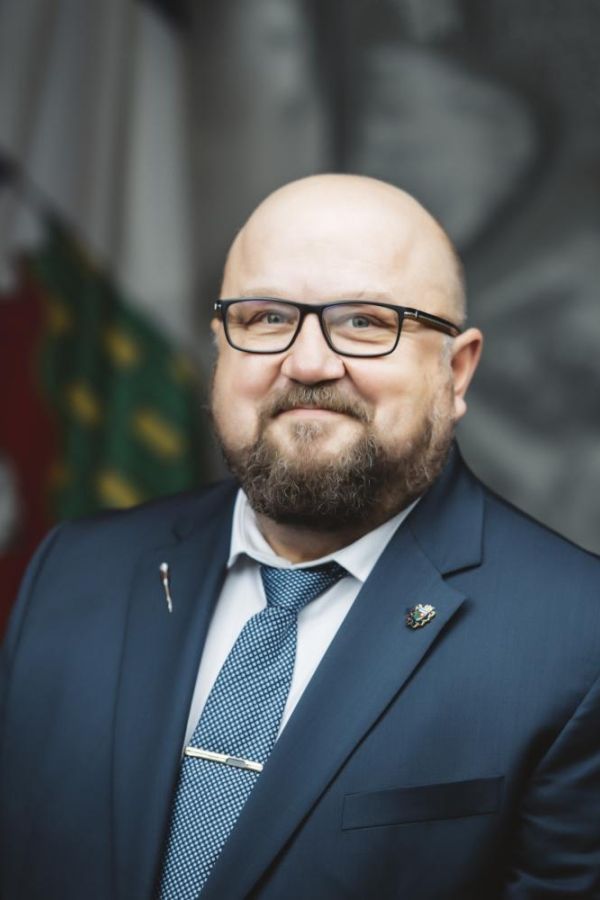
Speaker: MR. SPEAKER

Thank you, Minister of Health and Social Services. Oral questions. Member for Yellowknife North.

Question 1175-20(1): Northwest Territories Health and Social Services Authority Spending