Debates of March 5, 2026 (day 89)
Thank you, Mr. Speaker. So a few days ago, the health Minister gave an update in her statement in the House on the progress made on the public administrator's work plan, and it was mentioned in that statement that progress has, in fact, been made on financial sustainability in particular, and so I wanted to ask for more details on some of the statements made at that time. So with regard to progress made on deficits, can the Minister tell us -- and this is the Minister of Health and Social Services in case it was not clear. Can the Minister tell us in which areas of health authority spending savings were found in order to reduce the operations-related deficit by $8 million between 2025-2026 and 2026-2027? So that was mentioned in the statement. Thank you, Mr. Speaker.
Thank you, Member for Yellowknife North. Minister of Health and Social Services.
Thank you, Mr. Speaker. So within the 2025-2026, 2026-2027, so the reductions include voluntary holding non-essential positions vacant, reductions in non-clinical travel, and non-clinical training, and other O&M expenses, reduction of non-essential overtime, any standby and callback for non-essential, and redirecting any unused funding to other priorities within NTHSSA. Within 2025-2026, NTHSSA worked closely with the Department of Health and Social Services to ensure one-time funding received for chronically underfunded programs, which included underfunding costs related to laboratory and diagnostic imaging, underfunding costs to medical travel program, underfunding costs to COVID-19 vaccine and chemotherapy drugs, underfunding costs for foster care. And the NTHSSA continues to look at the financial sustainability of medical travel and adult out of territory services as well as other programs. Thank you, Mr. Speaker.
Thank you, Mr. Speaker. There was also a statement made that previous to that -- can the Minister tell us what areas of health authority spending were cut, or where were the savings found to reduce the operations-related deficit by even more, by $34 million in 2024-2025 compared to what had been budgeted? Thank you, Mr. Speaker.
Thank you, Mr. Speaker. Mr. Speaker, within 2024-2025, one of the biggest pieces was that we were able to -- we were able to secure additional federal funding. I think that was the first year that we got the two-year special allotment ever in the Northwest Territories for the medical travel piece to offset our costs. So that helped. Additional one-time GNWT funding, lower than budgeted costs across the NTHSSA programs, and some fiscal restraint measures implemented in our fourth quarter also contribute to that decreased deficit. Thank you, Mr. Speaker.
Thank you, Minister of Health and Social Services. Final supplementary. Member from Yellowknife North.
Thank you, Mr. Speaker. So, finally, can the Minister help explain to us any specific actions that the public administrator is in charge of that will lead to further savings and deficit reductions in the year to come? Thank you, Mr. Speaker.
Mr. Speaker, thank you. So the continuation of the fiscal -- I think the piece with the PA, he's been working closely at making sure that organizationally -- and just most recently the conversations that we've been having is looking at operationally within each area, within each region, you know, working with staff to kind of say what -- you know, with COOs and their budgets, if they know that there's areas where, you know, there's changes that need to happen. So we're actually -- that's one of the pieces that he's leading.
The other piece is the continuation of working with the department and with the deputy minister of the Department of Health and Social Services. Where they're looking at right now is that overlap where the executive of the NTHSSA and the department they're finding that -- well, it's not a secret. We've all said that there's some overlap there. So we're trying to ensure that with them two working together, with the ADMs and, you know, with their territorial managers, like, where does the department end in policy and -- you know, then where does operation start? If there's duplications, then that's the work that they're currently doing right now. Thank you, Mr. Speaker.

Thank you, Minister of Health and Social Services. Oral questions. Member from Yellowknife Centre.
Question 1176-20(1): Dental Review Officer
Thank you, Mr. Speaker. February 12th I followed up with the Minister regarding the dental review officer, and I am still waiting for some answers, so maybe I can get a couple of them at least to keep the discussion moving forward. I have constituents that are concerned that it's going very slow, so we'll just get a couple of questions out to see if we get some answers and they feel that the government's responding to their concerns in a timely way.
Mr. Speaker, my questions -- I will put one together -- two questions into one, which is simply who is the current dental review officer, when did their appointments start, and does it come with a scope that the Minister can enlighten the House with? Thank you.
Thank you, Member from Yellowknife Centre. That was three questions instead of two, but. Minister of Health and Social Services.
Mr. Speaker, I believe I had sent that information to the Member, but I don't have it at -- through a BF. But I don't have that at my fingertips. Thank you, Mr. Speaker.
Thank you, Mr. Speaker. Well, I don't seem to have it in my inbox, so we'll again try to probe for information for the public good, Mr. Speaker. The dental review officer currently, my understanding, is from Edmonton. They took a contract. Is there a reason why the department of health doesn't go to the college of dentistry, recognizing the expertise to be a member of that college rather than a regular dentist to review our local dentists? Thank you.
Thank you, Mr. Speaker. I don't have the exact details, but I do believe the legislation says that it has to be a dentist, so thank you, Mr. Speaker.
Thank you, Minister of Health and Social Services. Final supplementary. Member from Yellowknife Centre.
Thank you, Mr. Speaker. Who approves the expenses of the dental review officer when they come to the Northwest Territories to review our local practitioners of dentistry? Thank you.
Thank you, Mr. Speaker. I believe that the Department of Health and Social Services is obliged by the legislation that when there is a complaint or any investigation that's brought forward -- or a complaint brought forward, an investigation has to be, you know, followed through, and this is the process that we use. However, we do not get a lot of complaints, so we don't contract somebody on a permanent basis. However, when there is one that comes up -- but I don't have the exact details. Thank you, Mr. Speaker.
Thank you, Minister of Health and Social Services. Oral questions. Member from Range Lake.
Question 1177-20(1): Inclusive Education Review
Thank you, Mr. Speaker. The inclusive schooling review seems to be a very important piece of policy for this government. When will Members on this side of the House be able to review that document? Thank you.
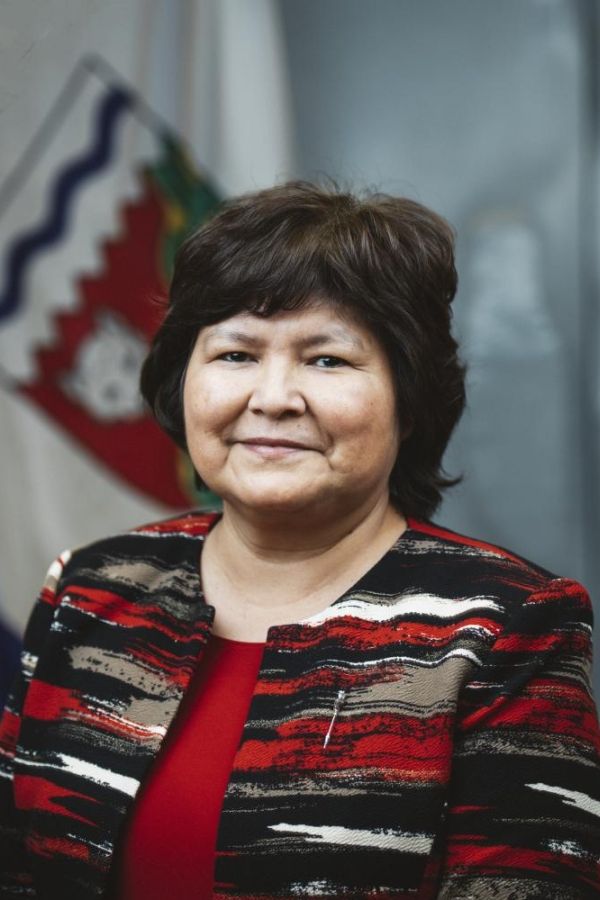
Thank you, Range Lake. Minister of Education, Culture and Employment.
Thank you very much, Mr. Speaker. Mr. Speaker, I would like to take time in the Members' upcoming committee week, which would be in April, to sit and be able to go through that with them. Thank you.
Thank you, Mr. Speaker. Okay, so that's good. Because I was surprised to hear yesterday in the closing remarks for the main estimates that because of the advocacy of Members $30 million is going to be spent to meet the needs identified through the inclusive schooling review. How were Regular Members able to advocate to meet the needs when we haven't even read the review? Thank you, Mr. Speaker.
Thank you very much, Mr. Speaker. Mr. Speaker, the negotiations for budgets happen between AOC and the finance Minister, so how that number was received at, I -- you know, I can speak to what I would like to see that go to, but there isn't anything -- and I don't even -- I am going to be honest, Mr. Speaker, I don't know what I can talk about right now as far as budget negotiations, so I am going to stop talking. Thank you.
Thank you, Minister of Education, Culture and Employment. Watch the line, people. Member from Range Lake.
Thank you, Mr. Speaker. I will note that this is a promised supplementary appropriation that is yet to appear. It is not before the House. Mr. Speaker, was the department intending or planning to bring forward $30 million to meet the needs of the inclusive education review before the budget negotiations began? That's something that is in the Minister's purview. Thank you.
Thank you very much, Mr. Speaker. So, Mr. Speaker, the way that budgeting works in the House is that normally I have to first be able to substantiate an ask. I believe that the inclusive schooling ask is going to be greater than what is currently being referenced by the finance Minister in her speech and the number referenced by the Member. Those are numbers that I would bring forward to the financial management board and bring them forward with substantiation where the financial management board would then be able to vote on that proposal, and then that would come forward either through the regular business planning and budgeting process. So that is something that would then fall before Cabinet normally in the summertime. It would then end up in the main estimates for next year.
So am I happy to see this dollar figure in negotiations? Absolutely. I think that it allows us to react more swiftly and to be able to ensure that we are approaching the needs of students in a phased approach, which is something that I look forward to being able to discuss more at length with Members when I come back during their committee week. Thank you.
Thank you, Minister of Education, Culture and Employment. Oral questions. Member from Yellowknife Centre.
Question 1178-20(1): Dental Review Officer Contract
Thank you, Mr. Speaker. To help the Minister, the current dental review officer has a contract with the Northwest Territories. Can the Minister speak to their specific contract process? And if not, can she promise to get back to me in a timely way because I've waited since February 12th for this answer. Thank you.
Thank you, Member from Yellowknife Centre. Minister of Health and Social Services.
Thank you, Mr. Speaker. I will have to go back to the department. If this is a contract, I am not sure what I am able to share. Thank you, Mr. Speaker.
Mr. Speaker, I won't educate the House what double jeopardy is, but it's also used as a lay term being tried twice. Mr. Speaker, the current dental review officer has processed -- we'll call it concerns on an individual constituent. The issue is so much so is that who -- brings to the question is if -- who reviews the work and mandate of the dental review officer to ensure they administer a fair and reasonable process? Thank you.
Thank you, Mr. Speaker. As I said, I will have to get more detailed information on this line of questioning. Thank you, Mr. Speaker.
Thank you, Minister of Health and Social Services. Final supplementary. Member from Yellowknife Centre.
Mr. Speaker, the current dental review officer is out of Edmonton. They have no contact with the NWT dental association except when they fly into the community to administer dental justice.
So, Mr. Speaker, would the Minister review the individual's contract to ensure someone from Northwest Territories who is more familiar with the community's and the territory's issues, including the dental association people that they're practicing this justice on, will be considered a Northerner, at the very least, and possibly even go back to the college of dentistry to have someone competent enough to fairly administer this program? Thank you.
Mr. Speaker, I -- you know, I am -- I don't know if anyone here on the floor is able to decide competency on dentists. I believe that that's left for the college of dentistry. What I do know is that because the NWT has a very small pool of dentists, if any complaint comes in of a dentist, an out of territory is used to avoid any conflict of interest. Thank you, Mr. Speaker.
Thank you, Minister of Health and Social Services. Oral questions. Member from Range Lake.
Question 1179-20(1): Inclusive Education Review
Thank you, Mr. Speaker. Going back to the inclusive schooling review, what is the total funding need that's been identified by that review? The Minister referenced that it may, in fact, be greater than $30 million. As we're broaching that subject now, if she could inform the House of what that total gap looks like. Thank you.
Thank you, Member from Range Lake. Minister of Education, Culture and Employment.
Thank you very much, Mr. Speaker. Mr. Speaker, that's information that I do not currently have at my fingertips on the floor of the House. It's also information that has not yet been shared with education partners or with Members of the committee on accountability and oversight. Thank you.
Thank you, Mr. Speaker. Mr. Speaker, will the -- Jordan's Principle funding shortfalls -- like, if the federal government's programs don't work for the North, because we're not sure that they will yet, will this new $30 million that's been committed -- will some of that be able to support the gap left behind by the Jordan's Principle shortfall? Thank you, Mr. Speaker.
Thank you very much, Mr. Speaker. Mr. Speaker, the inclusive schooling review did cover things, for example, like access to therapeutic services, which some Jordan's Principle funding did cover. It also did speak to needs of students, which some of the needs of students are access to supports within classrooms, and also spoke to the simple nature of the -- and I say simple, but very complex nature of the change of the needs of students across this territory. So certainly there would be an overlap of some of it, but because of the fact that the Jordan's Principle funding applications went directly from education bodies to the federal government, it would not be -- it wasn't something that we participated in, that we vetted, and so it's not something that I would be able to say it is an exact one-to-one and certainly there were things that were involved in that that would not be covered off under an inclusive schooling policy because, for example, some things had to do more with school food funding, some things had to do with the purchase of cultural infrastructure, so certainly there will be some differences. Thank you.
Thank you, Minister of Education, Culture and Employment. Final supplementary. Member from Range Lake.
Thank you, Mr. Speaker. Mr. Speaker, and granted that these will be different programs. So just to clarify, this -- will there be -- what are the strings attached to this new funding so education bodies can understand? Is it the same policies that covered inclusive education -- or inclusive schooling funding before, or are we expanding the criteria to ensure the dollars reach farther and address some of those things that Jordan's Principle was filling? Because that's partially why we're so dependent on Jordan's Principle, the money wasn't going far enough, and it wasn't being -- it couldn't be used everywhere that it could be, and Jordan's Principle could be used at the time these applications were made, anywhere, for anything.
So can the Minister just clarify that these dollars are going to go to solve those problems and help keep our kids educated and -- yeah, let's leave it there. Thanks.
Thank you very much, Mr. Speaker. Mr. Speaker, the dollars committed really are directly for the inclusive schooling review. They're committed to our JK to 12 education system, to the students who need them. And very much look forward to being able to sit down with committee, go through that review, go through the management response, go through the projected costs that will be associated with it, and ensure that our education bodies also have access to this information prior to that. Thank you.
Thank you, Minister of Education, Culture and Employment. Oral questions. Member from Yellowknife Centre.