


Jay Macdonald

Member Thebacha

Minister of Environment and Climate Change
Minister of Justice
Government House Leader

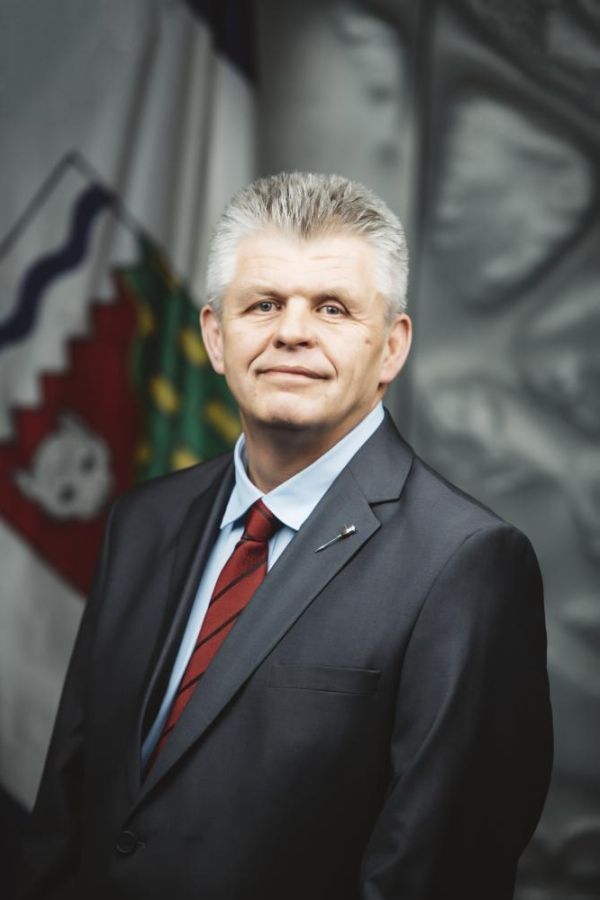
Jay Macdonald was elected to the 20th Northwest Territories Legislative Assembly to represent the constituency of Thebacha. Mr. Macdonald was elected to the Executive Council of the 20th Assembly.

Mr. Macdonald was born on June 26, 1964, in the town of Hay River, Northwest Territories. As an Indigenous Métis, Jay's roots run deep in the Northern Canadian landscape, and his journey has been marked by diverse experiences that have enriched both his personal and professional life.

Mr. Macdonald’s family relocated to Fort Smith in 1970. Mr. Macdonald successfully managed his small engine repair shop, providing essential services to the community and establishing himself as a reliable entrepreneur. Simultaneously, he delved into the intricacies of recreation facility management, overseeing operations at the local arena and golf course.

In his 13-year tenure as the Manager of Forest Management Services with the Environment and Conservation Division of the Government of the Northwest Territories, Mr. Macdonald demonstrated an unwavering commitment to environmental stewardship.

Mr. Macdonald’s dedication to youth development is evident in his 12-year role as the House Parent Program Coordinator for the Western Arctic Leadership Program. For five years, he served as a house parent, providing a nurturing environment for students from Lutsel Ke attending PWK High School. This experience not only showcased his compassion but also contributed significantly to the academic and personal growth of the students under his care.

Drawing on his expertise as a Journey Person Small Equipment Technician, Mr. Macdonald spent 13 years managing a Polaris dealership and served as an Instructor for Small Equipment Maintenance, Aviation Fuel Management, and Logistics disciplines under the Incident Command System.

Mr. Macdonald’s commitment to community extends beyond his professional roles. As a dedicated volunteer, he served as President and Coach of Fort Smith Minor Hockey, nurturing young talent and instilling the values of teamwork and sportsmanship. His coaching prowess extended to the national stage as he led Team NWT at the National Aboriginal Hockey Championships.

In his role as a representative of the Fort Smith Métis Nation on the local District Education Association Board, Mr. Macdonald contributed to shaping educational policies that reflect the unique needs of the community. Additionally, he served as a Board Member and Chair of the Northwest Territories Apprenticeship and Occupational Certification Board, advocating for the recognition and advancement of skilled trades.

Mr. Macdonald’s commitment to community welfare is further evidenced by his involvement in various local activities and events. Whether coaching minor sports or contributing to volunteer initiatives, he has consistently worked towards creating a vibrant and cohesive community fabric.

Outside of his professional and community engagements, Mr. Macdonald has a full family life. He is married to Karen, is a proud father to three children, and a doting grandfather to three grandchildren.

In his leisure time, Jay indulges in hobbies that reflect his love for the outdoors. Golfing, fishing, gardening, and enjoying the vast Northern landscapes are among his favorite pastimes.
Thebacha Electoral District:

Committees

Jay Macdonald
Thebacha
Member's Office

Yellowknife NT X1A 2L9
Canada

P.O. Box
1320
Email
Minister of Environment and Climate Change
Minister
Email

Statements in Debates

Debates of , 20th Assembly, 1st Session (day 67)

Thank you, Mr. Speaker. Mr. Speaker, the Department of ECC does have officers that will do paroles to ensure that when requested that if there's a site that specifically has a potential issue and they're asked to do an inspection, they will gladly go and do that inspection. If there are issues that seem to be evident at the site, they will attempt to work with the folks that are there and resolve those and, if required, there are other legal avenues that could be pursued to come to a resolution. Thank you, Mr. Speaker.

Debates of , 20th Assembly, 1st Session (day 67)

Thank you, Mr. Speaker. Mr. Speaker, at this time there's no essential prioritization of the items from the audit. Many of the items identified in the audit, as well as the outstanding items from 2020, are quite crosscutting and involve a number of partners that really don't all have the ability to participate at the same level. So as a department, we are certainly committed to the recommendations. And within the audit report in tab D I believe, it does lay out our commitments to those recommendations as well as lays out specific timelines and whether we are fully committed and fully agree...

Debates of , 20th Assembly, 1st Session (day 66)

Mr. Speaker, I move, seconded by the honourable Member from Kam Lake, that Bill 22, Legislation Act, be read for the third time. And, Mr. Speaker, I request a recorded vote. Thank you, Mr. Speaker.

Debates of , 20th Assembly, 1st Session (day 66)

Thank you, Mr. Speaker. I wish to table the following three documents: Annual Report on the Activities of the Rental Officer 2024-2025; Department of Justice Corrections Service Annual Report 2024-2025, and Territorial Police Service Agreement Annual Report (2024-2025). Thank you, Mr. Speaker.

Debates of , 20th Assembly, 1st Session (day 65)

Thank you, Mr. Speaker, and thank you to the Member for the question. Not data that I have off the top of my head, but I'm happy to collect that and return a response to the Member. Thank you, Mr. Speaker.

Debates of , 20th Assembly, 1st Session (day 65)

Thank you, Madam Chair. To my right, I have Mr. Brad Patzer, assistant deputy minister, attorney general.

Debates of , 20th Assembly, 1st Session (day 65)

Thank you, Madam Chair. I am here today to present Bill 22, Legislation Act. The purpose of Bill 22 is to replace the Statutory Instruments Act with a more modern Legislation Act that clearly sets out the territorial regulation-making process, as well as provisions related to the making of statutes. This is in line with trends across the country to replace this type of legislation with more modernized Acts.

The territorial approach to oversight of the regulation-making process dates from 1971 and has remained largely unchanged. The definition of statutory instrument used in the current...

Debates of , 20th Assembly, 1st Session (day 65)

Thank you, Mr. Speaker. Mr. Speaker, I don't have a specific distance per se to this question. There are a number of factors that would play into the preplanning, if you will, of trigger points. So there's weather, there's wind, there's drought levels, there's moisture, duff moisture codes. There's a number of contributing factors that would be taken into account as they determine what those trigger points are, whether it's a recommendation for an evacuation alert or a notice or an actual evacuation. So those things will vary depending on the specific location. Like I said, the specific level...

Debates of , 20th Assembly, 1st Session (day 65)

Thank you, Mr. Speaker. Mr. Speaker, after the 2023 after-action review, there was 25 recommendations that were received by the department, all of which were accepted in principle. So some of the major points I'd like to raise here, work that's ongoing has increased:

We've increased the number of fire crews, aircraft equipment available across the NWT.

We're mobilizing crews and aircraft earlier in the season to complete training ahead of the earlier start to the wildfire season.

We're conducting aerial surveys and thermal imaging to detect and address holdover fires at the beginning of the...

Debates of , 20th Assembly, 1st Session (day 65)

Thank you, Mr. Speaker. Mr. Speaker, within the wildfire management policy, there's a number of criteria that are looked at and every fire that is detected, a new fire gets some form of action. So there's -- some of the factors that come into play are location of the fire, available resources, proximity to values, proximities to communities. So as these fires start on the landscape, the fire experts within the department take a look at the current situation. They go out, a fire assessment is done. That information is then taken and put into an initial action plan which is used to determine...