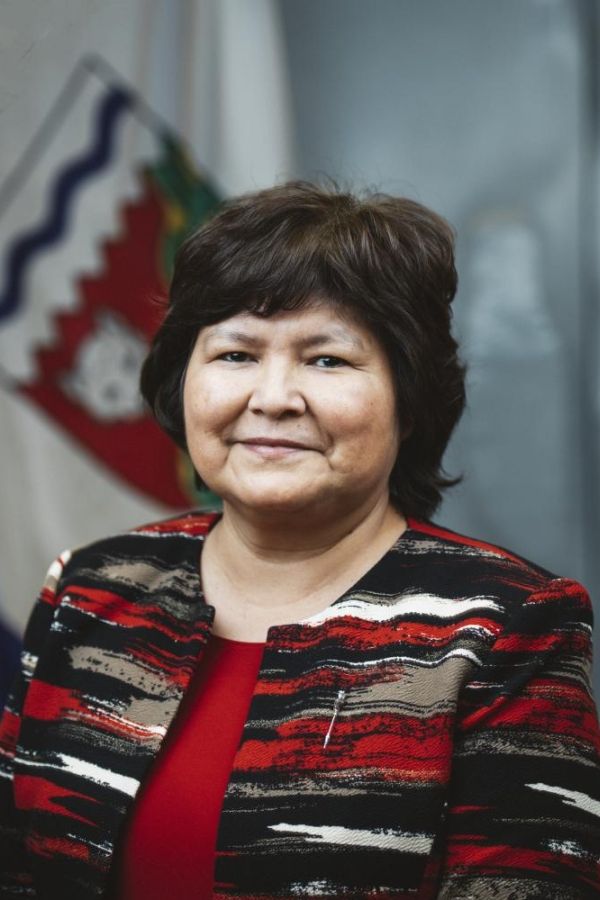
Thank you, Mr. Speaker. Mr. Speaker, as chair of the Standing Committee on Accountability and Oversight, I am pleased to rise today to provide our response to the budget address. We look forward to the coming weeks of discussion as Members work together to consider and approve a budget that must meet the realities facing communities across the Northwest Territories.
Mr. Speaker, the world has, indeed, changed. The North is in the spotlight. That should be good news for the people we serve. As the Premier said here yesterday, the status quo is not acceptable. And on that, Mr. Speaker, we agree.
In presenting this budget, the Minister has told us it is about momentum and readiness, about shifting from restraint to action at a time of real economic pressure and global uncertainty. That is a clear statement of intent. The question before us is whether the measures in this budget deliver that shift in practice through concrete investments, realistic timelines, and outcomes people can see.
Mr. Speaker, the eyes of the country are on the North. And that matters. But alignment in words must now be matched by alignment in spending, timelines, and delivery. That is the work before us. Because here is the test that matters, Mr. Speaker: Does this budget make us ready to act and deliver on this moment? Not in a year, not as work deferred to another Assembly, Mr. Speaker, but now.
The moment is real, and eyes are on the Arctic. Defense and sovereignty investments are coming. Critical minerals and LNG developed responsibly, and together with Indigenous governments, are in demand. Northern hubs in Yellowknife and Inuvik are on the map. People far outside this chamber, Mr. Speaker, are watching to see whether the Northwest Territories can move from talk to delivery.
To fully seize the opportunities before us, whether in a national defense investment, mineral development, or the historic funding now available to advance housing, we must ensure that our own systems are not standing in the way. Government has a responsibility to remove unnecessary regulatory barriers, streamline approval processes and provide a clear, efficient path for progress. We cannot allow our internal procedures to hinder the very opportunities that strengthen our communities and our economy.
We are a territory that is resource rich but cash poor. That gap is not a talking point. It is, Mr. Speaker, what families feel when projects stall, when jobs leave, and when costs go up. Readiness starts with land, infrastructure and delivery, and small communities feel it first. When land transfers and tenure decisions take a year, housing does not get built, gravel does not move, pads do not get prepped, local contractors do not hire. Opportunity, Mr. Speaker, passes by.
I want to be very clear; caution has its place, but the pace we are on is not caution; it is falling behind. When it takes a year to transfer land, we are not being cautious; we are falling behind.
Major projects need certainty, timelines, and people appointed to drive them. Roads, runways, materials, logistics; get the decisions made, Mr. Speaker. Get shovels in the ground. Climate change is tightening construction windows and shortening ice road seasons. Communities pay the price first on fuel, freight, and food. Waiting is not a plan. Planning ahead is. Indigenous partnership and community capacity are not add-ons. They are how the Northwest Territories works, Mr. Speaker. Small communities matter. Capacity must exist everywhere, not just in regional centres. If communities cannot act, the territory is not ready no matter how strong a plan looks on paper.
Mr. Speaker, partnership must show up as shared delivery, authority, people and tools, in place so work moves from ideas to action. Partnership is not about saying the right things; it is about putting the capacity in place so things actually happen. Our constituents judge us by results they can see - fixing roads, good education for their kids, a crew working on a site, a training class that leads to paid work. Public services are economic infrastructure. This is not a separate conversation, Mr. Speaker. It is the same one. You cannot build a strong economy on weak health care, education, housing, or without Indigenous partnership.
Mr. Speaker, health care stability keeps workers and families here. If people cannot count on care, they will not come and they will not stay. Education and training build the workforce. From K to 12, to trades and post-secondary, programs must line up with real jobs. If they do not, we pay twice in vacancies and in turnover, Mr. Speaker.
Mr. Speaker, housing is a constant constraint. If there is nowhere to live, there is nowhere to work. That means land ready and available, approvals on time, and crews building when the construction season opens. If people cannot live here, work here, or raise a family here, the economy does not grow.
I want to speak directly about small communities. They are not a footnote in our economy; they are central to it. A quarry stalled by unresolved tenure is not a paperwork issue. It is jobs that are not created. A health cabin without reliable connectivity or stable staffing is not a minor inconvenience. It is a reason a family questions whether they can stay in a community. Missing the short summer construction window is not a scheduling slip. In the North, it costs an entire year. Readiness in small communities is practical and visible. It means gravel delivered on time, pads in place, reliable care, working internet, and flights that arrive when they should. When those basics are in place, people see a future for themselves here, not somewhere else.
Mr. Speaker, on resource development, I will be direct. We need it. It pays for services and schools and keeps our communities viable. The world wants critical minerals and LNG. We have them. We also have the standards and partnerships to do it right. Investment goes where jurisdictions are ready. If we are slow, investors will go somewhere else.
Mr. Speaker, execution is what will decide whether this moment becomes prosperity. Decide faster, put cross-functional teams on priority files, give them authority to clear barriers, report progress monthly, in public, fund training where vacancies are, build houses where jobs are, stabilize access to care that people can feel this year. Northerners do not expect everything at once. They do expect progress they can see and timelines that mean something.
Mr. Speaker, we are hearing the government say that the status quo is no longer acceptable. Again, Mr. Speaker, on that we agree. The eyes of the country are on the North, and that matters. But alignment in words must now be matched by alignment in spending, timelines, delivery. That is the work before us.
As we move through the estimates, here is what the Regular Members will be looking for:
Land and permitting timelines that are measured and met;
Capacity in communities to move projects; primary health care access that is more reliable this year;
Training tied to guaranteed placements; and,
Housing where work actually exists.
Mr. Speaker, this budget points in the right direction but does not yet meet the moment. Direction is not the same as delivery. This is not about good intentions. It's about speed, execution, and results. When decisions are slow, families pay. When capacity is thin, communities wait. When services are weak, workers leave.
We can change that. Decide faster, build capacity everywhere, deliver the basics that keep people here, then the economy will follow. Let's stop describing the moment and start delivering on it, Mr. Speaker. Thank you.