Débats of février 27, 2026 (day 86)

Date
February
27
2026
Session
20th Assembly, 1st Session
Jour
86
Président
Membres présents
Hon. Caitlin Cleveland, Mr. Edjericon, Mr. Hawkins, Hon. Lucy Kuptana, Hon. Jay MacDonald, Hon. Vince McKay, Mr. McNeely, Ms. Morgan, Mr. Morse, Ms. Reid, Mr. Rodgers, Hon. Lesa Semmler, Hon. R.J. Simpson, Mr. Testart, Hon. Shane Thompson, Hon. Caroline Wawzonek, Mrs. Weyallon Armstrong, Mrs. Yakeleya
Topics
Statements

Mr. Speaker, at this time, where we are focusing on is during COVID, as many people know, that we ceased to be able to send dentists into the community. Those RFPs that went out to the private dentists who do provide that support in small communities, right now we are working with Indigenous Service Canada to be able to get that up and going, and we should be -- I believe we're ready to be putting out those RFPs soon so that dentists will be traveling back into the communities. We are not at the stage in health to be doing any of the training of that. That is a discussion that I can have with the Minister of ECE. Thank you.

Speaker: MR. SPEAKER

Thank you, Minister of Health and Social Services. Final supplementary. Member from Yellowknife Centre.

Thank you, Mr. Speaker. Whatever follow-up the Minister can provide me would be greatly appreciated.

Mr. Speaker, my last question is about recruitment, retention, and certainly about training and incentives. Mr. Speaker, as we are aware, Saskatchewan is moving forward on this. Is there a way to create some incentives so we can hook our northern students who are taking science who might be interested in this career? Is there a way we can create incentives so they may follow through and, again, so they can help serve Northerners where we need them best. Thank you.

Thank you, Mr. Speaker. You know, when we look at all of our health areas, we at NTHSSA do provide a bursary to those that are accessing health programs and, you know, this -- I would have to follow up to ensure that this one may fall under that area. However, you know, we do know that dental hygienists -- you know, we're looking at the option of dental hygienists because they do have a much more expanded scope now than they did years ago, and so we're looking at how to be able to implement dental hygienists into our system as well. Going forward, you know, I will continue to have those conversations with the college with the hopes that one day we may have a dental therapy program in the Northwest Territories. Thank you, Mr. Speaker.

Speaker: MR. SPEAKER

Thank you, Minister of Health and Social Services. Oral questions. Member from the Sahtu.

Question 1121-20(1): Educational and Economic Impacts in Norman Wells

Thank you, Mr. Speaker. Following up on my statement, and questions to the Minister of Education, Culture and Employment.

My first question: What immediate relief and support measures can the Minister commit to providing the Norman Wells and Sahtu region to address the educational and economic impacts of the Imperial Oil closure as well as the Jordan's Principle gaps? Thank you.

Speaker: MR. SPEAKER

Thank you, Sahtu. Minister of Education, Culture and Employment.

Thank you very much, Mr. Speaker. So, Mr. Speaker, the Department of Education, Culture and Employment has a suite of workforce development tools, working with existing employers to help do things like retrain, support through wage subsidies, and also ensure that we're helping businesses kind of shift their existing practice. In addition to that, industry, tourism and investment also has funding programs for people who want to start up businesses or who want to expand the existing practices and knowledge base through networking and skill development as well through the SEED program. Thank you, Mr. Speaker.

Thank you, Mr. Speaker. I am very glad that I am getting some supports here. As my statement had mentioned on March 16th on the SEED, business side impacts by the ESSO closure, I am more specific to the students and the school impacts.

My second question there, Mr. Speaker, is what specific actions the Minister is taking to work with the federal government to restore or protect Jordan's Principles in the Sahtu region. Mahsi.

Thank you very much, Mr. Speaker. Mr. Speaker, I want to start off by saying that Norman Wells residents can rest assured that the delivery of junior kindergarten to grade 12 education in Norman Wells will remain, will be uninterrupted, and that access to high school programming will remain in the community. So that is not at jeopardy.

In regards to Jordan's Principle, we continue to advocate, not just myself as education Minister but also as a Cabinet, given the impact does absolutely have an all-of-government impact and all-of-Northwest Territories resident impact. In addition to that, I continue to work with education Ministers from across the territory given that we know the territories are absolutely built different and have a different ability to react and absorb changes to the Jordan's Principle program. With the announcement that happened yesterday, both from a political level and a departmental level, we've reached into the federal government to find out exactly what this announcement means, if they're changing criteria, if they're going to go back to working directly with schools, and how we can make sure that northern families are served by this announcement as well. Thank you.

Speaker: MR. SPEAKER

Thank you, Minister of Education, Culture and Employment. Final supplementary. Member from the Sahtu.

Thank you, Mr. Speaker. Thanks to the Minister for the reassuring potential of the incoming funding.

Mr. Speaker, situations like this needs more than three questions. But my last question is will the Minister commit to joining me and Norman Wells for a town hall to address the Imperial closures in the community underneath the portfolio of ITI and at the same time at a town hall to address the impacts of our education system, particularly our school and children and the teachers that come on in delivering education security. We need some supports from the Minister saying yes, I will come, but we'll iron out the logistics. Thank you.

Thank you, Mr. Speaker. Mr. Speaker, the Member is absolutely right. Conversations like this take absolutely more than three questions and also making sure that the residents that we are trying to speak to are at the table is incredibly important, and I would be more than happy to travel to the Member's constituency and specifically Norman Wells. Thank you.

Speaker: MR. SPEAKER

Thank you, Minister of Education, Culture and Employment. Oral questions. Member from the Dehcho.

Question 1122-20(1): Improving Dental Services in Small Communities

Thank you, Mr. Speaker. My questions are for the Minister of Health and Social Services.

Can the Minister outline what specific steps the department is taking to improve the consistency and availability of dental services in small and remote communities, particularly in communities that have gone extended periods without a dental visiting -- a dental provider. Thank you.

Speaker: MR. SPEAKER

Thank you, Member from the Dehcho. Minister of Health and Social Services.

Thank you, Mr. Speaker. To the Member's question, right now what we are doing, immediate steps what we are doing is ensuring that there is a process for everyone who is covered under their insurance, applicable insurance. So for First Nation/Inuit, that would be through NIHB; Metis benefit, then they would go through that program or extended health benefits or employer benefits. But while saying that, that will help to access the travel to get to the dentist in the capital, or if you're in the Beaufort Delta sometimes it helps to get you to Whitehorse, what we're doing right now is we've -- we have done and completed the analysis. As many of the small communities, the dentists have highlighted the equipment in the communities as not -- you know, it's broken, it's not working. So we have done an application to the oral health access fund, and we are just waiting on that to see if all of that will be funded therefore then we will move forward and replace all of the equipment that needs to be replaced in all of our small communities.

We are also working closely with health and social services and Indigenous Service Canada on an interim solution and getting those RFPs out to being able to -- for those communities that do have working equipment, to get the dentists traveling back into those small communities. Thank you, Mr. Speaker.

Thank you to the Minister for that lengthy answer. And I will have -- some of the questions I have is -- she's answering them. So given the significant and rising costs associated with medical travel for preventable oral health issues, can the Minister explain how improved community-based dental services could help reduce pressure on the GNWT's medical travel budget and what actions are being considered to achieve these savings? Mahsi, Mr. Speaker.

Thank you, Mr. Speaker. So, Mr. Speaker, routine dental treatment services for NIHB-eligible residents are federally funded, and so anybody traveling for those dental services from the small communities that are 100 percent recoverable through NIHB for that travel and the appointment. While we don't fund the NIHB dental contract, what we're -- access to the community-based care would naturally decrease in the number of cases requiring out-of-community or out-of-territory travel that ISC is currently assessing on a case by case. So everybody has to put in the application before traveling, and those are assessed by ISC, because they're the payer.

One of the things that we are doing is we have -- we do have some dental therapists still in the system so those regional dental therapists are working with the regions. However we noted, to the previous Member's comments, is that there's not very many of them out there. So what we're looking at is the option of different, like dental -- or dental hygienists at this moment. Thank you.

Speaker: MR. SPEAKER

Thank you, Minister of Health and Social Services. Final supplementary. Member from the Dehcho.

Thank you, Mr. Speaker. My next question is what work is the department undertaking with Indigenous governments, local health authorities, and dental professionals, to develop sustainable, community-driven, preventable oral health programs that reduce long-term dental issues and improve overall health outcomes? Mahsi, Mr. Speaker.

Thank you, Mr. Speaker. Mr. Speaker, within the communities, dental -- or sorry, community health reps can be doing a lot of that health promotion, especially in the public, in the schools, making sure that, you know, it's an important part of teaching kids to make sure they're brushing their teeth. Also, the other piece underway is the modernization of dental equipment as I mentioned. But I would like to say that there are some Indigenous governments that have taken some more leads in this area, and I would -- the IRC for instance, they have established their own program, you know, with funding from ISC, and they hire their own. They've trained community members to do health promotion on dental care in the communities. They've hired dental therapists that come in and meet with residents in those communities. So there are some areas that Indigenous governments are taking lead, and we're working -- we'll always work with them. Thank you.

Speaker: MR. SPEAKER

We just spent 15 minutes on three sets of questions. Please be brief with your questions and brief with your answers.

Oral questions. Member from Range Lake.

Question 1123-20(1): Nurse to Patient Ratios

Thank you, Mr. Speaker. In 2023, British Columbia became the first province or territory in Canada to establish minimum nurse-to-patient ratios. In partnership between the provincial government and BC nurses’ union, implementation will occur over three years. It's worth $750 million, and there's an additional $237 million that's being spent for immediate recruitment and retention to fill an estimated 8,000 new nurses.

Has the Minister reviewed B.C.'s minimum nurse-to-patient ratio system and will she implement it in the Northwest Territories? Thank you.

Speaker: MR. SPEAKER

Thank you, Member from Range Lake. Minister of Health and Social Services.

Thank you, Mr. Speaker. Mr. Speaker, I believe that NTHSSA has assessed the ratios based on what -- our model of care is a little different than BC, and so what has happened is that they are -- the department is actually taking -- examining this to understand where and what the numbers would be based on our staffing model versus BC. And the chief nursing officer and the director of patient care are actually travelling to BC to meet with and learn from what BC has learned from this change. And so once they return from that, I am hoping that I would have a better understanding. Thank you, Mr. Speaker.

Thank you, Mr. Speaker. Mr. Speaker, I think the biggest thing that BC is learning is that they don't have enough nurses. So some of the things they're doing is fast-tracking the licensing of international-educated nurses, providing financial incentives for retired or inactive nurses to return to the frontline, and expanding nurse seats in schools across the province. So will the Minister pursue those lines of incentives to ensure we are recruiting nurses along the same lines as British Columbia? Thank you.

Thank you, Mr. Speaker. Mr. Speaker, what I can say is that we are working closely with CAN on how to move international-educated nurses into our system. We are working -- you know, we do graduate -- I believe this year is another large class that will be graduating from the nursing program. I am not sure how much more capacity our college could have to expand that. But I also know that we have many, many NWT residents that are also outside the territory currently training, and a lot of them want to come home and, you know, we have jobs for them. So we just need to ensure that we are making sure that we do set up the proper mentorship and on-boarding of these staff. Thank you, Mr. Speaker.

Speaker: MR. SPEAKER

Thank you, Minister For Health and Social Services. Final supplementary. Member from Range Lake.

Thank you. And I think details are important here, Mr. Speaker. But, I mean, if anyone woke up this morning and felt the minus 40 wind in their face, they'll know that it's way more enjoyable to be working as a nurse in sunny British Columbia in Vancouver and Victoria. So we are now competing with a jurisdiction that is doing a hell of a lot to recruit 8,000 nurses. How is the Minister going to keep pace when a province is spending billions of dollars on nurses and we are still struggling to figure out how to retain them? Thank you, Mr. Speaker.

Thank you, Mr. Speaker. Mr. Speaker, Potato/potata. Well, I mean, I love the North. I would never move to Vancouver or anywhere in BC; I don't like the rain, I don't like the fires. So I believe that, you know, the North is a place where you go when you want a lifestyle and many people love and enjoy -- like, the nurses that I worked with in Inuvik, and they continue -- they're there, they love it, it's their home. You know, and I think this is the thing, is we have a work-life balance and, you know, unfortunately, sometimes, you know, we talk about, yes, there's times where nurses have to work overtime and, you know, those are the things that we are challenged with and I won't -- I won't, you know -- yeah, we have to compete across everyone moving here and when we -- you know, when we hear about the cost of what houses are here versus Vancouver, I mean, you could still buy a nice house and a lot here than you can in a condo in downtown Vancouver or somewhere. So thank you, Mr. Speaker.


Speaker: MR. SPEAKER

Thank you, Minister of Health and Social Services. Oral questions. Member from Monfwi.

Question 1124-20(1): Economic Impacts of Mine Closures

Thank you, Mr. Speaker. Mr. Speaker, I know that we have no control over the market but when I think and talk about the mine closure, I feel sad knowing the outcome for the people and the environment. With that in mind, Mr. Speaker, my question is for Minister of ITI.

Given the fact that impacts of mine closures extend far beyond employment, how is ITI coordinating with education, culture and employment and health and social services to ensure a unified approach to workforce transition, mental health supports, and family stability for affected workers and communities? Thank you.

Speaker: MR. SPEAKER

Thank you, Monfwi. Minister of ITI.

Thank you very much, Mr. Speaker, and thank you to the Member for the question. It's definitely top of mind for many that are supporting these workers, that are neighbours of these workers, that are employers of these workers, because it's certainly mine workers directly but then also those that are employed with contractors and subcontractors as well that will be impacted. These are conversations that are happening not only with myself but also with the Minister of Health and Social Services and staff at department level and also with the mines themselves. So the mines do have mental health support staff. So for example, Diavik has people that they work with and that serve workers of the mine both at site and then also continued relationships away from site. And so some people I know have asked to stay on with the same people and indicated a desire to continue those relationships, and then also ensuring that the staff themselves are aware of what supports are available to Northwest Territories residents. Thank you.

Thank you. Thank you, Mr. Speaker. What specific mechanism has ITI established to coordinate long-term planning to maximize local employment and Indigenous business participation in reclamation work? Thank you.
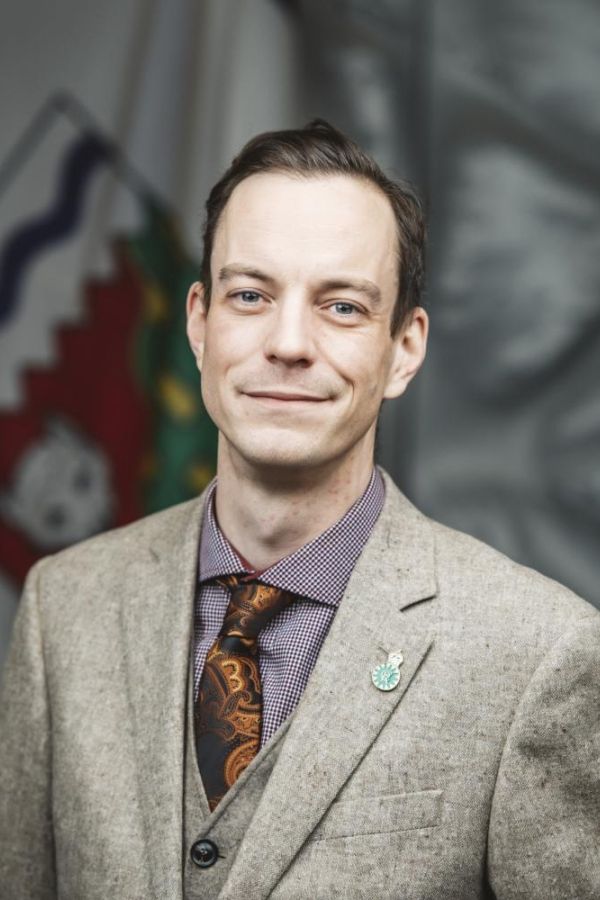
Thank you, Mr. Speaker. So Mr. Speaker, certainly as far as connecting businesses themselves to different workforce development funding tools, so accessing those wage subsidies that I spoke with earlier to the Member of the Sahtu, and accessing those training dollars that are available to employers that want to be able to retrain their staff. There are employers in the territory that are working to do on-the-job training for workers that are shifting from one work environment to another. And then the good news is, though, is a lot of people coming out of the mines have skill sets that they're able to take to these new roles. Some of those supports include things like communicating to my federal government counterparts how the federal procurement processes sometimes don't serve our end goals and also supporting the messaging coming out of industry who are also taking those messages themselves to the federal government. Thank you.

Speaker: MR. SPEAKER

Thank you, Minister of ITI. Final supplementary. Member for Monfwi.

Thank you, Mr. Speaker. Mr. Speaker, how is the department working with other departments and Indigenous governments to support the creation of new local industry to ensure communities can retain workers displaced by mine closure? Thank you.
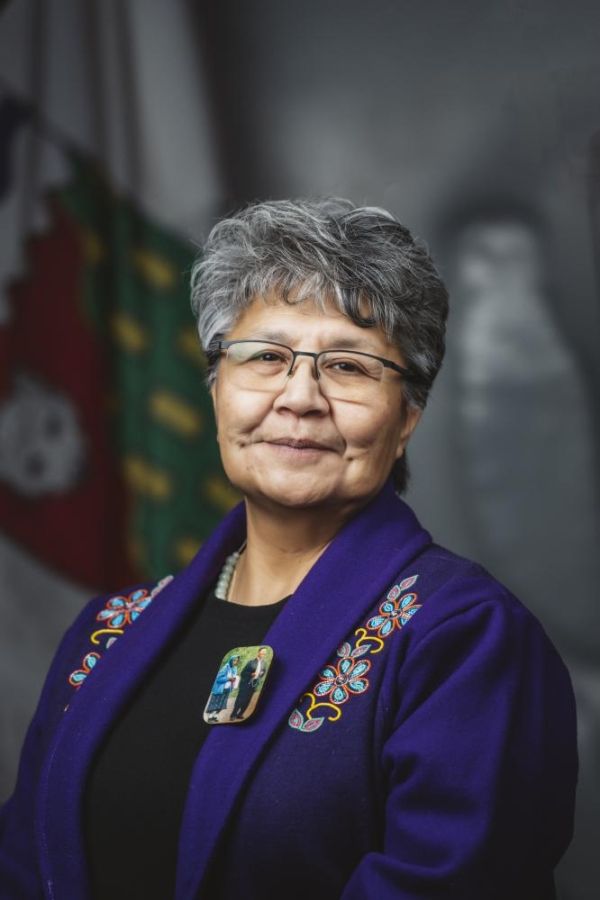
Thank you, Mr. Speaker. So Mr. Speaker, we are working both here in the NWT to make sure that people can remain employed here in the Northwest Territories. And so that's everything from participating in career fairs that bring together multiple employers that are looking, including the GNWT, that are looking to hire some of these workers that have been displaced. Some of them are looking to retire, so making sure that they have the support to understand, you know, what their rights look like from an employment standards perspective. And then some are looking to start up businesses and so making sure that they're connected with their regional coordinator if they're looking to pursue funding, for example like SEED funding or other funding sources from the GNWT. Thank you, Mr. Speaker.
Speaker: MR. SPEAKER

Thank you, Minister of ITI. Oral questions. Member from Tu Nedhe-Wiilideh.

Question 1125-20(1): Addictions and Wellness Programming

Thank you, Mr. Speaker. Mr. Speaker, just a follow-up on my Member's statement. Mr. Speaker, my question is for the Minister of health.

Does the Minister agree that the Northwest Territories currently lack a coordinated territorial-wide trauma healing strategy,a nd will her department commit to developing one that integrates Indigenous-led initiatives and community-based programs? Thank you, Mr. Speaker.

Speaker: MR. SPEAKER

Thank you, Member from Tu Nedhe-Wiilideh. Minister of Health and Social Services.

Thank you, Mr. Speaker. Mr. Speaker, myself as Minister, and I know the Premier, have had discussions during my time as a Cabinet Minister, and I think these discussions started prior to this government, working alongside and supporting the Endacho Healing Society on their work towards a trauma treatment centre in the Northwest Territories. And right now we are, you know, collaborating with them and the work that they are working to get -- you know, the funding that they need to do this through Indigenous Services Canada, and we will continue to work with them. Thank you, Mr. Speaker.

Thank you, Mr. Speaker. Mr. Speaker, does the Minister agree that establishing a dedicated, in-territory, Indigenous-led trauma healing lodge would strengthen the North's trauma continuum of care and reduce reliance on out-of-territory placement? Thank you, Mr. Speaker.