Debates of October 16, 2025 (day 63)
Thank you, Mr. Speaker. I'd like to recognize three pages from the Range Lake riding: Ava Fuentes, Hayden Purcka, and Matthew Sison. I had lunch with them and yourself, Mr. Speaker, and it was lovely. They reminded me of what the Pythagoras theorem is, which I had forgotten. So thank you for that. We don't use math as much perhaps we should, at least that complicated. But I can still read a budget.
Mr. Speaker, I'd also like to recognize Tom McLennan who is a Yellowknife city councillor. Thank you for taking an interest today, and thank you to the pages for their hard work for our sitting.
Thank you, Member from Range Lake. Recognition of visitors in the gallery. Member from Tu Nedhe-Wiilideh.
Thank you, Mr. Speaker. I wanted to recognize Matthew Unka who is also a page here. I want to also recognize all the translators that are here today. It's good to see you guys here again, and all the visitors in the gallery. Welcome. Mahsi.
Thank you, Member from Tu Nedhe-Wiilideh. Recognition of visitors in the gallery. Member from Frame Lake.
Thank you, Mr. Speaker. Mr. Speaker, I too would like to recognize counsellor Tom McLennan visiting from city council and from the Frame Lake riding, and also extend a special welcome to his father Sandy McLennan who is visiting Yellowknife. Thank you, Mr. Speaker.
Thank you, Member from Frame Lake. Recognition of visitors in the gallery. Member from Yellowknife Centre.
Thank you, Mr. Speaker. Through you, I'd like to recognize is Canaan MacDonald. Kenan is a page here, and I believe if I'm correct, from Mildred Hall as well. And at the same time, I'd also like to recognize the pages who are here from the Mildred Hall School. It's a great school, a community school. It's a school with a big heart. Thank you very much, Mr. Speaker.
Thank you, Member from Yellowknife Centre. Recognition of visitors in the gallery.
If we've missed anyone in the gallery today, welcome to your chambers. I hope you're enjoying the proceeding. It's always nice to see people in here, and I thank you for allowing us the privilege of representing the people of the Northwest Territories.
Oral Questions
Question 763-20(1): 2023 Wildfire Emergency Response After-Action Review
Thank you, Mr. Speaker. My questions today will begin for the Minister of Municipal and Community Affairs. So the after-action review emphasized the need to put standards for training and emergency preparedness into legislation and to establish detailed regulations, whereas currently we don't have it, regulations. To quote the review, regulations bring it to a concrete actionable level adding the clarity needed for partners to do their job. Provinces and territories with regulations have better compliance and enforcement of their act and demonstrated more effective emergency management plans. Now, the government in its response said it would consider maybe drafting new regulations, but that would be up to the new working group.
Can the Minister explain why can't the government commit at least to developing new regulations with defined standards while consulting with partners on the details? Thank you, Mr. Speaker.
Thank you, Member from Yellowknife North. Minister of Municipal and Community Affairs.
Thank you, Mr. Speaker. So I would first off say that we're not going to not do that. We are committed to, you know, making regulations. However, we didn't want to put the cart before the horse, so updating the Emergency Management Act, updating the legislation, and then having to go back and fix it after an after-action review was completed, the third party independent after-action review, would, again, just cause more confusion. So we're not saying we're not going to do this. It's we have to actually sit down and look exactly what we need to do. You know, most times this wouldn't include Indigenous governments; however, this government has committed to working with Indigenous governments to implement this as part of our review and also put it into some of our -- you know, some of our plans, some of our legislation, some of the work that we have to do. So it's -- the process is that it's not going to be done; it's we're starting to work on it now, and hopefully it will all flesh out over time there. Thank you, Mr. Speaker.
Thank you, Mr. Speaker. So the review, one of it's specific recommendations is that we amend our legislation to describe how a territorial state of emergency interfaces with a state of local emergency, noting that the transfer of authority away from and back to the city of Yellowknife in 2023 was unclear to everyone involved as well as which authority actually decides when to evacuate. So will the Minister commit to changing our Emergency Management Act to make these unclear authorities actually clear to everyone? Thank you, Mr. Speaker.
Thank you, Mr. Speaker. And I guess that's the good thing about this third party independent after-action review, is that it brought out all these things. It brought out the -- you know, some of the issues that we were having, including this one that was raised. Yes, we are looking at making these changes in the Emergency Management Act. This is all part of the after-action review. You know, the whole point of this is clarifying our roles and responsibilities. You know, I guess after that, in 2023, having been part of it, you know, I understand the confusion and everything else that was there, and it definitely is a trying, difficult time; however, the role behind this is learning from it, and that's what this government is doing right now, is we all are following the after-action review, we're reviewing the Emergency Management Act, and we're going to implement our clearer roles even in the working with like, the city of Yellowknife, for example, so. Thank you, Mr. Speaker.
Thank you, Minister of Municipal and Community Affairs. Final supplementary. Member from Yellowknife North.
Thank you, Mr. Speaker. So I'm hearing from the Minister that the government is going to move forward with the recommendations of the after-action review, yet the government's written response was that it would take these ideas into consideration as it consults with the new working groups, etcetera.
Can the Minister clarify is the government going to wait to see what is the outcome of these discussions with working groups, or is the government committed now to actually implement these recommendations around new regulations and legislative change? Thank you, Mr. Speaker.
Thank you, Mr. Speaker. So out of the 35 recommendations, there was, you know, one that we really didn't agree with. You know, the rest of them were partially agreed. And part of this is not just that we weren't going to do this; it was the fact that we need to see what we need to do. We can't just update the Emergency Management Act, like I said earlier, and update all the legislation to find out that's not what we needed to do. In fact, going through the after-action review has obviously highlighted some of the things that we need to do and part of the process of updating the Emergency Management Act and the legislation and how we work with communities. So the after-action review isn't being ignored; it's being implemented in a way that's going to be working with everybody, the communities, the municipalities, you know, the Indigenous governments, so that all the concerns are taking into place and we're able to encompass it in all our responses of the 35 recommendations, so. Thank you, Mr. Speaker.
Thank you, Minister of Municipal and Community Affairs. Oral questions. Member from Great Slave.
Question 764-20(1): 2023 Wildfire Emergency Response After-Action Review
Thank you, Mr. Speaker. I will join the MACA pile-on.
Mr. Speaker, I am concerned that while the GNWT says they're learning from missteps and disasters in evacuations, we continue to see elders and folks with disabilities and those who support them struggle when they're displaced. Equity of support means that for some folks we need to do more. So, Mr. Speaker, can the Minister tell me what is the GNWT doing to improve how we provide compassionate support to elders and folks with disabilities before, during, and after emergencies, especially evacuations. Thank you, Mr. Speaker.
Thank you, Member from Great Slave. Minister of Municipal and Community Affairs.
Thank you, Mr. Speaker. So the government has been working with communities to identify residents in the community that require extra assistance in case of an emergency. That being said, the government may not be fully involved at that time, especially if it's a local emergency. Even in that scenario, the government may still be involved locally in the fact of helping, you know, assist somebody out of an apartment building or whatever that may have been evacuated. So the process is updating. We're learning from the things that have happened. You know, we're -- I will have to say even this year, I've noticed a big change in how we are working with other departments within the government as part of the whole emergency management scene and dealing with elders, persons with disabilities, and people that require extra assistance.
So the 2023 wildfire season and the after-action review has opened a lot of eyes. We're working with NGOs to, you know, also get some assistance for people with disabilities, for, you know, whoever may need some extra assistance. So we're continually working on this and as we go through the after-action review and update everything, I'm hopeful and I'm pretty certain that a lot of these concerns will be addressed. Thank you, Mr. Speaker.
Thank you, Mr. Speaker. Mr. Speaker, this past year, we saw elders and folks with disabilities getting mutual aid support from community members and not the GNWT. However, I'm glad that the GNWT agrees that emergency social service plans are required at community and NGO level but not every elder or person with a disability is within those structures. So will standard operating procedures be developed and demoed with NWT communities, the regional and territorial EMOs, and the external jurisdictions to the south, to prioritize folks with more complex needs in evacuations, including those with disabilities and our elders? Thank you, Mr. Speaker.
Yes, thank you, Mr. Speaker. So when it comes down to the training and the development, working with the communities at the all the levels, the local level, the regional level, you know, we're working with the community governments to make sure that the things are in place to help out these residents. A lot of the problems that we've seen even just recently are not really related to the government. It's related to circumventing the process, and it's been a very frustrating thing for me to even see because we have the resources in place, we have the opportunities in place, to assist with the residents that require those needs. So for myself, you know, with the resources that are required, the government is working hard to make sure that we're covering all that off. I know the EIA is working with ESS to build a framework that outlines the roles and responsibilities in dealing with these types of scenarios. Thank you.
Thank you, Minister of Municipal and Community Affairs. Final supplementary. Member from Great Slave.
Thank you, Mr. Speaker. Mr. Speaker, I want to reiterate my colleague from Deh Cho's September press release that stated that safety alone is not a sufficient measure. A constituent's well-being in regards to this year's evacuation of Fort Providence. Since the GNWT has elected not to create a standalone emergency management agency, how does the GNWT expect to have dedicated capacity to work through ongoing policy development and identify operational needs on an ongoing basis so as to ensure the dignity of residents in exceedingly difficult situations like evacuations? Thank you, Mr. Speaker.
Thank you, Mr. Speaker. We have the staff within MACA to deal with this type of stuff. We have the staff that are trained in emergency management. We have the staff that are able to, you know, build the plans and also work with the legislation. I'm quite confident that the department is able to manage the types of emergencies that we've been dealt with the last little while. I know there's also concerns about the capacity. The Government of the Northwest Territories have -- it's actually even still advertised -- have requested for GNWT employees who wish to step up. There are trained GNWT employees who in their regular line of work may not be involved in emergency management, but they're also volunteer firefighters, they're also something else in a different community, but they're willing on stepping up and helping out the GNWT during those times. So we have those surge capacity lists that are available for the government to use in the time of need. So is the government doing everything they can to work during emergencies and emergency evacuations and local emergencies? I believe we are, and we'll continue to improve. Thank you, Mr. Speaker.
Thank you, Minister of Municipal and Community Affairs. Oral questions. Member from Range Lake.
Question 765-20(1): Funding of the NWT Society for the Prevention of Cruelty to Animals
Thank you, Mr. Speaker. Mr. Speaker, every time the SPCA comes up in the context of funding and the services they provide for the community, I see an overwhelming tide of support from my constituents and from across the Northwest Territories. There was a news story just yesterday about dire funding straits for the SPCA. This is a matter that's been -- I've risen in this House, I've risen in committee. It's certainly something that's of mind to Northerners.
I'd like to ask the Premier why the SPCA is not considered a critical service as it relates to funding NGOs given the important work they do across the territory for all of our communities? Thank you.
Thank you, Member from Range Lake. Mr. Premier.
Thank you, Mr. Speaker. I very much appreciate the work of the SPCA. I've had pets most of my life and, you know, when there's an emergency, I know that the trauma of being separated from your pet. So the work that they have done over the years is -- you know, is very important. What we are doing as a government is looking at the services that we provide, the services that we would have to provide if other service providers didn't do them. And so what we're focusing on now as we strengthen our relationship with the NGOs is those types of services, the services that if that NGO was to stop providing those services, such as the homeless shelter, the GNWT would have to pick up that slack and do that work. And so that is the -- those are the area that we are currently focusing on right now. Thank you.
Thank you, Mr. Speaker. Well, Mr. Speaker, this summer Yellowknife's down to one vet, which means for pet owners, there's one vet in the Northwest Territories, apart from people who fly in to do work, largely brought in by the SPCA. There's some vets who work for ECC, I believe, who do wildlife work. So is the Premier offering to use our veterinary technical experts in the department to offshore this should the SPCA fold its doors because it can't pay the bills and they have no more funding to operate these essential services? Because I'm not hearing any other solutions. Thank you.
Thank you, Member from Range Lake. It's second line of questioning. Can you come back to -- I'll put you on the list. That was very much different than your original line of questioning. Thank you.
Oral questions. Member from Yellowknife Centre.
Question 766-20(1): 2023 Wildfire Emergency Response After-Action Review
Thank you, Mr. Speaker. Mr. Speaker, I'll start off by saying I heard the Minister of MACA's response in -- to the question provided by the Member for Great Slave, and I kind of wonder if the Minister has had the opportunity to read the fullness of the report and recommendations. And I'll let him answer that. Because recommendation number 4 I have says, very specifically, it says to create one dedicated emergency management agency for the NWT.
So my question specifically, ultimately boils down to, is what analysis did the Department of Municipal and Community Affairs do to create this decision to ignore the recommendation provided by TSI, who is the gold standard in this industry? Thank you.
Thank you, Member from Yellowknife Centre. Minister of Municipal and Community Affairs.
Thank you, Mr. Speaker. So when it comes down to having our own department essentially for emergency management, we have the services available, we have the opportunity to do emergency management, operate emergencies under our current operating system. And what I would say is when I first ran for MLA, one of the things that I was saying through the whole thing is, you know, I believe in fine tuning in what we have. I believe in fine tuning on what we do. And this is exactly my point is that we have the staff, we have the personnel, we have the ability, and we've also had to, you know, also hire essentially more staff with emergencies. You know, we have regional emergency management coordinators throughout the North right now. You know, it's do we want to have a standalone department? And we could hire a deputy minister, we could hire an assistant deputy Minister, but the government felt that we can manage it within our -- sorry, the department figured and we realized we could manage it how we operate right now. I believe that we can do it. You know, my background in emergency services, I may not be like TSI who contracts people in to come in and do these things like myself, but the reality is is this can be done the way we operate now. And if we're all up on quotes, I will steal a quote from the associate professor of the disaster and emergency management of York University said a standalone agency doesn't automatically solve all the issues. There's ways that could be helped by a stronger presence; for instance, of an independent territorial emergency management organization standalone as an agency, he said. So the reality is we can do this with the way we're doing it now with the trained and educated staff that we have now. Thank you, Mr. Speaker.

Thank you, Mr. Speaker. Mr. Speaker, I didn't hear any analysis. I heard we did an internal, and if the Minister wishes to cherry pick quotes -- which is fine. I mean, it's the nature of the business -- I would hope he'd also spend time on the CBC article where they had two experts say this is the direction this problem is going, Mr. Speaker.
Mr. Speaker, I'd like to know how much a dedicated agency would cost. And I'm kind of hoping the Minister would have spent a little time in that 15-minute answer -- or it felt like 15 minutes -- to tell me how much it would cost given the fact that the last major emergency cost this government over $330 million. Thank you.
Thank you, Member from Yellowknife Centre. That could have been a written question. But I'll turn to the Minister of Municipal and Community Affairs.
Thank you, Mr. Speaker. Yes, it's nice to -- for the Member to bring out that article because that's actually where that quote came from, so thank you.
I also will add the department has not specifically pulled out numbers on what it would cost to stand up a department for operating emergencies; however, we wouldn't know what that looks like. If people were around back in the '80s or early '90s, people would remember the Department of Public Safety where Justice was under, fire marshal's office was under, and that's gone. We're now operating the way we operate. So typical government, vicious cycle, build another department again that was already existing. So I don't know. We can find out. I'll ask the department to run some numbers and get back to the Member. Thank you, Mr. Speaker.
Thank you, Minister of Municipal and Community Affairs. Final supplementary. Member from Yellowknife Centre.
Thank you, Mr. Speaker. And I appreciate the guidance you provide in the House.
Mr. Speaker, that's the creativity I'm asking for, and that's where I was going with my third question, which is, you know, I'm concerned that that analysis wasn't done. The Minister confirmed it and said he would do it. So thank you for clarifying that.
Mr. Speaker, my final question is built around the decision of no. So who did the department consult with to come up with this final determination. Did they speak to Indigenous governments? Did they speak to other type of territorial leadership? Did they talk to MLAs? Did they write committee for their opinion? I'm trying to find out did they make this sole decision in isolation when they keep sitting around the table saying we're the best, no you're the best. I want to know what independent advice they had that said this is the best idea. Thank you.
Thank you, Mr. Speaker. With the fine detail that he likes or would want, I will get back to him with that information. Thank you, Mr. Speaker.
Thank you, Minister of Municipal and Community Affairs. Colleagues.
Oral questions. Member from Tu Nedhe-Wiilideh.
Question 767-20(1): Community Ambulance Services
Thank you, Mr. Speaker. Mr. Speaker, in the last year I raised the issue in the House about emergency medical transportation for small communities and services they provide to help save lives for our members in our community. I spoke to the Minister of MACA and health in collaboration to look for a solution. I have a question for the Minister of Community affairs, and my question is will the Minister of Municipal and Community Affairs commit to a plan establishing life-saving paramedic and drone ambulance services in the community of Lutselk'e and Fort Resolution? Thank you, Mr. Speaker.
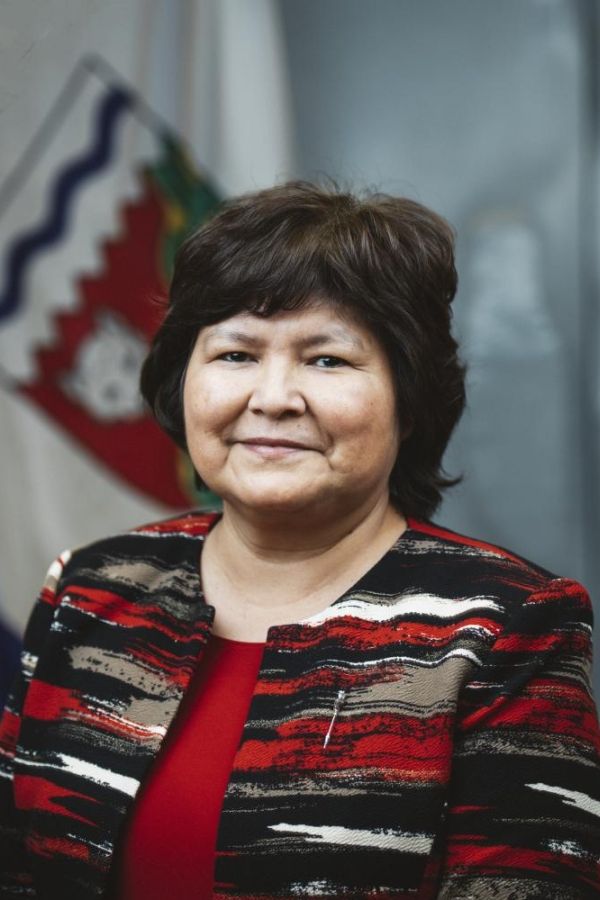
Thank you, Member from Tu Nedhe-Wiilideh. Minister of Municipal and Community Affairs.
Thank you, Mr. Speaker. I believe it was this spring I had similar lines of questioning, and at that time I pretty much kind of laid out what the plan was going forward. The reality is I think it's important that we really work with the communities on what's needed in the communities. And that's still the continued goal. We are, the department of health and the department of MACA, are working together to come up with plans for the communities, and Fort Res is one of the communities in our mind when we're talking about this, is having something in place to help respond in the communities to emergencies. And that's -- there is no full plan involved right now or full plan in place right now, but we are working on something to go, to move forward with that. Thank you, Mr. Speaker.