Debates of March 3, 2026 (day 87)
Thank you, Mr. Speaker. I can recall when the community of Aklavik dominated the sport of soccer and represented the NWT at the Arctic Winter Games. More than once, it brought home the gold ulu. There was -- this was a community stronghold on sports and recreation where the younger generation wanted to be the next in line to go to the Arctic Winter Games, but with the changes in tryouts, there's no chance for them to live their dream of going to the Arctic Winter Games. My question to Minister of MACA is can the Minister give me some insight on why the tryouts for the Arctic Winter Games is being held in Yellowknife and not in the other regions throughout the Northwest Territories? Thank you, Mr. Speaker.
Thank you, Mackenzie Delta. Minister of Municipal and Community Affairs.
Thank you, Mr. Speaker. Yeah, some difficult decisions had to be made in order to cut costs. You know, with the times, the way it is with travel, you know, the cost of travel is extremely high. In order to move people around and, you know, during tryouts, there's anywhere up to 700 athletes and participants that we're moving around to do the tryouts. And sometimes it's just not easy, and it's very expensive. And we also have to adapt to getting these athletes to the Arctic Winter Games afterwards. So, you know, some difficult decisions had to be made and try to save some money in order to do these tryouts. And these -- unfortunately, these tryouts were -- the suggestion was to hold these tryouts this year in one regional -- or one spot, one regional spot, and that was Yellowknife, in order to try to cut down some of those costs. You know, and I've actually asked the department to work with the multi-sport games group to look for other solutions for the next time around and come up with some ideas. So thank you, Mr. Speaker.
Thank you, Mr. Speaker. It's very disheartening to hear that financial restraint has taken over the well-being of a community or a region. It should be the other way around.
Will the department look at reinstating community and regional tryouts within each of the communities and regions throughout the Northwest Territories? Thank you, Mr. Speaker.
Thank you, Mr. Speaker. Yeah, fortunately, I agree -- I mean, I agree with the Member. But, unfortunately, you know, the way the world works and the way these budgets are working lately, it's -- we're all fighting for a piece of the pie. And, you know, we were able to secure some funding for sports this year which was -- you know, in the next three years, which was good. Help some stabilization of the multi-sport games. You know, and that's a positive step forward. However, again, we're -- you know, we're fighting -- I am fighting with health. I am fighting with infrastructure. I am fighting with everybody to try to get some money and move athletes around, and this is the growing trend right now. So on top of that, the cost of everything is going up, the cost of airfare, the cost of travel, the cost of accommodations. Just seems to never end, Mr. Speaker. So, you know, I am committed to continue to work to try to drive down the cost and make sure that our athletes in the smaller communities are able to experience the Arctic Winter Games. Thank you, Mr. Speaker.

Thank you, Minister of Municipal and Community Affairs. Final supplementary. Member from Mackenzie Delta.
Thank you, Mr. Speaker. The well-being of our residents in the smaller communities is important, and sports and recreation is very important in our smaller communities too. We don't have the big infrastructures that bigger centres have. So, you know, financial resources, will the Minister responsible look at putting financial resources into sports and recreation within the smaller communities so we can develop athletes, and the well-being of our residents is paramount to this government. Thank you, Mr. Speaker.
Thank you, Mr. Speaker. Again, I do not disagree with the Member. And, again, the reality is is we're all fighting from the same pot for some of these funds, and that's the unfortunate reality. I would love to direct funds for every community to have dedicated, you know, rec coordinators, rec centres, whatever. But at the same time, it's -- you know, I am trying to -- you know, we're fighting against other departments for the funds, and that's the reality here. But it also takes a community. And I have to be honest here. It's not just about money. You know, I look at when I was younger, you could guarantee that there was a softball game playing and just kids playing around and enjoying time in the ball field and that type of stuff. And you don't see that these days. And there's many factors behind it, not just funds. It also takes a community. So thank you, Mr. Speaker.
Thank you, Minister of Municipal and Community Affairs. Oral questions. Member from Yellowknife North.
Question 1142-20(1): Private Security Contractors
Thank you, Mr. Speaker. So in my Member's statement today, I spoke about the fact that private security firms are unregulated in the NWT, meaning there are no territorial standards or licensing for security guards; however, many agencies and departments of the GNWT do currently contract private security to protect government-run operations and staff and clients, everything from public housing units to the day shelter, the hospital, counselling services, etcetera. So my first set of questions are for the Premier.
Does the GNWT currently have a policy that requires all government contracts with private security services to mandate trauma-informed training, training in cross-cultural awareness, and de-escalation techniques? Thank you, Mr. Speaker.
Thank you, Member from Yellowknife North. Mr. Premier.
Thank you, Mr. Speaker. I am not aware of any GNWT-wide policy that does such things; however, I did have a look at what RFPs are out there right now, and I see an RFP for security guard services, and in that it requires that all employees performing professional security guard services must have cultural sensitivity training, such as but not limited to, the GNWT Living Well Together, and it goes on.
And it also states that proponents shall be responsible for response and management of all physical and verbal violence within the facilities using approved crisis prevention, institute non-violent crisis intervention techniques.
So while there is not a government-wide policy, departments are putting these provisions into the RFPs that govern the contract with the security guard providers. Thank you, Mr. Speaker.
Thank you, Mr. Speaker. So that helps to start to eliminate what the current practices may be. I am not sure how consistently they're applied, but.
Secondly, does the GNWT currently have any policy or standard regarding what would be the limits on appropriate use of force or restraint by contracted private security services such as what weapons or equipment security guards should be allowed to use and whether they should be handcuffing or arresting people. Thank you, Mr. Speaker.
Thank you, Mr. Speaker. So security guards, as was mentioned, are unregulated so they are private citizens. And so the same rules that would govern you or I when we're out in public would govern security guards. So the Criminal Code is the legislation I would look to for that. There are provisions in the Criminal Code allowing for a citizen's arrest and those allow for reasonable force to be used, as well as detention. So that is -- that's in the federal realm. That's in the courts and, you know, any type of force that is used would be tested against that standard. Thank you, Mr. Speaker.
Thank you, Mr. Premier. Final supplementary. Member from Yellowknife North.
Okay. And so just following up on that, then, can the Premier then clarify, or make it crystal clear, does the GNWT specify whether or not its private security contractors should or should not be conducting a citizen's arrests or handcuffing people, or is that left completely up to, you know, the individual or the private security firm that we're contracting? Thank you, Mr. Speaker.
Thank you, Mr. Speaker. I don't see it in the RFP here. I believe I saw something in there so I don't have the information at hand, but this is a publicly available document that speaks about the expectations for how security guards will behave in environments where they're providing their services. There is an expectation that if there is the need to physically detain someone to protect the staff, protect the other residents at a facility or patients in a health centre, that that would be within the scope of the duties of the security guard, all while remaining within the scope of the -- or ensuring that what is done is what's allowed under the Criminal Code. If there are concerns with a security guard provider about the behaviour of staff and how they're exercising their duties, then that's a conversation to be had between the proponent and the government who holds that contract. Thank you, Mr. Speaker.
Oral questions. Member from Inuvik Boot Lake.
Question 1143-20(1): Liquefied Natural Gas Development
Thank you, Mr. Speaker. Following up on my Member's statement today regarding our strategic energy plan, I have a question for the Premier.
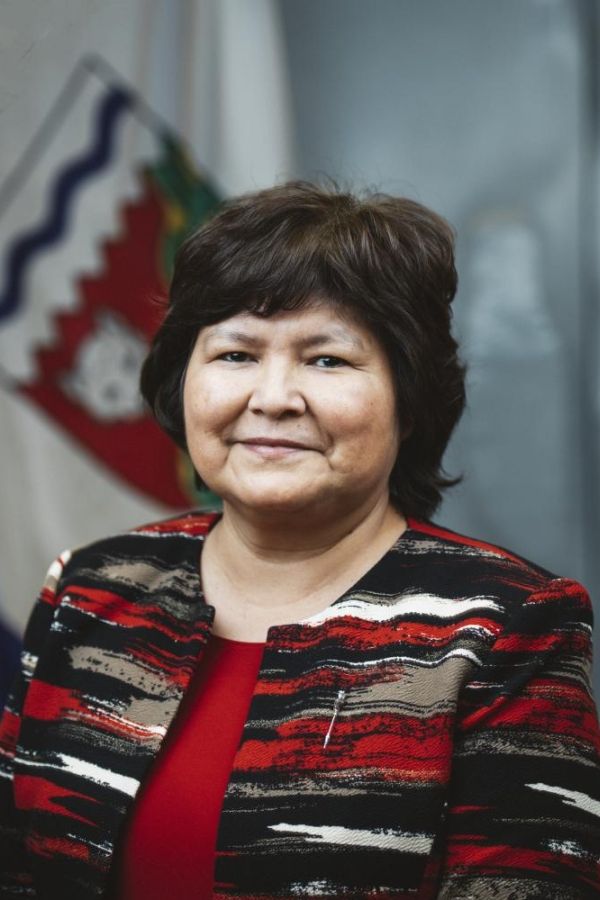
If I can get an update on the re-engagement with the Inuvialuit Regional Corporation on the M18 project and specifically around LNG and if there's been any conversations around how we can work together to move the development and export of LNG out of the Beaufort Delta. Thank you.
Thank you, Member from Inuvik Boot Lake. Mr. Premier.
Thank you, Mr. Speaker. Over the past number of years, those discussions have largely been confined to the -- at the officials' level, but recently we have started having conversations at the elected officials level about LNG and the Inuvialuit's -- how we can work together to advance projects that the Inuvialuit might want to see, how we can work together to attract investors and industry if that's the desire. And so we are starting those conversations now. We had representatives from IRC here last week, and I raised this subject because it is of great interest to myself as well as, of course, the Member, and I think everyone in the territory should be interested in this because it is such a massive opportunity for the people of the Beaufort Delta and the people of the territory. Thank you, Mr. Speaker.
Thank you, Mr. Speaker, and thank you for that. And, yes, indeed, it is a massive opportunity. I know the Premier has spoken previously, and we have talked about in this House the potential for working groups. I wonder, as part of the strategic energy plans, specifically again to the Beaufort Delta region, is there any interest in -- while working with the strategic energy plan, in forming a working group that may include MLA participation as well, regular MLA participation, and how we can further this development, including reaching out to industry. Thank you.
Thank you, Mr. Speaker. I don't have that level of detail, and I have to admit this is more in the Minister of ITI's realm. That being said, if the Member would like, I would be happy to invite him to sit down with officials and have a discussion so we can get some in-depth background information and, you know, provide his comments on what he would like to see going forward. I'd be happy to do that because I know how interested the Member is, and I am sure he'd provide some valuable insight. Thank you.
Thank you, Mr. Premier. Final supplementary. Oral questions. Member for Monfwi.
Question 1144-20(1): Establishment of Tlicho Administrative Region
Thank you, Mr. Speaker. Mr. Speaker, Behchoko is the largest Dene community in the NWT. All four communities - Whati, Gameti, Wekweeti, and Behchoko - the majority of the people are Tlicho people who speak fluently in Tlicho language. With that in mind, Mr. Speaker, my questions are for the Minister of Finance. Can the Minister clearly explain what is preventing the establishment of a dedicated Tlicho administrative region from moving forward at this time? Thank you.
Thank you, Member for Monfwi. Mr. Premier.
Thank you, Mr. Speaker. I will take these questions as this does relate directly to ongoing discussions with an Indigenous government. We have a very strong relationship with the Tlicho government. We have a bilateral agreement. And the creation of a Tlicho administrative region is something that is a live discussion. We have discussed it at the elected officials level, at our bilateral meeting a couple years ago. There have been ongoing discussions at the officials level. We are working to get a better understanding of what the Tlicho government would like to see, what areas they're interested in, what information they would like. And so there's a dialogue going on right now, and I don't want to preempt that by saying we're just going to create an entire region, which is going to be quite a bit of work administratively and will take our efforts off of doing the other work that we're trying to do right now to advance government and for the benefit of the people of the Northwest Territories. So it's an active discussion with the Tlicho government, and we are committed to continuing to advance that discussion. Thank you, Mr. Speaker.
okay. Can the Minister outline the process and criteria government uses when recognizing or establishing an administrative region and confirm whether that same process is being applied in this case? Thank you.
Thank you, Mr. Speaker. I'd have to go look through the archives to see if there is such a thing. But as I think you all know, there is no consistent administrative region of the GNWT. Depending on the department, the borders are different. The Naka and education, culture and employment, infrastructure, they all have different borders for the administrative regions. And so we don't have a process to do this. It's not something that is done very often. And so I guess that's the answer, that there is no process right now. Thank you, Mr. Speaker.
Thank you, Mr. Premier. Final supplementary. Member from Monfwi.
When we do terms of reference and working group, it's going to take more than a couple of years to get the region. So I just want to ask the Minister, will the Minister commit to advancing and expediting the establishment of a separate and distinct Tlicho administrative region during the life of this Assembly? Thank you.
Thank you, Mr. Speaker. I am committed to working with the Tlicho government and advancing a Tlicho administrative region at a pace that both of our governments can handle while we still continue to deliver the programs and services that we need to for our respective citizens. Thank you, Mr. Speaker.
Thank you, Mr. Premier. Colleagues, realizing that we've been going over two hours, we're going to take a brief break as I have a number of Members still on order to ask questions.
---SHORT RECESS
Question 1145-20(1): Review of Intergovernmental Agreement on Lands and Resources Management
Colleagues, oral questions. Member from Frame Lake.
Thank you, Mr. Speaker. I am going to continue the pile-on of the Premier today. I promise we did not plan this in our House planning.
Mr. Speaker, it's noted in the 2026-2027 business plan update that EIA will be coordinating the seven-year review of the NWT intergovernmental agreement on lands and resources management. Can the Premier speak to how process timelines will be addressed during this review? Thank you.
Thank you, Member from Frame Lake. Mr. Premier.
Thank you, Mr. Speaker. So the review is going to look at the governance system, how well is our governance system functioning, examining the period from signing of devolution until 2023. We're going to look at what works well, what's been working well, what doesn't work well, what lessons have been learned, are the current processes sufficient, in particular in terms of how we deal with roadblocks when we run into roadblocks, are we letting them linger too long at the working group without elevating them up to the officials or the political level. So it's definitely -- we're looking at the entire operations, how efficient it's been, how effective it's been. It's really the first big review. It's a seven-year review that was delayed a couple years, so it really is the first big substantive review of devolution. We want to make sure we examine all of these serious issues. Thank you.
Thank you, Mr. Speaker. Mr. Speaker, I note in their 2023 report on the Forest Act, the Standing Committee on Economic Development and Environment made a number of recommendations related to the co-drafting process and how it relates to the public and committee. Can the Premier confirm these recommendations will be reviewed and addressed by the IGCS committee conducting the intergovernmental agreement review? Thank you.
Thank you, Mr. Speaker. The IGCS is not going to review itself, or the IGC. It's going to be put out to tender and so there will be a contractor contracted to do the review, and certainly we can bring that to their attention. Thank you, Mr. Speaker.
Thank you, Mr. Premier. Final supplementary. Member from Frame Lake.
Thank you, Mr. Speaker. I appreciate the commitment to bring it to the attention, and that's news to me. It's a bit different than what was communicated in the business plan, so I appreciate getting that news, and we'll be inquiring further about that as well.
Mr. Speaker, the standing committee also recommended that the co-drafting process needs additional resources to proceed efficiently. Will those recommendations be responded to by the government as part of the intergovernmental agreement review? Thank you.
Thank you, Mr. Speaker. So what will be looked at in the review is what I mentioned earlier, and I can see how the funding piece would play into that, but we are not waiting for a review to look at how we have Indigenous governments participate or how they're funded to participate in this process. Just the other day -- you know, it could have been yesterday, maybe the day before -- we were down at PDAC, the Prospectors and Developers Association of Canada's conference, the largest mining conference in the world, where the Minister of Environment and Climate Change signed a memorandum of understanding with the Minister of CIRNAC on our regulatory system. One of the goals of that MOU is to explore opportunities to align federal and territorial funding mechanisms to support the meaningful participation of Indigenous peoples and Northerners in impact assessment and regulatory processes. So that's only one of the objectives of the MOU. We're also looking at how we do everything. And so what the Member is asking about, that's already something that we're on top of. I will leave it there. Thanks, Mr. Speaker.
Thank you, Mr. Premier. Oral questions. Member for Yellowknife Centre.
Question 1146-20(1): Electoral Boundaries Commission Final Report
Thank you, Mr. Speaker. During today's Member's statement, I talked about the electoral boundaries report and the -- the commission's final report, that is. My question is actually to the Premier with respect to the -- we'll call it the final disposition of the report. So will the Premier be exercising a free vote in Cabinet so Cabinet Ministers can not only vote their conscience, as they say, or vote representative of their perspective? Thank you.
Thank you, Member from Yellowknife Centre. Mr. Premier.