Debates of March 3, 2026 (day 87)

Topics
Statements

Thank you. Seeing no further -- Yellowknife North.

Thank you, Madam Chair. So my first question, under the overall active positions -- I am not sure where else to ask this question, but on page 376. So the overall staffing for Housing NWT has gone up from a hundred positions last year to 134 positions this year. I know that Housing NWT took on the day shelter. And so does the extra 34 positions, is that all staff associated with the day shelter that were transferred from health, or are there any additional positions not associated with the day shelter? Thank you, Madam Chair.

I will go to the Minister of Housing NWT.

Thank you, Madam Chair. Housing NWT will take on the operations of the Yellowknife day shelter and also the sobering centre. So we're taking that on April 1st, and that includes 30 staffing positions for the two facilities. We're also -- we've added five positions for the new homelessness programs division. So five positions, which include a manager, advisor, an advisor in Hay River, an advisor in Inuvik, and also the director of homelessness programs. Thank you, Madam Chair.

Thank you. I will go back to the Member for Yellowknife North.

Thank you, Madam Chair. So thanks to the Minister for clarifying that. I wanted to turn to a few items in the business plan. So on page 12 of the business plan, it talks about how our funding agreement with the federal government, it's going to expire in March of 2028, and that's a pretty big deal, and that we need to seek a new and sustainable funding approach. The current agreement was struck in, I believe, 1997. That's a long time ago. But I think the assumption that someone had in the federal government was that over time we just wouldn't need public housing anymore, that this was just going to kind of decrease and then everyone would move off public housing and we wouldn't need funding for this anymore. And that has not been the case. And so the target in the business plan right now is to have a new agreement in place by October of 2027. Seems like a ways away, but it's coming up quick and it's the end of this Assembly. Can the Minister talk about the status of the negotiations with the federal government, if there are different stages to this, or do we just kind of keep trying and hope for the best, and then maybe suddenly one day we get a whole new agreement that is more sustainable? Thank you, Madam Chair.

Thank you. I will go to the Minister of Housing NWT.

Thank you, Madam Chair. With that social housing agreement that was signed in 1997 with CMHC, they funded the operations and maintenance of our public housing units up until 2038 but the one thing with that agreement was it's slowly declining year by year. And then the federal government, back in -- I think it was 2018 or 2019 signed a bilateral agreement with Housing NWT and the Government of Northwest Territories to supplement that social housing agreement that was signed back in 1997. So the bilateral agreement -- and that was through the national housing fund -- was signed and provided supplemental funds until 2028. So there are two key dates here. It's 2028 and then 2038. We're funded up to 2038 but the supplemental funding was 2028. And perhaps I can just ask our associate deputy minister Michael Saturnino just to provide some supplementary information for the Member. Thank you, Madam Chair.

Thank you. Associate deputy minister Saturnino.

Speaker: MR. MICHAEL SATURNINO

Thank you, Madam Chair. As the Minister mentioned, the current bilateral does expire in 2028 and as does the national housing strategy. So this is one of the significant topics being discussed at the FPT table is the future of the national housing strategy. Negotiations are top of mind for all provinces and territories, and so those discussions are beginning now. We're about two years out from that agreement ending, and I can confirm that every PT has communicated the importance of this bilateral agreement and the O&M funding to the federal government. So it's currently those discussions are ongoing. Thank you, Madam Chair.

Thank you. I will go return to the Member for Yellowknife North.

Thank you, Madam Chair. I do appreciate that additional detail and the distinction between the base sort of funding agreement and then the supplemental funding agreement. That's important for us to understand.

So the assistant -- or associate deputy minister mentioned the national housing strategy; however, the supplemental funding, it's bilateral. Does that mean that our bilateral agreement with the federal government is going to have to be the same as all the other bilaterals that all the other provinces and territories get, or are we at the same time making a case for the specific needs for the NWT to try to get sort of a different bilateral agreement than others are getting? Thank you, Madam Chair.

Thank you. I will go to the Minister of Housing NWT.

Thank you, Madam Chair. I think it's important when we are at the FPT table just to make the case for the North. We talk about remoteness. We talk about cost of repairing units. We talk about many of the communities that are spread out throughout the Northwest Territories and how getting to them and providing that repair and maintenance is so critical to the everyday operations of housing. So at the FPT table, we have all our partners at the table, including the provinces and the territories. And especially in the North, with our partners in Nunavut and Yukon, we always add the northern remote perspective to request additional funding through our bilateral agreements with the federal government. And perhaps Mr. Saturnino could just provide more information to the ongoing negotiations. Thank you, Madam Chair.

Associate deputy minister Saturnino.

Speaker: MR. MICHAEL SATURNINO

Thank you, Madam Chair. So to be clear, the bilateral is a product of the national housing strategy, so both are expiring at the same time. When we do engage with the federal government, of course, there's sort of align -- you attempt to align across jurisdictions but we do have our own unique needs in the NWT, and so we do present that case forward of what our needs are. They're very different than especially what the provinces would have. We also work pan-territorially with the other two territories. We're having active conversations with the other territories around needs in the North. They are unique. And I would also just comment, so those discussions and those negotiations are still ongoing.

One comment I would say is that the bilateral also is not just O&M. There's other aspects to it. We also get repair dollars from it. We get the Canada NWT national -- or the housing benefit from it as well. So there's a number of different components that make up the bilateral which comes from the national housing strategy. And those discussions are still ongoing. Thank you.

Thank you. I will go back to the Member for Yellowknife North.

Thank you, Madam Chair. So I have a different question now. One of the priorities in the business plan was to provide more supportive living options, and I know that there's some specific buildings going up and projects that are sort of transitional housing that, you know, are run by non-profits and have the wraparound supports. But I wonder what Housing NWT is doing to try to provide more intensive supports even within, quote-unquote, like normal public housing units or buildings. So maybe not the same level that an NGO would provide with sort of like a live-in centre but within, say, the -- when we have a whole building of public housing units, can we be doing more to, for example provide security, provide supports, do relationship building, just support tenants to ensure that they can be more successful in the existing public housing units? Thank you, Madam Chair.

Thank you. NWT Minister of housing.

Thank you, Madam Chair. A really important conversation because what we're facing at Housing NWT now is we're not only a provider of the actual unit itself; we're providing more social supports. And that's probably a big key to our success moving forward, is working with the tenants on an everyday basis to make them succeed. And I think back to the strategic renewal that was implemented in the 19th Assembly and it had people thinking about, like tenants within the public housing units, and how we can succeed. So those 42 recommendations were really important at the time to deliver on that. And with the work that we're doing over the next couple of years, President Kelly will provide more in-depth information on our wraparound supports -- or supportive living component. Thank you, Madam Chair.

Thank you. President Kelly.

Speaker: MS. ERIN KELLY

Thank you, Madam Chair. So we're really pleased that we've been able to work with the Yellowknife Housing Authority to put a pilot project in play at Aspen. So we have 18 tenants that have moved in. The security supports started today. There is a competition out right now for a tenant support navigator, which will be helping tenants within that building get some of the supports they need. I can definitely say that we have some university folks that are going to help us to monitor and evaluate this pilot, and we're looking at it as a model for other areas in housing as well.

Speaking of security supports, we do have an RFP out right now for security in Yellowknife and Inuvik, and we also have a security provider in Hay River. Thank you, Madam Chair.

Thank you. Next, I have a Member for Mackenzie Delta.

Thank you, Madam Chair. Giving some responsibilities back to the communities and the Indigenous governments, back to owning their own homes, running their own infrastructure within their communities, has the Housing NWT been looking into providing support to developers or Indigenous governments to incentivize building market housing and public housing, affordable rental units in smaller communities to expand options across the northern housing continuum? It's much needed, and some of the communities have more market housing than others, and some are limited. Is there something in that area that Housing NWT is looking at? Thank you, Madam Chair.

Thank you. I will go to the Minister of Housing NWT.

Thank you, Madam Chair. A good question. I think that the work we're doing is important work with our Indigenous governments and in our small communities because, again, we come in as a partner. We don't come in as the only purveyor of housing in the Northwest Territories. So interested in working, especially through the NWT Housing Forum. And Mr. Saturnino can provide more information with the forum itself and the relationships, especially with Indigenous governments. Thank you, Madam Chair.

Associate deputy minister Saturnino.

Speaker: MR. MICHAEL SATURNINO

Thank you, Madam Chair. So as the Minister mentioned, the NWT Housing Forum is a collective group of Indigenous governments and Housing NWT that comes together to discuss common housing concerns and issues, opportunities to share best practices and lessons learned. Definitely lots of productive conversations there. I would also say that we have a number of MOUs with Indigenous governments so where we're having bilateral conversations with Indigenous governments. And so, you know, we do have -- presently there's a small number of Indigenous governments that are talking about social housing, but most are talking about market housing, homeownership programs. And we are actively -- we actually do discuss those with Indigenous governments.

We also have a program, the community housing support initiative, that can provide some financial supports. So, for example, when Indigenous governments or other partners are looking at submitting applications for federal funding, getting some support from the federal -- or from the territorial government, and specifically Housing NWT, is a critical component. The federal government likes to see that support. They also like to see some investment. And so we also have that program available to support their efforts as well. Thank you.

Thank you. I will go to the Member for Mackenzie Delta.

Thank you, Madam Chair. Some of these vacant units in our communities, especially in my region there, they've been vacant a long time. They've been boarded up. On one street alone in my community, there's these units that are well over 50 years old and boarded up and been sitting there for a long time. But there's other units in the community with -- where people may have moved to another unit or for some other reason moved out of that unit, and I know for a fact in my community one of my residents passed away, and that's been over three years and that house is still vacant. And I am wondering how much authority does the local housing board have over the staff? Does the staff take their recommendations, or do they make their own decisions on how people are allocated? Because in another instance, there's two young men living in a four-bedroom house, and there's a growing family that's pleading with me to get another unit. My question is how much authority does these boards have over the staff? Do the staff have to take their recommendations and implement them, or it's just the board is just there for nothing. Thank you, Madam Chair.

Minister of Housing NWT.

Thank you, Madam Chair. I think it's important that we understand the structure with housing and housing authorities. We also have housing associations. So we have 24 of either an authority or an association across the Northwest Territories, and we sign community housing services agreements with either the association or the authority, and that outlines the terms and conditions of the authority itself, including either an advisory board or an authority board or an association board. So President Kelly can provide more information in terms of the authority itself and how much -- just responsibilities that authority would have and just talk a bit about some of these vacant units. Because this is something we've heard throughout, especially when we visit community or go into regions, that there's a lot of vacant units that are boarded up and owned by Housing Northwest Territories. So turn it over to President Kelly. Thank you, Madam Chair.

Thank you. President Kelly.

Speaker: MS. ERIN KELLY

Thank you, Madam Chair. With respect to allocations, they're based on a point system. So when a client comes in, they fill out an application and there's certain criteria that are in there, and they develop a point rating. So people who -- their allocations are based on the points from those applications. And I guess it's really important to note that people need to update their applications if they're waiting for public housing because as their circumstances change, it can adjust their points. So I recommend that if someone is waiting, that they're going and they're talking to the LHO on a regular basis, making sure that their application is up to date, so we can make sure that their points are correct and that they're on the list in the proper place.

Thank you. I will go to the Member for Mackenzie Delta.

Okay. The reason I am asking the questions about these boards is because a lot of these tenants, rather than going to these boards and seeking -- you know, asking them why -- you know, why am I not, you know, getting a -- moving up the waitlist or getting allocated a unit, instead of them going to those boards, because they feel the boards have no authority, they're coming to me. So they're -- rather than -- you know, if they can go to the boards and get an answer, maybe it might get resolved there. But they're coming to me and I am going to the Minister. So, you know, I don't know what's the purpose of these boards. I mean, I never asked you how to -- about any point system or anything. I asked what's the purpose of the boards if they're not -- their recommendations are not taken. Because you've got -- like I said, you got two young men living in a four-bedroom unit. There's something wrong there. And I believe I spoke to one of the board members, and they did bring it to the attention that these changes have to be made so they can accommodate larger families, but nothing's been done. And even if they move out, it'll take them about a year to prep that house for the next person.

Okay, I will go on to training and support workshops. Do you have -- are these annual workshops you have for the staff of the local housing authorities? Thank you, Madam Chair.


Thank you. I will go to the Minister of Housing NWT.

Yeah. With the LHO training, there was a question just asking if there's training available or the number of training events or -- just to clarify. Thank you, Madam Chair.
I will go back to the Member for Mackenzie Delta.

Thank you, Madam Chair. You got training and support workshops on page 379 for $254,000. Thank you, Madam Chair.

Thank you. I will go to the Minister of Housing NWT.

Thank you, Madam Chair. It just helps to know which page and what subject matter because we have notes related to each item. Mr. Saturnino will provide information regarding the training. Thank you, Madam Chair.
Associate deputy minister Saturnino.

Speaker: MR. MICHAEL SATURNINO

Thank you, Madam Chair. So as part of strategic renewal, we went out and engaged with various stakeholders, including LHOs, and definitely heard that there was a need for more training, more support for LHOs. So through strategic renewal, we did make a commitment to offer annual training. So we do offer a variety of different workshops, so some for LHO managers, tenant relations officers, maintenance staff as well. And usually, you know, these are LHOs from across the territory that come together and within those workshops, we would offer different training that would be specific to their -- to intified needs. And so that is happening on an annual basis. Thank you.
Thank you. I will go to the Member for Mackenzie Delta.

Okay, thank you, Madam Chair. One quick question. You know, are these workshops held in Yellowknife, or are they rotated? And, you know, we went -- our committee on social development went to Hay River last month, and we toured some of these units. I think that would be a good spot for one of these workshops, to show the local housing authority, the staff, the maintenance workers, like how much work that organization does because they take recommendations of their board. Thank you, Madam Chair.
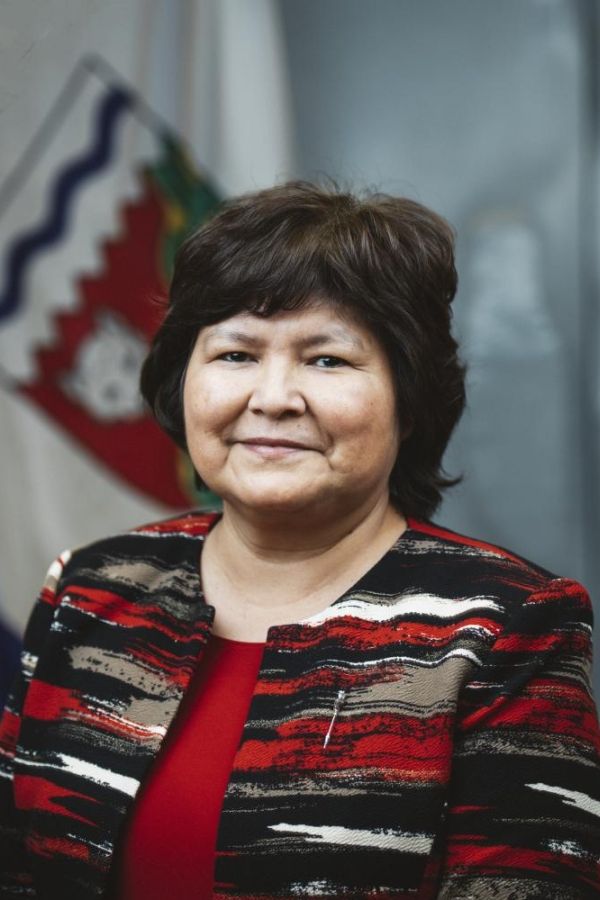
Thank you. I will go to Minister of Housing NWT.

Thank you, Madam Chair. President Kelly could provide more information to that. Thank you, Madam Chair.

President Kelly.

Speaker: MS. ERIN KELLY

Thank you, Madam Chair. They have been held in Yellowknife annually, but we have been looking at other locations for the exact reasons that the Member brought forward, having exposure to some of the things that are happening in different communities. And the other thing that we've done is we've had the Dene Wellness Warriors come in and do training with our LHO staff because some of the illegal activity, things that are occurring in units, it's not something that a lot of those folks are used to or have been trained for, so we're trying to expand that training as well. Thank you, Madam Chair.