Debates of March 4, 2026 (day 88)
Prayer or Reflection
Ministers’ Statements
Minister’s Statement 194-20(1): Preparedness for 2026 Wildfire Season
Mr. Speaker, as the 2026 wildfire season approaches, I would like to provide an update on our government's continued investments in wildfire preparedness and resilience across the Northwest Territories. Building wildfire resilience means investing in our communities so our people can live safely with wildfire and be ready for emergencies.
Over the past year, the government has continued to support FireSmart projects and a wide range of community-based wildfire preparedness initiatives across the Northwest Territories. This work provides an important foundation for protecting our communities and critical infrastructure. This work reflects a commitment to strengthening the coordination of territorial wildfire resources and local fire departments and ensuring communities are well equipped are well equipped and ready to protect people, homes, and critical infrastructure if threatened by wildfire.
Mr. Speaker, supporting community-led action remains central to our efforts. Through my discussions with leaders and frontline staff, it is clear that our partners share the goal of constant improvement which will strengthen wildfire prevention and the capabilities our communities have to respond.
With federal financial support, we invested in 11 FireSmart projects across the NWT. These investments supported wildfire mitigation, equipment purchases, expanded fuel reduction work, enhanced cross-training and planning activities, and they will help communities to be wildfire ready. We have invested in two additional structure protection trailers, bringing the territorial government's total capacity to six trailers, with the ability to protect nearly 200 homes simultaneously. These trailers will be pre-positioned based on wildfire threat assessments and provide additional tools to help protect communities. We are also looking at modular, air portable solutions to support protection efforts for remote communities that are not on the road network.
Mr. Speaker, over the winter, fire personnel have received a range of specialized training, and in the next few months we will once again begin annual training to ensure our frontline responders are fully prepared when the fire season starts.
Community wildfire protection plans are being reviewed and updated for all forested communities in the NWT. The first critical step is hazard and risk assessment work to inform upcoming fuel management projects in the communities. We are advancing interface response plans that detail how we will action a fire with our community partners when a community is threatened.
Mr. Speaker, taken together, these efforts reflect a sustained commitment to safer, more resilient communities in the face of a changing climate. We will continue to invest in our people, and we will continue to prepare so that Northerners are ready for emergencies and the things they care about are protected. Mahsi, Mr. Speaker.
Thank you, Minister of Environment and Climate Change. Ministers' statements. Minister responsible for Housing NWT.
Minister’s Statement 195-20(1): Territorial Housing Needs Assessment: Northwest Territories
Mr. Speaker, today I announce the completion and release of the Territorial Housing Needs Assessment. This report examines housing needs across the Northwest Territories, both now and into the future. It provides the foundation for collaborative action, evidence-based planning, and strong advocacy for increased housing investment across the NWT.
A territorial-wide assessment has not been completed for over 25 years. While Housing NWT has worked with several communities over the years to develop housing needs assessments through the community housing plans initiative, the NWT has not conducted a territorial-wide housing needs study since the year 2000. Completing this assessment addresses a significant gap and provides a detailed report for the whole NWT at a single point in time, allowing for coordinated support.
We must obtain federal investments to address the housing crisis in the NWT. This priority is embedded in the mandate that governs this Legislative Assembly. The completion of this needs assessment is an essential first step towards unlocking federal support. It includes the data and analysis needed for federal funding requests that will help all NWT communities address housing challenges and work toward achieving viable housing solutions throughout the territory.
Mr. Speaker, this report estimates that the NWT has a current need of between 1,700 and 2,700 homes. We will require an additional 771 to 1,030 new homes by 2044, depending on the population growth and projected changes in housing conditions. This does not include the approximately 1,500 units that are either already at the end of their service life or will be by 2044. This is a significant need and highlights the requirement for continued collaboration and investment.
We also know that housing is more than numbers; it is about people's homes. That is why we need to go beyond the statistical data and hear directly from community leaders and residents about the diverse challenges people face with their homes across the territory.
In the summer of 2025, Housing NWT completed extensive engagement with Indigenous and community governments in 20 communities to better understand their unique housing needs. More than 450 residents from almost every community also shared their views through an online survey. This meaningful engagement with community leaders and community input was central to making this report as complete and accurate as possible.
Mr. Speaker, the GNWT and Housing NWT recognize that the housing crisis cannot be solved alone. The Territorial Housing Needs Assessment is an important step in this collaborative process. We look forward to continuing to work with Indigenous governments and community governments to ensure housing solutions are reflective of regional and community needs. This report is not the end; it is a basis for more evidence-based housing solutions. I am encouraged by this progress, and I believe this is an important step toward building stronger communities and improving housing for everyone in the territory. Quyananni, Mr. Speaker.
Thank you, Minister responsible for Housing NWT. Ministers' statements. Minister from Municipal and Community Affairs.
Minister’s Statement 196-20(1): Planning in Flood Hazard Areas Guide
Mr. Speaker, I rise today to recognize the ongoing work to ensure community governments have access to resources that can better help them to build resilience against flooding. Last week, the Government of the Northwest Territories launched the Planning in Flood Hazard Areas Guide and released new flood hazard and inundation maps for five communities in the territory. Flood maps have been completed for Aklavik, Fort Simpson, Hay River, K'atlodeeche First Nation, and Nahanni Butte. Flood maps for Fort Good Hope, Fort Liard, Fort McPherson, Jean Marie River, and Tulita will be completed by 2028. The maps were developed with funding from the Government of Canada's flood hazard identification and mapping program.
Mr. Speaker, one of the best ways to prepare for flooding is through community planning. Community governments should proactively plan for flooding, flood mitigation, and flood proofing. While many communities in the Northwest Territories prepare for the possibility of flooding every year, climate change has altered the frequency and severity of flooding. That is why we created the planning guide to assist community governments with incorporating flood hazard maps into community planning and development.
I encourage community governments to incorporate the new flood hazard maps into their planning and development decisions. This will ensure communities are better prepared and more resilient to flooding. It will also make community governments better aligned with the Government of Canada's disaster financial assistance requirements.
Flood maps support emergency preparedness and the GNWT's commitment to ensuring safe communities for Northerners. These maps show the largest historical flood a community has experienced since the water levels were recorded, and they are useful when community governments update their community emergency plans or participate in tabletop exercises to practice their emergency response.
The Planning in Flood Hazard Areas Guide and the advancement of flood mapping in the territory are supported through an interdepartmental effort.
I would like to recognize the staff of the Department of Environment and Climate Change, the Department of Finance Northwest Territories' Centre for Geomatics, and the Department of Municipal and Community Affairs for their work in bringing this project to fruition. Collaborating and engaging with community governments and Indigenous governments has also been crucial during the flood map development process. The success of this initiative demonstrates that, by working together, we can build a stronger, more prepared, and more resilient territory.
Mr. Speaker, we know the Northwest Territories will continue to experience climate-related emergencies, and the best way to be prepared is having strong community plans, land use plans, zoning bylaws, and emergency preparedness plans. The Government of the Northwest Territories is committed to supporting community governments in developing sustainable community plans that meet the needs of residents while addressing the challenges of climate change. The new flood mapping and the Planning in Flood Hazard Areas Guide are significant tools for community governments to ensure their communities and residents are ready for emergencies such as flooding. Thank you, Mr. Speaker.

Members’ Statements
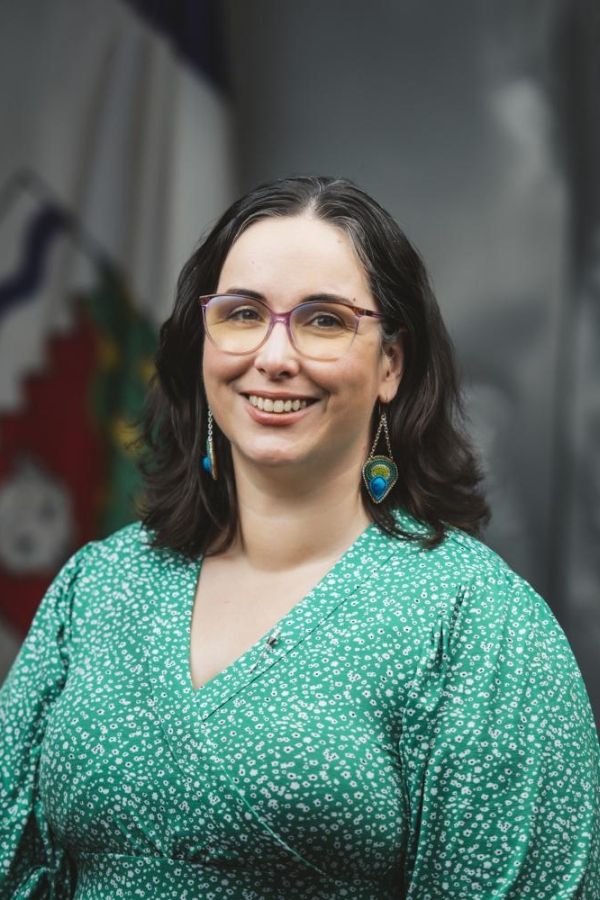
Member’s Statement 961-20(1): Selection Process for Arctic Winter Games
Mr. Speaker, the 2026 Arctic Winter Games are set to begin next week in Whitehorse, and while I am excited to see all the medals our amazing young athletes, a part of Team NWT, will bring back home to the NWT I am disappointed that one of my constituents won't be able to participate. They weren't kept off the team because of their athletic skill. They never even got a chance to be judged on it. Instead, a minor administrative error kept them from participating. With no appeals process for late or incomplete registration forms, there was seemingly no way to fix it. As a parent, I know how much paperwork kids bring home for school activities and trips, not to mention their own colouring sheets and other things they collect from their friends and their classes at school. The Arctic Winter Games, which means travel away from home communities, naturally has a lot of forms to fill out. Even the most responsible teenagers sometimes miss a step, and we parents are used to often stepping in to help. In this case, one Range Lake family was unaware that signatures were required on a specific document before the athlete was confirmed on the team. The rest of their forms were completed on time and in good faith, but this one oversight -- and I will stress that, Mr. Speaker -- one form prevented this young athlete from participating with their peers in an event that is often the highlight of sports in a young athlete's teenage years.
This outcome is not in the best interests of the Arctic Winter Games, young athletes, or our government's stated goals of promoting inclusion, sport, and healthy youth development. When I raised this issue with the Minister of MACA, the decision was upheld without any consideration for these circumstances. I was not asking to set a new precedent or to break any rules, just for reasonable accommodation in light of the absence of a fair appeals process, to ensure this young person had the opportunity to participate in games that are a cherished part of our culture in northern Canada.
Mr. Speaker, our young athletes deserve better. We need proper procedures to ensure that passion and dedication, not a missed signature, determine participation in the Arctic Winter Games.
I expect more leadership from this Minister to support northern families and young people. Our youth should be judged on their skills and if their paperwork is incomplete, they should not be left at the mercy of incomplete policies. Thank you, Mr. Speaker.
Thank you, Member from Range Lake. Members' statements. Member from Frame Lake.
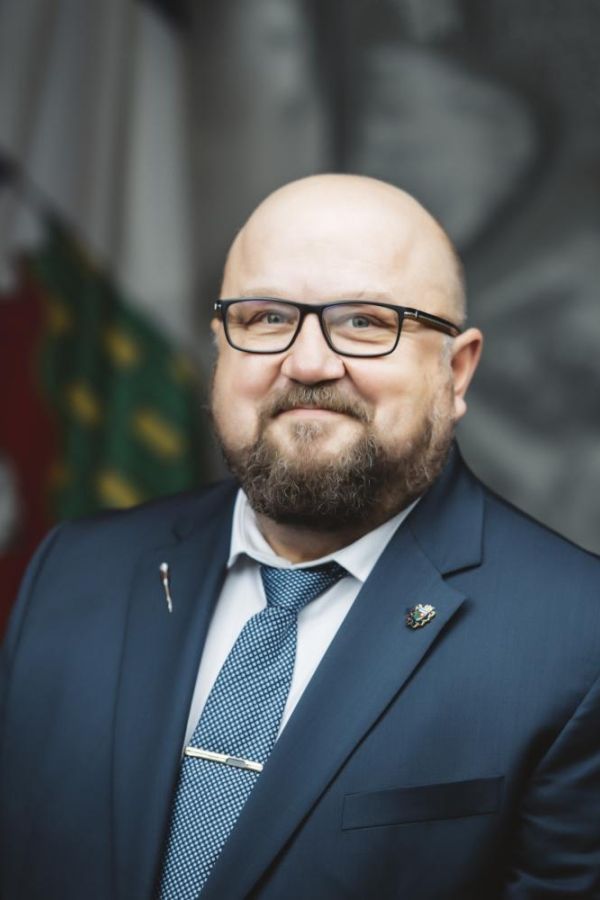
Member’s Statement 962-20(1): Territorial Housing Needs Assessment
Thank you, Mr. Speaker. Mr. Speaker, MLAs and the public received the territorial housing needs assessment. I want to compliment the Minister and department on getting this done. We know this document is what we needed to take our next steps on addressing housing needs in the territory. As the assessment states itself, this gives us data-driven requests to bring to the federal government and ensure that we have long-term investment into our housing continuum in the areas where the most need has been identified. The assessment speaks for itself. The need is massive, and I don't think that comes as a surprise to anyone, certainly not in this building. I want to draw a few items from the highlights in the document, which I think are particularly notable, for this Assembly.
There is limited housing availability across all areas of the housing spectrum. The availability of non-market and affordable rental housing in particular is limited, especially housing designed for singles and small families. With more than 800 households on the waiting list for public housing across the NWT, there remains significant demand for lower-income, non-market housing. To put that in plain language, we need to increase our public housing stock to reduce this waitlist.
There is a significant need for transitional housing across the territory, and particularly in the regional centres, to offer pathways from homelessness to other forms of housing. Mr. Speaker, we've made some good strides on that, and I am very excited about the recent announcement making transitional housing permanent at Rock Hill.
Perhaps the one I find the most frustrating is that the report highlights that land availability continues to be a limiting factor to housing development due to lack of developed residential land and often complex processes for acquiring land to develop. While some of the areas I've highlighted require significant investment and help from the federal government to fully address, the land barrier is something which is entirely within our control, so I want to ensure that the commitments in this budget to more staffing and addressing timelines in the process more directly, as we discussed in Committee of the Whole, will mean we get out of our own way.
Overall, Mr. Speaker, I want to be clear today that while we need federal investment, I am committed to ensuring that we continue to put territorial investment on the table as well, as this Assembly has done and the next Assembly will need to do. Thank you, Mr. Speaker.
Thank you, Member from Frame Lake. Members' statements. Member from Great Slave.
Member’s Statement 963-20(1): Pathfinding Supports for Residents with Disabilities
Thank you, Mr. Speaker. Today I want to echo the comments of my colleague from Frame Lake from earlier in this sitting, that the government needs better pathfinding supports for our residents with disabilities. There are numerous supports that exist in social envelope departments but without taking up my allotted time to list them all, I know I could effectively argue that considerations for folks with disabilities touches on every Minister in each portfolio, as well as statutory officer responsibilities.
Approximately one quarter of NWT residents have a disability. I am concerned without overarching targeted ministerial oversight that disability issues and holistic improvements to GNWT programs that serve disabled residents will suffer without a common thread or strategic approach that considers disability in a whole of government way. The disability action plan final report was tabled at the end of the 19th Assembly in 2023. I believe the Minister of health is now responsible for the disability strategic framework that expires in 2027, but no word if that will be renewed. When the affirmative action policy was rescinded, the preferential hiring in the GNWT for people with disabilities ended with no bridging actions to the next purported policy initiative, which has not yet come to standing committee for review despite my continued nudging.
When the standing committee pushes forward yet another annual recommendation of the human rights commissioner to create accessibility legislation, the GNWT, in essence, replies, sorry, can't make that happen.
Mr. Speaker, if folks hear nothing else from my statement today, let it be this: Every person with a disability or multiple disabilities has unique needs as well as aspirations. Many disabilities are invisible, and we should all strive to understand where our neighbours are coming from. All disabilities can and should be considered thoughtfully, compassionately, across government, in partnership with advocates and non-profits who tirelessly work for residents in this space, and ideally with a Minister responsible that champions all aspects of their lived experience. Mr. Speaker, I will have questions for the Premier at the appropriate time.
Thank you, Member from Great Slave. Members' statements. Member from the Sahtu.
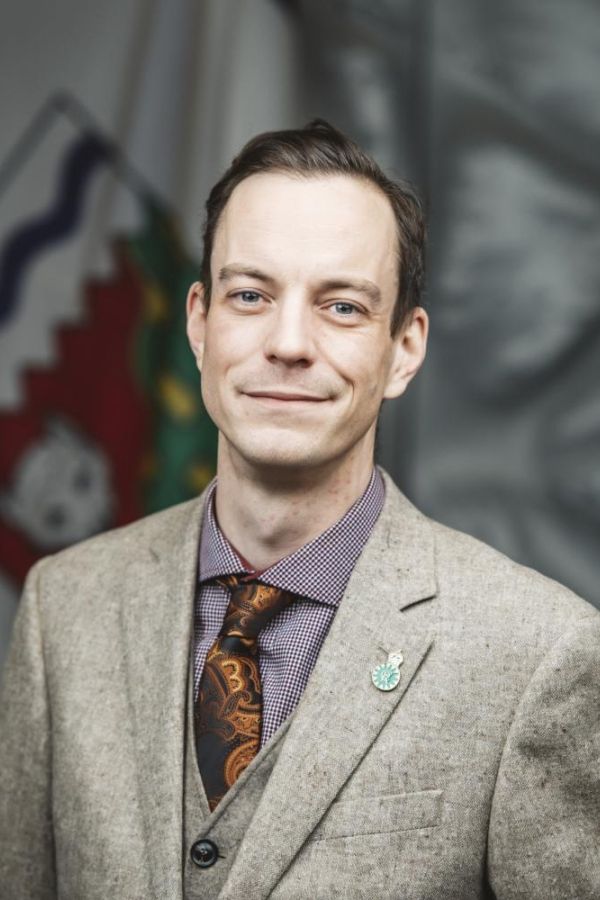
Member’s Statement 964-20(1): 2026 Prospectors and Developers Association of Canada (PDAC) Conference
Thank you, Mr. Speaker. Mr. Speaker, my recent attendance to the Prospectors and Developers Association of Canada conference in Toronto, we witnessed considerable enthusiasm and excitement regarding new funding mechanisms to support critical mineral projects, funding specifically designed to de-risk capital investment. A joint memorandum of understanding underscored a clear message: The resource development opportunity for the North is now.
Yesterday's announcement from the Government of Canada substantiates this commitment. I refer to the $5 billion allocated to the trade diversification corridors fund and the $1 billion to the Arctic infrastructure fund. These are substantial investments targeted at addressing the infrastructure deficits that have constrained our territory's economic potential for decades.
Mr. Speaker, these funds directly address the infrastructure challenges that render resource projects prohibitively risky for private capital. These federal programs fundamentally alter that.
Mr. Speaker, the trade diversification corridors fund focuses on strengthening supply chain capacity, reviving transportation bottlenecks, and addressing infrastructure gaps that limit market access for critical minerals in the NWT entertain a conceptual approach, supplier only, and process in Canada's southern jurisdictions. The Arctic infrastructure fund addresses the unique challenges of northern development, the transportation links that enable economic development and market access, community scoping costs, Indigenous-led infrastructure solutions.
Mr. Speaker, the calls for proposals are now open. The federal government has committed substantial capital to de-risk infrastructure investments. The Northwest Territories must now bring forward the projects through the applications that will define our economic future and secure prosperity for the residents. Later, Mr. Speaker, I will have questions for the Ministers.
Thank you, Member from the Sahtu. Members' statements. Member from Mackenzie Delta.
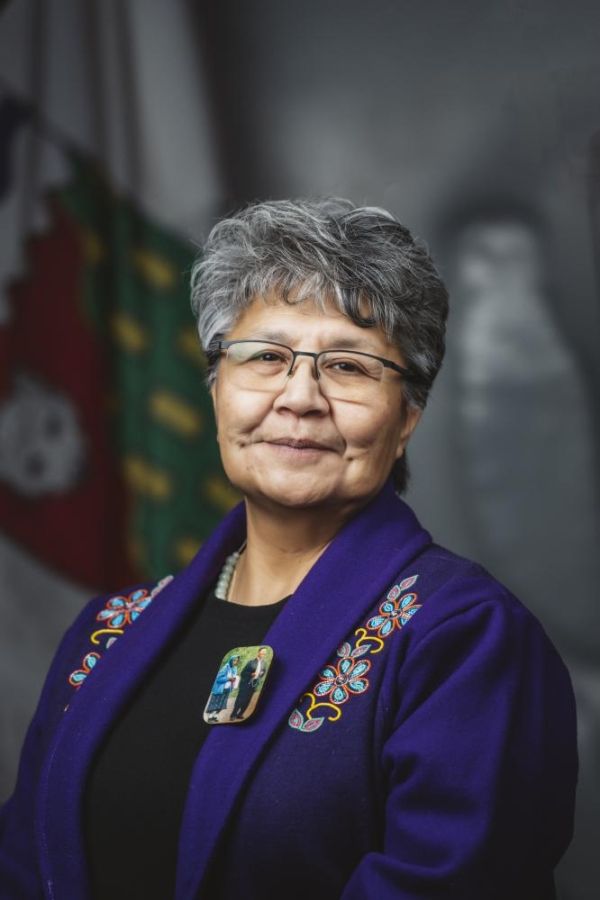
Member’s Statement 965-20(1): Internal Operations of Local Housing Authorities in Mackenzie Delta Region
Thank you, Mr. Speaker. Today, I wish to formally express my concern regarding the internal operations of the housing authorities in my riding. Specifically, I am concerned that the working relationship between the local housing boards and their staff is not always functioning in a manner that best serves the housing clients they are mandated to support. There appears to be instances where direction issued by the local boards is either not clearly understood or not fully implemented by the staff responsible for executing board-approved decisions. In certain situations, board motions are not carried out as directed, resulting in staff assuming decision-making authority that properly rests with the board. This has contributed not only to tension between board members and staff but also begun to adversely impact housing clients, creating uncertainty and confusion for those affected. It is not the intent of the housing authority staff to make decisions on behalf of the board. Clear governance structure, adherence to board directions, and respect for established rules are essential to ensuring accountability and integrity of the housing authority's mandate.
Mr. Speaker, it should be clear that the board has the authority to make final decisions on client files and without interference from staff and that where policy creates indecision and uncertainty, housing boards can use their own discretion to determine the individual client's outcome. The housing policy's guide to follow on can be interpreted to mean different things based on the housing client's situation.
Mr. Speaker, the local housing boards have the power through policy to exercise their housing policies in a way that assists and helps clients seeking suitable housing. They need to be reminded that the decisions are final and that in no way can staff represent decision-making on their own behalf, and final housing needs and services rest solely with the boards to define. Board power should include the ability to change housing policy where and when required to meet client needs in ever-changing client environments. Thank you, Mr. Speaker. I will have questions at the appropriate time.
Thank you, Member from the Mackenzie Delta. Members' statements. Member from Yellowknife North.
Member’s Statement 966-20(1): Territorial Housing Needs Assessment
Mr. Speaker, it's overwhelming. I am thankful for the enormous amount of work that went into the territorial housing needs assessment, but its conclusions are overwhelming. The NWT has a housing deficit of up to 2,700 homes, and that's just to address current needs. Within the next 20 years, we will need another thousand new homes. 71 percent of households in core need are Indigenous. 30 percent of these households are led by single mothers.
Now, this government has done more than many past assemblies on the housing front. We've agreed to $150 million in new investment for Housing NWT and have more transitional housing underway than ever before, both for those coming out of addictions treatment in Yellowknife and Inuvik, and for those coming out of homelessness. But it all seems like a drop in the bucket compared to the need. How do you keep going with good initiatives once you realize how very far you still have to go? How do you keep up the motivation and the momentum?
As an Assembly, we've chosen big priorities: housing, health care, workforce development, the economy. It's easy to list off how many things are going wrong. The first step is usually to get mad and blame someone. The hard part is trying to take action to change things. You pull on one thread and suddenly you are buried in balls of yarn all tied up with those threads. Once we start seeing how big and how complicated the problems are, they're all tied to colonialism, poverty, trauma, racism. There's an understandable instinct to become cynical and defeatist. If we can't do everything, then what's the point of improving just one thing? And if you try to improve one thing, you risk putting a target on your back. How dare you change this but not this other thing that I wanted. It's never going to be enough to satisfy people or meet the whole need so might as well just keep muddling through.
Let's take the opportunity, Mr. Speaker, to look for the critical steps that could start a virtuous cycle of cascading improvements. Let's look for every opportunity to support people in helping themselves, every opportunity to prevent damage and ensure housing is built to last longer. Mr. Speaker, I am not naive to the scale of our challenges but I refuse to be defeatist or get tangled up in the overwhelm. Thank you, Mr. Speaker.
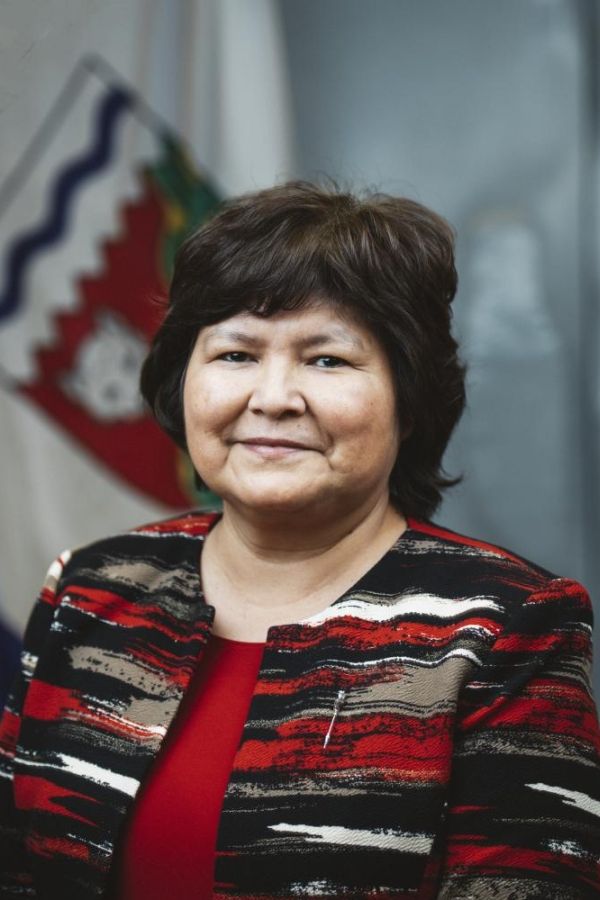
Thank you, Member from Yellowknife North. Members' Statement. Member from Inuvik Boot Lake.
Member’s Statement 967-20(1): Markets for Liquefied natural Gas
Thank you, Mr. Speaker. Mr. Speaker, in my Member's statement yesterday I asked the Premier about his meeting last week with the IRSC representatives around liquefied natural gas, and I know, Mr. Speaker, that the Minister also met with the IRSC representatives.
Mr. Speaker, the Prime Minister has been in Asia over the past week. Before he arrived in India, India's High Commissioner to Canada told the media that India wants to buy any energy product it can from Canada. The Beaufort Delta has the energy resources to help Canada become an energy superpower, which the Prime Minister identified as a generational challenge in his mandate letter.
Mr. Speaker, with what's happening globally right now, with what's happening on the energy front globally, we've seen in the media our federal minister taking calls around Canada's energy, things, comments like how quickly we can produce or how quickly we can certainly start looking at our resources. The time, Mr. Speaker, has never been better. And we talk about meeting the moment. It's time that we look at all significant discovery license holders in the Northwest Territories. It's time to pull these meetings together with Indigenous governments, with our government, with the federal government, to signal to them that indeed we are open for business, that we certainly can be an energy superpower here in the North, as we likely should have been many years ago when the Mackenzie Valley pipeline was first proposed, Mr. Speaker. So I will have some questions for the Minister of ITI around where we are with our strategic energy plan. Thank you.
Thank you, Member for Inuvik Boot Lake. Members' statements. Member for Monfwi.
Member’s Statement 968-20(1): Land Leasing Policy and Bequeathments
Thank you, Mr. Speaker. Mr. Speaker, today I want to speak about fairness in our land lease system, and how it is affecting families and elders in our communities.
Mr. Speaker, in Tlicho region, many residents live on land they lease from their community governments. Families build homes, raise children, and spend their entire life on these lands. Yet the structure of our land lease system is creating real financial pressure. I know that the Minister is going to say this is community government, band, hamlets, or villages' responsibility. I can't tell them what to do. I know that's what he's going to say. But this needs to be addressed as MACA funds 33 communities across Northwest Territories.
Mr. Speaker, when a leaseholder passes away, a formal legal process is required for the lease to be transferred to their children. That process can be complex and expensive. I have heard from my constituents who have been quoted tens of thousands of dollars in legal fees to settle this issue. For many families, those costs are far beyond what they can afford. Mr. Speaker, in these circumstances this is simply not acceptable. We need practical reform to simplify the process so that transferring a land lease to the next generation does not require such extensive legal assistance.
Similar questions of fairness arise when we look at our elders. Across the Northwest Territories, residents become eligible for property tax relief at age 65; however, this relief does not extend to leased land where many of our elders in Tlicho communities live and continue to pay their land lease fees in full. Mr. Speaker, access to programs intended to support seniors should not depend on the land tenure system of a person's community. Mr. Speaker, can I have unanimous consent to conclude my statement. Thank you.
Mr. Speaker, seniors should have equal access to support programs regardless of where they live. Families and elders across our communities deserve a system that is fair, equitable, and does not create unnecessary financial hardship. Masi, Mr. Speaker. I will have questions for the Minister of Municipal and Community Affairs. Thank you.
Thank you, Member for Monfwi. Members' statements. Member from the Dehcho.
Member’s Statement 969-20(1): Solutions to Educate People (STEP) Program
Mahsi, Mr. Speaker. Mr. Speaker, today I am calling for the reinstatement of the solutions to educate people program, known as STEP, a practical, made-in-the-north set of courses that equip residents with the financial literacy, home purchase knowledge, and basic home maintenance and repair skills needed to be successful homeowners. STEP formed part of the housing choices suite that was open to applicants and, where space allowed, to other residents through district offices.
Mr. Speaker, today residents can find information about current homeowner repair programs from seniors aging in place to preventative maintenance, yet the education and counselling function that STEP provided is no longer listed among the supports available to the public. This is a gap.
While we continue to invest in repairs and emergency responses, we have stepped back from the frontline education that helps households prevent problems and manage the responsibilities of ownership in the first place. Reinstating STEP would be cost-effective, community-based intervention. It prepares homeowners to succeed, reduces preventable repair needs, and supports long-term asset sustainability by teaching residents how to maintain their home. It also aligns with our commitment to self-reliance and affordability, meeting people where they are with practical tools that work in northern realities.
Mr. Speaker, I urge Housing NWT to restore STEP in partnership with Indigenous governments, local housing organizations, adult educators, and community partners offering flexible delivery, culturally grounded content, and recognized certificates of completion. Let's pair financial support with skills and knowledge so Northerners can keep their homes safe, resilient, efficient for years to come. I will have questions for the Minister responsible for housing at the appropriate time. Mahsi, Mr. Speaker.
Thank you, Member from the Dehcho. Members' statements. Member from Tu Nedhe-Wiilideh.
Member’s Statement 970-20(1): Territorial Housing Needs Assessment
Mr. Speaker, last fall the federal government launched the Build Canada Homes initiative, committing $13 billion to kick start a massive effort to build affordable, transitional, and supportive housing across Canada as quickly as possible. With housing needs across Canada so high, every level of government from coast to coast to coast is scrambling to get their share. But nowhere are housing needs more important than in our small communities and remote communities in the Northwest Territories. And the recent housing needs assessment makes this housing crisis clear. But the challenge for our communities is to access Build Canada Homes funding is that while Housing NWT can submit a large-scale, highly detailed proposal, each of our communities are on their own. As a result, the territorial government has the advantage and they will use it to get this funding for themselves and continue to keep the access to housing behind policies. They don't work for our people.
Indigenous communities should be able to lead their own housing projects while still complementing territory efforts through the Build Canada Homes. Our communities could deliver Indigenous-led, mixed income, and affordable housing tailored to the local needs while Housing NWT continues broader territorial and social housing initiatives.
To level the playing field, our communities need an office to coordinate their submissions from across the NWT into a single proposal. It is clear that the Dene Nation was best suited for this role and is already establishing a housing secretariat.
In my budget, I asked for $700,000 to support this work but it was refused. When I raised this with the Minister, she refused to sit down with the Dene Nation chief and to look for collaboration to address this issue. The future of the housing of the Northwest Territories, like the delivery of most programs and services, is with community leaders and yet, through Housing NWT, federal funding through CMHC is set to end in 2038.
This colonial government sees this initiative as a short-term opportunity to take our funding while still refusing to honour our treaties. Our communities, on the other hand, see Build Canada Homes as an opportunity to build their capacity but they need a place to start. I will have questions for the Minister later today. Thank you, Mr. Speaker.
Thank you, Member from Tu Nedhe-Wiilideh. Members' statements. Member from Yellowknife Centre.
Member’s Statement 971-20(1): Government Accountability
As the clock ticks away in this Assembly, Mr. Speaker, public service hiring must continue without reproach. So I rise today to speak about a single, non-negotiable value; it's called a public trust.
As this Assembly slips into the darker days, into the final days, with 579 days approximately left, our duty to the people of the North doesn't sunset. It actually intensifies. We know that the machinery government will require talent. I don't doubt that for a second. But we also know it requires speed at times, and direct appointments often are designed for those moments of urgent need.
Mr. Speaker, but let's be clear. Direct appointments should be always considered as the exception of the rule where someone will skip the line, bypass competition, and bypass the typical process to get one of those coveted GNWT jobs. Mr. Speaker, sometimes that bypass process steps across or beyond the principle of merit.
Many of us have seen, at the 11th hour of the mandate of the current government and previous governments, how the pace quickens and pressure mounts to do these last-minute decisions and people get tempted by making these choices. It is precisely these moments, Mr. Speaker, when the transition begins, that our decisions require more scrutiny, not less. And that is why I am advocating for a clear, commonsense safeguard, that in the final six months of this Assembly direct appointments must carry the support of caucus. It's unusual, but it's important. It is not about creating red tape, Mr. Speaker. It's about sharing accountability. Because we are here to ensure that those appointments made, even on the eve of the next coming election, they carry the confidence of many, not just those special few and the secrets of Cabinet around the table.
In a consensus government system, collaboration is intended to be the foundation of the work we do. So no one's suggesting that we -- caucus does the work, but we treat it as a safeguard to safeguard its integrity. It helps prevent the perception of political favours and the impartiality of the public service we all need and trust upon. Mr. Speaker, I am calling for transparency, not just expediency; the quality that northern people deserve. Thank you, Mr. Speaker.
Thank you, Member from Yellowknife Centre. Members' statements.
Member’s Statement 972-20(1): Improved Access to Care in the Dehcho Region
Colleagues, today it gives me great pleasure to do this Member's statement. Improving access to health and social services is a priority of this Assembly, and it matters to the health and well-being of people across the Northwest Territories.
In the Nahendeh riding, people have faced real challenges getting the care they needed. This region has more health cabins than any other region in the NWT. That means residents of Nahendeh often face bigger barriers to primary care simply because of where they live. These health cabins are supported by community health workers, dedicated local people who are often the first place residents turn when they need help. They work closely with nurses and play a key role in everyday care and in emergencies. Providing care in these small and remote communities is very different from accessing care in places like Yellowknife or larger regional centres.
I believe it is important to speak up when there are problems, but it is just as important to recognize progress when it is happening. That is why today I would like to thank the Minister of Health and Social Services, the department, and the Northwest Territories Health and Social Services Authority, and acknowledge the good work they are doing to improve access to care in the Nahendeh riding.
Over the past several months, NTHSSA, with support from the department's community, culture and innovation unit, took a closer look at the gaps and challenges in health cabin communities. Staff spent time in these remote communities to better understand the conditions of the health cabins and the day-to-day realities people face when they need care. Thanks to this time, improved training plans for the CHW has occurred to help improve their skills. I can tell you in talking with the CHWs, they are greatly appreciative of this new focus.
Since December, a new pilot has been launched with two nurse practitioners sharing a role to support cabin communities. They provide a mixture of virtual care and in-person care with flexibility response to urgent needs. Community health workers are also receiving new tools and regular training to strengthen the care they provide. Early results are positive, with more appointments and more people being seen.
This work is about making sure people get the care they need closer to home and surrounded by family, culture, and communities. I want to recognize the good work being done in the Nahendeh riding, and I look forward to continued work with the Minister and her department and the NTHSSA as work moves forward. And thank you on behalf of the residents. Members' statements.
Oral Questions
Question 1153-20(1): Advancing Liquid Natural Gas Production in the Beaufort Delta
Thank you, Mr. Speaker. Mr. Speaker, to quote one of my favourite movies, the table is all set. We have our knife. We have our fork. We have our sauce. We need the steak, Mr. Speaker. My questions are for the Minister of ITI.
Can I get an update on what the next steps for GNWT to engage with IRC around LNG and what steps they may take together to advance this incredible resource for development and export? Thank you, Mr. Speaker.
Thank you, Member from Inuvik Boot Lake. Got that right. Minister of ITI. I know you're all excited and jumped up, ready to go. Here we go.