Debates of May 28, 2026 (day 92)
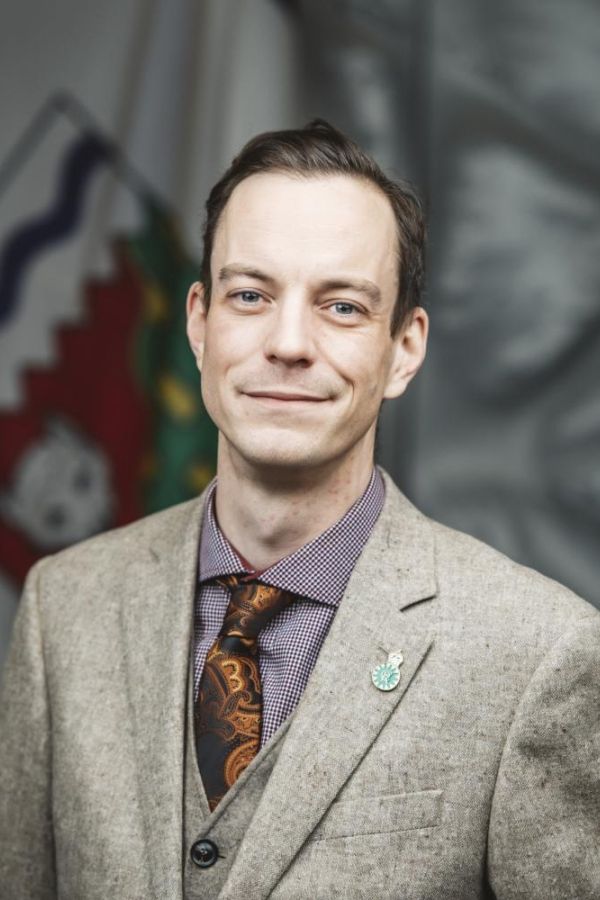
Mahsi, Mr. Speaker. Today, I am proud to recognize Presley Simba-Canadian who served as a Youth Parliament MLA for the Deh Cho last month. Presley made her communities proud. She carried herself with maturity and confidence and showed that the future is bright for youth in the Deh Cho. With that, Mr. Speaker, I would like to share Presley's words from her Youth Parliament Member's statement.
Over the past few years, many families have seen their everyday expenses go up. Prices for basic needs such as housing, food, transportation, and school supplies, continue to increase. When the cost of living rises faster than people's incomes, families must make difficult choices that affect their well-being and future. Housing is one area where people are feeling the most pressure. Rent is going up in many communities, and buying a home has become more expensive. According to a 2024 housing report, 12.8 percent of housing in the NWT is unaffordable.
Groceries are another major concern. The price of food has increased in almost every category, from fresh produce to basic staples like bread, milk, and pasta. For many families, this means looking for cheaper options or cutting back, even when they want to make healthy choices.
Transportation costs have also grown. Gas prices, bus fares, and the cost of maintaining a car have increased. When transportation becomes more expensive, it can limit a family's ability to get to school, to work, or community activities.
School supplies are also important. Without affordable supplies, it is harder for NWT students to get the education they need. Laptops cost hundreds of dollars, and students need them to keep up with schoolwork.
If prices do not become more affordable, people could decide to move down south. I want people to be able to stay in the NWT.
I thank Presley for her leadership and for making the Deh Cho proud. Mahsi, Mr. Speaker.
Thank you, Member from the Deh Cho. Members' statements. Member from the Yellowknife Centre.
Member’s Statement 1017-20(1): Medical Travel Assistance
Thank you, Mr. Speaker. Let's stop pretending that health care is simply just stethoscopes and clinics. For many of the people I represent, Mr. Speaker, health care can be a brutal challenge from day to day. It also represents other areas of care, such as people going through airports or even the grueling, kidney-rattling ride down hundreds of kilometres of the gravel highway known as "the Dumpster."
Mr. Speaker, in a territory of this scale, medical travel assistance to some is not a luxury perk; it is a fundamental lifeline. And to those people who call me, they feel it is failing.
Let's be completely honest. When your sick kid, you have to focus and sometimes even moonlight as a travel administrator trying to make sure you meet the obligations and expectations of the doctor's instructions, follow the medical travel directions, and everything all in between. Yet the rigid system sometimes goes sideways because the bureaucracy immediately plays the blame game and can leave you hanging. So let's take a look at our process, Mr. Speaker.
Well, you know, if you make an error, they will often say you didn't follow the instructions. Mr. Speaker, it remains -- it's remarkably easy, sorry, to be sitting back and passing judgment on constituents' competency when someone's perched in a cosy, climate-controlled office, sipping coffee, eating those little tiny crackers, and all while denying file XYZ123 simply because they made some errors. But the real world is, for people like me, when you see folks under the blindness of fog of stress and anxiety, it's easy to make mistakes and lose focus.
Look around this room, Mr. Speaker. I bet 9 out of 10 of us would have trouble fixing the old VCR time let alone navigating the medical travel process when you're in that emotional crisis. So let's not get caught up in the difficult rules of process. How can we fix this?
Opportunity before us, Mr. Speaker. We could hire and start setting out the fact that we need a navigator through the medical travel process. When we have constituents such as I who had been given approval to proceed with your own travel arrangements on a particular health journey but then told the subsequent appointments needed specialized approval each way along, common sense tells me that just created red tape, bureaucracy getting in the way. The hollow promise of health care is it should be about how can we help you, not did you fill out that form. Thank you, Mr. Speaker.
Thank you, Member from Yellowknife Centre. Members' statements.
Member’s Statement 1018-20(1):
Colleagues, today I am here to remember and honour Louie Betthale, a man whose life was deeply rooted in the land, in family, and in tradition. Louie was born on January 4th, 1942, at Coles Lake, BC, to William and Germaine Betthale.
From the very beginning, his life was shaped by the bush, by the seasons, and by the people he loved. He grew up learning the ways of the land alongside his father, his brother William, and his in-laws, hunting moose, trapping along the trapline with dog teams long before skidoos, and living a life that demanded resilience, skill, and heart.
Louie was a natural hunter. By the age of nine or ten, he had already shot his first three moose. He was trusted in ways that spoke volumes, the only one his grandpa would allow to carry his rifle. That bond meant everything to him. He followed closely in his grandpa's footsteps, quite literally stepping into his tracks, learning by watching him and imitating him with a small stick as if it were an axe. These quiet moments checking rabbit snares and walking together on the land stayed with Louie for life.
In the summer, Louie took on a very different role as a cook for the firefighters. And no matter what he was doing, he always had a cigar in his mouth. That's how many came to know him in Fort Nelson, Cigar Man or simply Cigar. It became part of who he was.
Louie had his moments, as we all do, but at his core he had a good heart. He helped people, whether they needed it financially or spiritually. He gave what he could without asking for anything in return.
Many remember him riding his red quad all year round, visiting, helping, and staying connected. He supported people in quiet ways, buying crafts to help them out, selling them at Christmas bazaars, and then passing that kindness forward to young people who lent him a hand.
Louie had a full, rich life, one filled with hard work, laughter, stories, and deep connections. He leaves behind memories that are both joyful and heavy and the kind that reminds us of how much somebody truly matters. He always loves travelling with friends and family to Muskeg River, Big Lake, Maxhamish, Coles Lake, Trout Lake, and Fisherman's Lake.
Being respectful of time, I ask the remaining of this Celebration of Life be deemed as read and printed in the Hansard.
In his remaining life, he lived comfortably at the old folks home. Louie left us on April 16, 2026. He will be deeply missed. There's no one who can quite fill his shoes, especially not those dancing and jigging shoes.
Rest in peace, Louie. You were loved, and you will never be forgotten.
His sister Laura shared many stories that captured Louie's spirit. One time, while out moose hunting, Louie was the only one allowed to carry a rifle. When a bull moose answered his call and came in close, Laura and William got scared and ran to climb a tree. The moose ran off, and Louie, frustrated, told them plainly: "If you're both scared, next time, stay home." That was Louie, direct, honest, and serious about the work at hand.
Another time, still young, Louie and his sister Laura were tasked with bringing moose meat home by dog team. With steep riverbanks and heavy loads, it was no easy job. But they did it. That determination and toughness stayed with Louie his entire life.
Louie faced hardship too, and he faced it with strength. He survived an Air Tindi plane crash in 2014, along with five other passengers and the pilot. He was deeply grateful that they all made it out alive, and true to his nature, he didn't let it stop him from getting back on a plane. Years earlier, he also survived a house fire, escaping in the dead of winter with nothing but his long johns and a T-shirt, running to a neighbour for help.
But Louie wasn't just a survivor he was someone who truly lived. He loved fishing, and anyone who saw him at the spring Fishing Derby knows he had a real talent for it. And he loved dancing just as much. Louie could jig like no one else. Even at 84, he could out dance just about anyone in town. You get the feeling that even at one hundred, he would've still been out there, two-stepping with a smile and a partner in his arms.
The family would like to thank everyone who has helped prepare for Louie's service. Your kindness and support during this time are deeply appreciated.
Leaves to mourn him: Sisters (Laura Nande & Susan Kotchea (Steve)); Brothers (Jerry Betthale and Philip Betthale), Uncle (Harry Deneron) and numerous of cousins, nephews, nieces, friends from all over. Sadly, most of them are gone too.
Predeceased by: Parents (William and Germaine (Deneron) Betthale); Grandparents (Andre and Mary (Ekenele) Betthale & Laurent and Marie Angele (Cordille) Deneron); Brothers (William Betthale and Unnamed Newborn Brother) and Sisters (Adele, Maryrose (Jimmy) and Rosie (Kyle).

Oral Questions
Question 1213-20(1): Support for Former Residential School Survivors from Chief Jimmy Bruneau School
Thank you, Mr. Speaker. Mr. Speaker, my statement is sensitive, especially for the survivors of the Chief Jimmy Bruneau School, students and residents. So what I would like to suggest is that I encourage them to reach out and talk to a counsellor or a trusted person in their respective community. Now my question is to my favourite person, the Premier.
Will the Premier acknowledge that former Chief Jimmy Bruneau students lived through a residential school experience no different from those that have been formally recognized? Thank you.
Thank you. Member from Monfwi. Mr. Premier.
Thank you, Mr. Speaker. Chief Jimmy Bruneau of course does have a residence. There were students from outside of the community who attended. I don't want to paint every residential school experience with the same brush. I know people who have had different experiences, and I think it's out of respect I wouldn't say that everyone has had the same experience. That being said, I do recognize that it is a residential school, and I am not familiar with the day-to-day of the operations while it was a residential school, but I am taking the Member and, you know, the messages she is bringing from her constituents at her word and recognizing that -- or acknowledging what the Member is saying, that there were experiences that people had that were similar to others. That being said, I don't want to paint everything with the same brush. There's nuance to this. Thank you, Mr. Speaker.
Okay, thank you. In 1971, many of the students were returning, and some of them were transferring from Fort Smith, some of them were coming back from Fort Simpson, and some of them were coming in from Inuvik. They were sent as far as Inuvik, some of our students. But a lot of Yellowknife went to school at the Chief Jimmy Bruneau residence, which I talked about already before, so -- and I would like to take Premier over there to look at the residence, you know, the residence itself.
So will the Premier work towards formal recognition and compensations for former Chief Jimmy Bruneau students and residents?
Thank you, Mr. Speaker. I've been to the school. I've seen part of the residence. I believe it's not in great shape, so I don't think I've toured the entire thing for safety issues, but I am happy to sit down with the Member and discuss this further.
When we talk about compensation, that's -- you know, we're getting into a different area here. The residential school compensation, IRSSA -- I don't know the acronym, but the settlement agreement with residential schools, that was an agreement with the Government of Canada, the churches, the Assembly of First Nations, and the survivors, and that was something that was hashed out over many years and so it's -- I can't stand here and say that we're going to do something similar because that is a significant process. It's not the kind of thing that you just stand up and say yes to, you know, in the House here without any sort of, you know, discussions or things like that. So that being said, I am happy to sit down with the Member and discuss this further. Thank you.
Thank you, Mr. Premier. Member from Monfwi. Final supplementary.
Thank you, Mr. Speaker. Mr. Speaker, it was a residential school similar to western Arctic leadership. It's another form of residential school. So will the Premier takes steps to ensure former CJBS -- or former Chief Jimmy Bruneau School students and their families have access to targeted mental health, healing, and other supports? And when we did a constituent's touring to Gameti, one of the young person approached me, and they were right beside me, two Ministers, when a young man was talking to me. Thank you.
Thank you, Mr. Speaker. There were residential schools across the territory. There were individuals who suffered harm at those schools across the territory, and it's a big part of the reason that we're in the situation we're in, in the territory. The effects of trauma, we see that every single day, and I attribute that to the history of colonialism in residential school. So everything we do when it comes to mental health and wellness has a focus on that healing component. Thank you, Mr. Speaker.
Thank you, Mr. Premier. Oral questions. Member from Frame Lake.
Question 1214-20(1): Mining Securities and Reclamation
Thank you, Mr. Speaker. Mr. Speaker, my questions, as I indicated in my statement, are for the Minister of ECC.
Mr. Speaker, considering the issue noted in my statement of undersecured mine sites, can the Minister detail for the House the steps his department is currently taking to review their security estimation tool and make changes where necessary to ensure sites are not undersecured in the future? Thank you.
Thank you, Member from Frame Lake. Minister of Environment and Climate Change.
Thank you, Mr. Speaker. Mr. Speaker, as I am sure the Member is aware, securities in the NWT are set by the land and water boards under legislation and estimates on reclamation securities are based on current versions of closure and reclamation plans which are also approved by the board. This is a multiparty process which -- and the figures are provided through an estimating process, part of which the company participates in. The exact makeup, so there are -- I am sorry, I've lost my -- the board runs a multiparty process, and as the -- I would ask the Member to repeat the question, Mr. Speaker.
Thank you, Minister of Environment and Climate Change. Member from Frame Lake, can you repeat your question.
Thank you, Mr. Speaker. I do understand it's a pretty technical issue.
Mr. Speaker, considering the issue noted in my statement of undersecured sites, mine sites, can the Minister detail for the House the steps his department is currently taking to review their security estimation tool and make changes where necessary to ensure sites are not undersecured in the future. Thank you.
Thank you, Mr. Speaker. And my apologies for the earlier response.
Mr. Speaker, the tool that is used in the Northwest Territories for estimating the requirement under the security deposit is the Reclaim tool. That model that we're currently using is an old version that's been around for a number of years, and we are currently working with the Government of Canada on a revised version of that tool to improve the way in which the estimates are developed. Thank you, Mr. Speaker.
Thank you, Minister of Environment and Climate Change. Second question. Member from Frame Lake.
Thank you, Mr. Speaker, I appreciate that.
Mr. Speaker, can the Minister give us some more details, what exactly is changing in the tool? What steps are being taken to address this issue, noting that, you know, once a security estimate is put in, it can quickly become out of date as inflation takes hold and things change on a site. So can the Minister help us understand how Reclaim is being improved to help ensure that security estimates are up to date for the site in any given moment. Thank you.
Yes, thank you, Mr. Speaker. Mr. Speaker, so the Reclaim model is based on current northern estimates, and those estimates would come from the Yukon, Northwest Territories, and Nunavut. And so the estimates within the tool would be brought up to more current to date estimates, and that part of that model update includes the different components that feed into that. So there is estimation and information that's provided by the proponent. That information is shared with the department. The department also contributes to that. And all of this information is then relayed to the land and water boards who ultimately set the level of security required. Thank you, Mr. Speaker.
Thank you, Minister of Environment and Climate Change. Final supplementary. Member from Frame Lake.
Thank you, Mr. Speaker. Mr. Speaker, I am realizing this is quite a complex topic and maybe some written questions will be necessary as well.
Mr. Speaker, would the Minister -- considering what I've raised with the shortcomings of security estimation, I am curious if the Minister would commit his department to researching and considering the possibility of adopting a different or additional model for reclamation security as demonstrated by jurisdictions like Western Australia and Queensland, and reporting on the results of this work to the Standing Committee on Economic Development and Environment. Thank you.
Thank you, Mr. Speaker. Mr. Speaker, some of the other methods that have been used in other countries, such as Australia, is a pool method, where they're pooling resources. I've just provided an example here. And, you know, at our peak we had four mines in the Northwest Territories so that type of approach is not likely to work very well within the Northwest Territories, but I am happy to take that question away from the Member and get back to him with a more detailed response. Thank you, Mr. Speaker.
Thank you, Minister of Environment and Climate Change. Oral questions. Member from Great Slave.
Question 1215-20(1): Climate and Energy Strategy
Thank you, Mr. Speaker. Mr. Speaker, my questions today are for the Minister of ECC.
As we all know, climate change is making our wildfire seasons longer and more intense, and that is -- sorry, Mr. Speaker, I am also having a bit of a brain fart.
Mr. Speaker, every time I am about to go into session, inevitably somebody asks me, you know, when is the new climate plan going to be available. Can the Minister please give an estimate as when the updated climate and energy strategy will be made public? Thank you, Mr. Speaker.
Thank you, Member from Great Slave. Minister of Environment and Climate Change.
Thank you, Mr. Speaker. Mr. Speaker, the GNWT has developed a new energy and climate change strategy which is planned to be released later this summer. That strategy is currently with the standing committee for input, and we will be addressing some public feedback on both -- requesting public feedback on climate change strategy framework and energy strategy calling for a more clear, coordinated approach on climate change. Thank you, Mr. Speaker.
Thank you, Mr. Speaker. I am pleased to see the work that ECC and MACA have done to create the wildland urban interface program which fulfills one of the commitments in the after-action review on the fire response from 2023.
Can the Minister please let us know how many outstanding commitments from that review for ECC remain and what the timeline is to complete them.
Thank you, Mr. Speaker. Mr. Speaker, the department certainly takes lessons learned from the 2023 wildfire season and the recovery review very seriously. We've accepted all 25 recommendations, and work has begun on those. We are prioritizing certainly the implementation of these actions with the ones that have the greatest impact on public safety and community protection first, and we can be supported by the current resources that we have. We are certainly committed to the wildland urban interface program. We're very proud of that program, and that has just recently been put out. The specific dates for completion I don't have available today, but I am happy to provide those to the Member. Thank you, Mr. Speaker.
Thank you, Minister of Environment and Climate Change. Final supplementary. Member from Great Slave.
Thank you, Mr. Speaker. Mr. Speaker, when we talk about FireSmarting for residents, we're often talking about a home or a cabin's structural protection. At my constituency event last week, one constituent had a really interesting suggestion for the Minister. Will he consider amending timber harvesting permits and any associated regulations so that residents might harvest firewood at municipal firebreaks? Thank you, Mr. Speaker.
Thank you, Mr. Speaker. Mr. Speaker, certainly a very good point. I think that, you know, as we look at FireSmarting, it's also about fuel reduction in the broader landscape. And, you know, there are certainly some limitations in the current legislation such as the harvest distance from roads that must be met. However, in the new Forest Act, we will provide tools that have more flexibility when that Act comes into force. And we're certainly happy to have the department examine whether there are opportunities within the current system that could better support the use of timber cutting permits and reduce the fuel loads around communities.
We will also make sure that, as we're doing this, it can be done safely and in compliance with the Acts. We'll also be happy to consider this as a suggestion as we move forward in the development of the final regulations. Thank you, Mr. Speaker.
Thank you, Minister of Environment and Climate Change. Oral questions. Member from Mackenzie Delta.
Question 1216-20(1): Restorative Justice Programming
Thank you, Mr. Speaker. Further to my Member's statement, my questions will be directed to the Minister of Justice.
We have a lot of offenders who continuously go into the correctional institution without being rehabilitated, and once released they don't have the tools to deal with their trauma that keeps them going in and out of these correctional institutions. So what steps is the government taking to expand access to restorative justice programs so that more Indigenous offenders can be diverted from costly incarcerations through community-based and on-the-land healing programs? Thank you, Mr. Speaker.
Thank you, Member from Mackenzie Delta. Minister of Justice.
Thank you, Mr. Speaker. Mr. Speaker, certainly community justice and restorative justice is one of the priorities of this government and of this Assembly. And, you know, we're very engaged on the fact that Indigenous people are more over-represented in the justice system across the NWT. So currently as of April 2026, we have six multi-year agreements and 13 single-year agreements in the community justice file across the NWT. This is one of the ways that we're certainly working with communities in addressing this challenge.
We also have a large number of programs available across the NWT. So I will focus on one, but there are many. There's community -- there's the wellness court. There's intimate partner violence treatment option. There's justice navigators. But I will focus on the men's healing fund which is one of the programs that is highlighted here.
Currently, there are six communities that are participating in that fund, and two of those communities, Aklavik and Fort McPherson, are from the Member's riding. So we're very happy to report on that. Thank you, Mr. Speaker.
Thank you, Mr. Speaker. It's, on the average, costing about $600 to house an inmate per day. And with the money going to the community programs for the -- it's less than what it costs to house an inmate in the correctional institution. How does the government justify that continued reliance on correctional facilities at the cost of over $600 per day per inmate when evidence shows restorative justice programs can be effective in reducing re-offending and supporting rehabilitation? Thank you, Mr. Speaker.
Thank you, Mr. Speaker. Mr. Speaker, it just so happens I was looking at the rate or the total count of inmates in the North Slave Correctional Centre this morning, and currently there are 12 incarcerated people that are actually serving time in the North Slave Correctional Centre. There were two federal inmates and the remainder, which was 130-some, were remands. So there's a small number of inmates that are actually serving time in the Northwest Territories.
We have a tremendous investment in many of the community programs besides what we invest in the rehabilitation side. So there's $2.3 million that's in community justice committees. There's $800,000 in the justice navigator pilot program. We have a special funding project fund also that can be accessed by communities if they want to do some work in that direction of creating a special project within their community. Thank you, Mr. Speaker.
Thank you, Minister of Justice. Final supplementary. Member from Mackenzie Delta.
Thank you, Mr. Speaker. These community-based programs are not funded enough to take on the responsibility of restorative justice in terms of going out on the land. It's where the healing is. And, you know, what measures are in place to ensure that first-time and nonviolent offenders are consistently assessed and directed toward restorative justice options within their home community or out on the land? Thank you, Mr. Speaker.
Thank you, Mr. Speaker. Mr. Speaker, as I indicated earlier, through the community justice program there are outreach workers that assist community members in accessing these programs. The idea is to have, you know, early offenders be able to access this resource and participate. And we're certainly happy to share information with the Member about the many programs that are available across the NWT in the process in order to access those resources for his communities. Thank you, Mr. Speaker.