


Jay Macdonald

Member Thebacha

Minister of Environment and Climate Change
Minister of Justice
Government House Leader

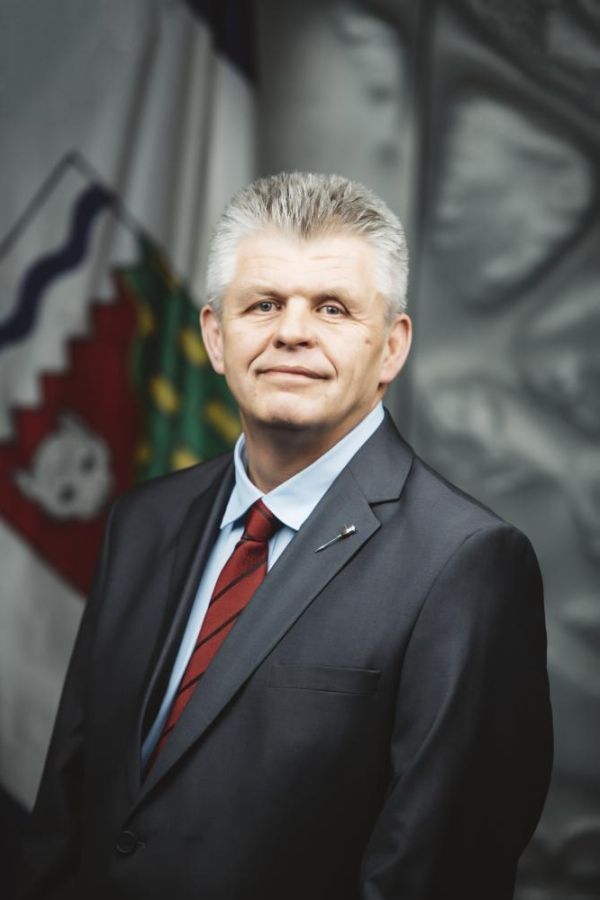
Jay Macdonald was elected to the 20th Northwest Territories Legislative Assembly to represent the constituency of Thebacha. Mr. Macdonald was elected to the Executive Council of the 20th Assembly.

Mr. Macdonald was born on June 26, 1964, in the town of Hay River, Northwest Territories. As an Indigenous Métis, Jay's roots run deep in the Northern Canadian landscape, and his journey has been marked by diverse experiences that have enriched both his personal and professional life.

Mr. Macdonald’s family relocated to Fort Smith in 1970. Mr. Macdonald successfully managed his small engine repair shop, providing essential services to the community and establishing himself as a reliable entrepreneur. Simultaneously, he delved into the intricacies of recreation facility management, overseeing operations at the local arena and golf course.

In his 13-year tenure as the Manager of Forest Management Services with the Environment and Conservation Division of the Government of the Northwest Territories, Mr. Macdonald demonstrated an unwavering commitment to environmental stewardship.

Mr. Macdonald’s dedication to youth development is evident in his 12-year role as the House Parent Program Coordinator for the Western Arctic Leadership Program. For five years, he served as a house parent, providing a nurturing environment for students from Lutsel Ke attending PWK High School. This experience not only showcased his compassion but also contributed significantly to the academic and personal growth of the students under his care.

Drawing on his expertise as a Journey Person Small Equipment Technician, Mr. Macdonald spent 13 years managing a Polaris dealership and served as an Instructor for Small Equipment Maintenance, Aviation Fuel Management, and Logistics disciplines under the Incident Command System.

Mr. Macdonald’s commitment to community extends beyond his professional roles. As a dedicated volunteer, he served as President and Coach of Fort Smith Minor Hockey, nurturing young talent and instilling the values of teamwork and sportsmanship. His coaching prowess extended to the national stage as he led Team NWT at the National Aboriginal Hockey Championships.

In his role as a representative of the Fort Smith Métis Nation on the local District Education Association Board, Mr. Macdonald contributed to shaping educational policies that reflect the unique needs of the community. Additionally, he served as a Board Member and Chair of the Northwest Territories Apprenticeship and Occupational Certification Board, advocating for the recognition and advancement of skilled trades.

Mr. Macdonald’s commitment to community welfare is further evidenced by his involvement in various local activities and events. Whether coaching minor sports or contributing to volunteer initiatives, he has consistently worked towards creating a vibrant and cohesive community fabric.

Outside of his professional and community engagements, Mr. Macdonald has a full family life. He is married to Karen, is a proud father to three children, and a doting grandfather to three grandchildren.

In his leisure time, Jay indulges in hobbies that reflect his love for the outdoors. Golfing, fishing, gardening, and enjoying the vast Northern landscapes are among his favorite pastimes.
Thebacha Electoral District:

Committees

Jay Macdonald
Thebacha
Member's Office

Yellowknife NT X1A 2L9
Canada

P.O. Box
1320
Email
Minister of Environment and Climate Change
Minister
Email

Statements in Debates

Debates of , 20th Assembly, 1st Session (day 9)

Thank you, Mr. Speaker. Mr. Speaker, I wish to table the following two documents: The Natural Resources Conservation Trust Fund Financial Statements for the Year ended March 31st, 2022; and, Inuvialuit Water Board 20222023 Annual Report and Financial Statements. Thank you, Mr. Speaker.

Debates of , 20th Assembly, 1st Session (day 9)

Thank you, Mr. Speaker. Mr. Speaker, as of August 28th, 2023, the department committed to not sending any arrears for Indigenous leaseholders that qualify to collections. And they would also go so far as to suspend any of the collection actions that were previously started against Indigenous leaseholders from that while we work on a collaborative process to address the concerns regarding the traditional lease. Thank you, Mr. Speaker.

Debates of , 20th Assembly, 1st Session (day 9)

Thank you, Mr. Speaker. Mr. Speaker, the department is looking to work collaboratively with the Indigenous governments across the Northwest Territories to develop a new approach to administration and management for camps and cabins on public lands that support traditional use. We are hoping to talk about the administration and management of these structures in a more broad way than has been done in the past. Thank you, Mr. Speaker.

Debates of , 20th Assembly, 1st Session (day 8)

Thank you, Mr. Speaker. Mr. Speaker, we have increased our resources. From last year's allocation, we brought on some extra rotary wing as well as by identifying the need and potential for holdover fires to have early activity in the spring of 2024. We are ensuring that our resources are brought on sooner and that the preparation work, which much of which started in the fall of 2023, is completed and prepared for a potential early start. Thank you, Mr. Speaker.

Debates of , 20th Assembly, 1st Session (day 8)

Thank you, Mr. Speaker. And thank you to the Member for the question. Yes, plans are already underway to start our fire crews and aviation contracts earlier in the season. This will allow training to happen sooner, especially on the resources that are in the South with the potential for additional early season fires. So we should have everything up and running in early May. Thank you, Mr. Speaker.

Debates of , 20th Assembly, 1st Session (day 8)

Thank you, Mr. Speaker. Mr. Speaker, ECC has a series of tools that are used to detect and monitor wildfires, including lightening detection, weather stations, fire detection towers, satellitebased remote sensing, and aircraft smoke patrols. In the event of a wildfire, additional monitoring is put in place depending on the location and nature of the fire. ECC's valueatrisk system automatically notifies managers of values that may be potentially at risk. Thank you, Mr. Speaker.

Debates of , 20th Assembly, 1st Session (day 8)

Thank you, Mr. Speaker. Mr. Speaker, I can assure this House that the wildfire that went on to impact the community of Enterprise was initially attacked on the first day it was detected on August 2nd and was actioned consistently prior to the tragic event of August 13th. The fire crews actioned the fire was actioned by crews and aircraft that were allowed but the extreme fire conditions and extreme fire behaviour made fighting the fire very challenging.

The incident commander had daily contact with the regional emergency management organization. On August 13th, ECC officials contacted MACA...

Debates of , 20th Assembly, 1st Session (day 8)

Thank you, Mr. Speaker. Mr. Speaker, the budget for the fire suppression program is a predetermined budget that is very much based on our contractual obligations. So typically, it is the practice of the department when we start our season earlier that there's a potential that we may have we may end the season earlier, but that is all really dependent on the level of activity and the amount of fires and resources that are required. Thank you, Mr. Speaker.

Debates of , 20th Assembly, 1st Session (day 8)

Yes, the plan is to start our aviation contracts earlier in the year. Most of the contracts that we have for fixed wing aviation are longterm, multiyear contracts. And there's a provision within the contract through notification from the department to allow those contracts to start sooner. Thank you, Mr. Speaker.

Debates of , 20th Assembly, 1st Session (day 8)

Thank you, Mr. Speaker. Mr. Speaker, fire towers have been used as one of the series of tools used by ECC to detect wildfires, including smoke patrols, lightening detection, networks, weather stations, satellite base and public reporting. The industry standard for fire towers is moving away from having people work in isolation for safety reasons. However, fire towers are being used to house communications, equipment, and detection cameras. ECC is investing in remote camera networking to provide 360degree coverage and operate 24 hours a day providing a proven and effective way to monitor new...