Debates of February 24, 2026 (day 83)

Date
February
24
2026
Session
20th Assembly, 1st Session
Day
83
Speaker
Members Present
Hon. Caitlin Cleveland, Mr. Edjericon, Mr. Hawkins, Hon. Lucy Kuptana, Hon. Jay MacDonald, Hon. Vince McKay, Mr. McNeely, Ms. Morgan, Mr. Morse, Ms. Reid, Mr. Rodgers, Hon. Lesa Semmler, Hon. R.J. Simpson, Mr. Testart, Hon. Shane Thompson, Hon. Caroline Wawzonek, Mrs. Weyallon Armstrong, Mrs. Yakeleya
Topics
Statements

Prayer or Reflection

Please be seated. Thank you, Lillian Elias, for the opening reflections or prayers. Member from Kam Lake.

Thank you, Mr. Speaker. Mr. Speaker, I seek unanimous consent to move item 4 up in the orders of the day. Thank you.

Recognition of Visitors in the Gallery

Thank you, Mr. Speaker. Mr. Speaker, we have some very special guests in the gallery joining us today, including members of the official languages board, participants of the mentor apprenticeship program, and staff from the Indigenous languages secretariat. And I'd like to take this opportunity to recognize them in the House today. These individuals continue to put their hearts and hard work into language revitalization, and it is an absolute privilege to have them in the House with us today. And in no particular order, and I will do my best, Mr. Speaker, we have names Lorna Storr, Elsie Mantla, Brenda Baton, Mary Louise Drygeese, MaryRose Sundberg, Ann Catholique, Karen Lepine, Stella Nadli, Bertha Landry, Caroline Bonnetrouge, Cheryl Cli, Mavis Klause, Debra English, Annie Jane Charlie, Anna Pingo, Alysette Lockhart, Candace Smith, Emily Kudlak, Victoria Rabesca, Susan Saunders, Jesse Green, T’anchay Gionet, Lisa Zoe, Edward Mantla, Doreen Lafferty-Zoe, Mandy Beha, MaryAnn Vital, Jessica Sangris, Lena Drygeese, Margaret Mitchell, Hovak Johnston, Sheila Landry, Theresa Bonnetrouge, Lloyd Cardinal, Doris Bourke, Fredelle Deneyoua, Annabel Tetlichi, Jacey Firth-Hagen, Beverly Amos, Ida Lennie-Manuel, Lucy Ann Antoine, Melvin Tom, Mary Adele Rabesca, Rochelle Hilderman, Jennifer Walterhouse, Jean Francois Pitre, Robin Mantla, Alice Liske, Tammy Steinwand Dechambault, Catherine Mckeinzo-Taylor, Bertha Drygeese, Sally Drygeese, Shauna Yamkovy, Agnes Mitchell, Elaine Landry, Jacqueline Hope, Priscilla Canadien, Pacheo N'keko, Patricia Lafferty, Cecile Deneyou, Annie Smith, Marla Pissuk, Violet Sangris, Catherine Pope, Rena Chapple, Doris Tom, Alice Charlie, Brigitte Forget Watt, Jordan Reid who we loving refer to as Jordie in this House, Martha Porter, and Daniel Zoe.

So I'd like to give them a warm welcome to the House, Mr. Speaker.

Ministers’ Statements

Minister’s Statement 182-20(1): Health Recruitment Unit

Mr. Speaker, today I am pleased to recognize the accomplishments of the health recruitment unit and to highlight the progress being made to strengthen staffing in nursing, social work, and allied health professionals across the Northwest Territories.

The health recruitment unit was established within the management and recruitment services division of the human resources branch of the Department of Finance, in partnership with the Northwest Territories Health and Social Services Authority and the Tlicho Community Services Agency. The purpose of this unit is to coordinate and streamline recruitment efforts across health and social services positions throughout the Northwest Territories by leading proactive and streamlined approaches to recruitment.

Mr. Speaker, we know that there are persistent workforce challenges facing northern and remote jurisdictions. Across Canada, shortages of health and social service professionals continue to place pressure on health systems, driven by demographic change, and increased service demand. In the North, these pressures sometimes result in greater reliance on locum and other short-term staffing arrangements. The work of recruiting skilled professionals is critical to maintaining reliable services for residents of the Northwest Territories.

The health recruitment unit's mandate is to increase the number of indeterminately staffed health positions by 5 percent annually over the course of the 20th Legislative Assembly. Indeterminate staffing plays a key role in improving continuity of care and strengthening service stability, particularly in small and remote communities.

Since the creation of the unit on August 1st, 2020, 728 indeterminate staff have been hired. These hires include 66 registered nurse graduates from the Aurora College Bachelor of Science in nursing degree program in the last five years. A further 215 term employees were hired during this same period, as of December 31, 2025.

Mr. Speaker, I am also pleased to report that, as of December 31st, 2025, the health recruitment unit has recruited 60 registered nurses and three nurse practitioners, 11 licensed practical nurses, 14 social service workers, and 16 allied health professionals. Allied health professionals, for example, can include: audiologists, speech-language, occupational therapy, sonographers, medical lab tecnicians and so on.

The health recruitment unit also manages a growing database of over 700 registered nurses interested in casual employment and, during this fiscal year, has hired 239 casual registered nurses.

Based on current projections, the unit anticipates a 12.1 percent increase in indeterminate staff this fiscal year alone, excluding turnover. This projected increase exceeds the unit's annual target and reflects progress toward the Legislative Assembly's priority of access to health care.

Looking ahead, the health recruitment unit will continue to work to refine recruitment strategies, strengthen coordination, and support government-wide efforts to build and maintain a skilled, stable, and sustainable health workforce for the Northwest Territories. Thank you, Mr. Speaker.

Speaker: MR. SPEAKER

Thank you, Minister of Finance. Ministers' statements. Minister of Municipal and Community Affairs.

Minister’s Statement 183-20(1): 2024-2025 Annual Report on the Northwest Territories Emergency Management System

Mr. Speaker, later today I will be tabling the first annual report on the Northwest Territories Emergency Management System covering the period of April 2024 to December 2025. This report gives residents, community governments, Indigenous governments, and Members of this House clear and transparent account of how the emergency management system is functioning, what improvements have been made, and where further work is needed. By reporting on our progress, we are taking an important step toward demonstrating improvements to the Northwest Territories emergency management system.

Mr. Speaker, Northerners have been clear about their expectations. They want a stronger emergency management system that is resilient, communicates clearly, and demonstrates accountability. The Government of the Northwest Territories takes this priority seriously. Trust is built through consistent action and a commitment to follow through. This annual report reflects our commitment to transparent and timely reporting on the actions to improve the NWT emergency management system.

The Northwest Territories continues to face significant risks. Floods and wildfires remain our highest risk hazards, and climate change is making these events more frequent and severe. The major floods of 2021 and 2022, followed by the wildfire seasons of 2023, 2024, and 2025, resulted in costs exceeding $354 million. As a result, the Government of the Northwest Territories has strengthened its approach to emergency management by applying after-action review recommendations and lessons-learned from each disaster. Feedback from community governments, Indigenous governments, and emergency management staff also guide improvements to planning, training, and operational procedures. These emergency events have had real impacts on families, businesses, and communities, reinforcing the need for a resilient emergency management system that residents can rely on.

Mr. Speaker, the Government of the Northwest Territories has invested in staffing, creating a new dedicated training officer position. This role ensures consistent training, increased support for communities to develop and practice their emergency plans, and improved local readiness.

The Government of the Northwest Territories has also expanded its communications team to strengthen risk communication, coordinate public information, and improve engagement with communities before and during emergencies. These resources help ensure information is timely, clear, culturally appropriate, and accessible.

Mr. Speaker, a key part of strengthening our system and public trust is ensuring that those who respond to emergencies have the training and tools they need.

The Government of the Northwest Territories made a commitment to expand the incident command system, or ICS training, across the territory. ICS training provides a common language and structure for emergency response and is essential for coordinating efforts during complex events. We continue to provide ICS courses for emergency staff and frontline responders.

Training for elected officials, including MLAs, is also planned for this April, to recognize the important leadership role they play during emergencies. Community governments can now access the ICS 100 training through local government administrators of the NWT. When responders across the territory are trained to the same standards, communities can count on a coordinated, professional response when it matters most.

Mr. Speaker, community governments are responsible for their emergency plans, but we are there to provide stronger supports through updated tools, templates, training, and advisory services. Tabletop exercises and improved planning resources help ensure that community governments understand their roles and responsibilities and are ready to act when an emergency occur. When communities are well prepared and well supported, residents have greater confidence in the system that serves them.

Improving public communication during emergencies is also a key focus. Residents can expect timely, transparent updates, using plain language so residents better understand the risks they face and know what to do.

Mr. Speaker, these changes are making a difference. Since 2023, the GNWT, community governments, and frontline responders have a better understanding of their role, improved information flow, and a more structured response system. Standardized reporting and documentation have strengthened oversight during emergency responses, and after-action reviews are now more robust and better informed. These improvements demonstrate that the system is learning, adapting, and improving. Public feedback has played an important role in shaping these improvements. Residents asked for clearer communication, stronger reporting practices, and we have responded.

Mr. Speaker, emergencies cannot be completely prevented, but we can reduce their impacts by ensuring residents and communities have the tools and information they need to understand the risks and be prepared when an emergency strikes. This is how we build a system that we can trust, where communities lead, and the GNWT stands firmly behind them every step of the way.

Mr. Speaker, as we continue this work, we remain committed to providing regular, transparent updates on improvements to the emergency management system. Thank you, Mr. Speaker.


Speaker: MR. SPEAKER

Thank you, Minister of Municipal and Community Affairs. Ministers' statements. Minister of Education, Culture and Employment.

Minister’s Statement 184-20(1): Indigenous Languages Month

Mr. Speaker, I will begin my statement today in Dene Suline.

Mr. Speaker, [Translation] INSERT* [Translation Ends].

Mr. Speaker, Indigenous languages in the Northwest Territories are at a critical point. NThe 2025 Community Survey shows declining numbers of speakers in every region of this territory. This trend is real, and it is concerning. But it also strengthens our determination. Indigenous governments, elders, community organizations, schools, and language workers are leading the way, and the GNWT is committed to walking alongside them. This is also work we are legally and morally obliged to do through the Official Languages Act and the United Nations Declaration on the Rights of Indigenous Peoples Implementation Act. It is also work we believe in.

Mr. Speaker, several initiatives are helping us move forward. The Indigenous Languages Revitalization Scholarship continues to support Northerners pursuing post-secondary studies in their language. This year, we awarded to the full ten scholarships of up to $5,000 each, bringing the total to 91 recipients since 2018.

Interpreters and translators remain essential to language revitalization, helping normalize the use of Indigenous languages in public life.

Last May, we co-hosted an interpreter-translator gathering with the Legislative Assembly to support training, development, and succession planning, especially for those who work during session. I want to thank every interpreter in this House for the time and expertise they contribute as we work together.

Mr. Speaker, in June 2025 we launched the Indigenous languages service request portal, a centralized translation management system now used across the government. The portal helps departments coordinate translation requests more efficiently and maintain a shared terminology database, which strengthens consistency, accuracy, and capacity for future work. In the eight months since launching, the portal has helped coordinate 80 translations.

Mr. Speaker, 2026 marks the seventh year of the mentor-apprentice program. Over 180 apprentices have now completed their 200-hour immersion experience, and some have continued over multiple years. Six former apprentices have progressed into mentor roles. This growth speaks to the increasing confidence, proficiency, and leadership within communities.

Schools also play a key role. In the 2025-2026 school year, 40 of 49 schools offered Indigenous language programming as a second language, four continued immersion programming, and three regions are taking part in the Indigenous language instructor employment plan pilot. This pilot creates trainee positions where emerging instructors learn alongside experienced language teachers.

Mr. Speaker, all NWT residents deserve access to GNWT programs and services in their Indigenous language. Beginning this spring, the government will begin introducing Indigenous language service standards. Staff who deliver frontline services will be trained and equipped to support the public in their language by email, voicemail or in-person at service offices.

Finally, the Department of Education, Culture and Employment is developing a new long-term strategic approach for Indigenous languages, following the conclusion of the 2018-2025 Indigenous languages framework and action plan.

The new approach will align efforts across governments and organizations, reduce duplication, and strengthen collective impact in revitalization work. This government is taking steps towards this collaborative-developed approach with Indigenous governments and will also collaborate with language authorities, the official languages board, education partners, and community organizations.

Mr. Speaker, this work is practical, steady, and grounded in reconciliation. It also creates more opportunities to use, hear, and strengthen Indigenous languages in communities. Language is a source of strength, identity and continuity. By continuing this language revitalization work together, we help ensure that future generations grow up with the languages that belong to this land and its people. Mahsi, Mr. Speaker.

Members’ Statements

Member’s Statement 906-20(1): Disabilities Support Programs

Thank you, Mr. Speaker. Mr. Speaker, adults with disabilities and their families face persistent barriers to access and accommodation when more than one GNWT program must work together. There is currently no single coordinated access and accommodation pathway across GNWT programs, resulting in delays, service gaps, and ineffective accommodation.

This problem is systemic, not just case specific. I have heard from multiple constituents about these issues. It was raised in the 2023 Supported Living Review, and it was raised by another MLA already this sitting, so I think it's clear these issues are affecting numerous people in the territory. Programs commonly involved in fragmented access are home and community-based care and personal support services, respite, and short-term placement within long-term care facilities, GNWT-funded community and disability support programs requiring individualized accommodation, and GNWT-administered income and disability-related support programs.

These programs operate across departments and service delivery streams without a unified access point. In the absence of effective coordination and accommodation mechanisms, caregivers are routinely required to fill operational and staffing gaps in GNWT service delivery in order to prevent service breakdowns. This includes caregivers absorbing responsibility for personal care and supervision, transportation, coordination between multiple programs and departments, and continuity of supports during service transitions or delays.

In practice, Mr. Speaker, unpaid caregivers are being relied on to silently absorb service gaps created by fragmented disability and care programs, allowing systemic failures to remain hidden from public reporting and accountability.

Mr. Speaker, the GNWT already has a proven model for managing clients facing complex situations and dealing with issues that span multiple programs and departments. The integrated service delivery team at executive and Indigenous affairs has been a welcomed solution, and I have had positive experiences with constituents who access this team for support and referring constituents to them. That team is specifically tasked to support clients with housing and social support needs, but I wonder if a modification or addition to that service could be made to the team to specialize in disability support related issues I have raised today. I request unanimous consent to conclude my statement, Mr. Speaker.

---Unanimous consent granted

Thank you, Mr. Speaker and colleagues. Alternatively, perhaps system navigation support and coordination for persons with disabilities and caregivers is something the department of health could establish, modelled after the ISD team. Regardless of who does it or how it is done, what is important is that we close these service gaps. I am not asking for a new program here, Mr. Speaker, just that we better coordinate access to the programs we are already offering. Thank you.

Speaker: MR. SPEAKER

Thank you, Member from Frame Lake. Members' statements. Member from Range Lake.

Member’s Statement 907-20(1): Child and Youth Advocate

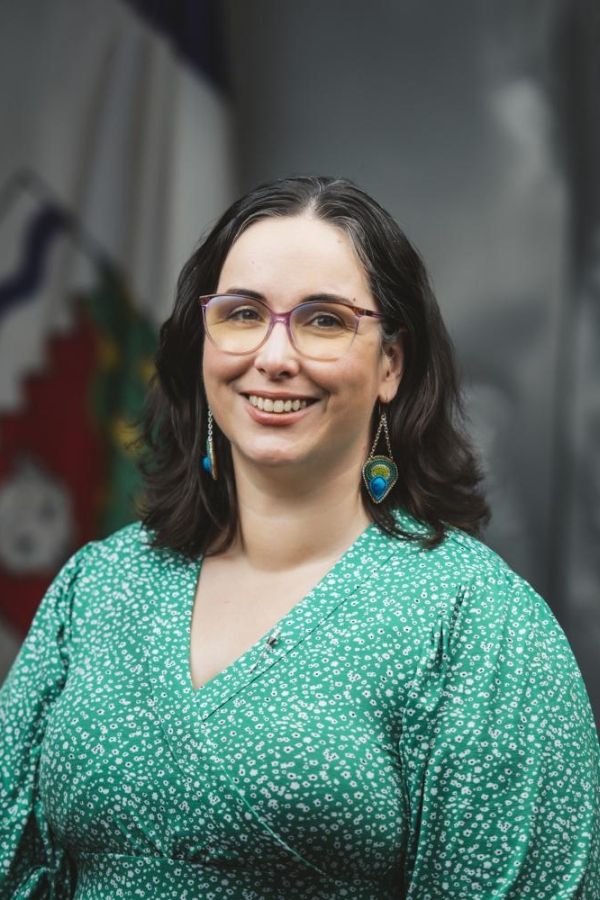
Mr. Speaker, yesterday evening I had the pleasure of meeting Annette King, Yukon's child and youth advocate, alongside several of my MLA colleagues, to discuss the vital work she and her peers champion for the rights of children across Canada. Ms. King's accomplishments, confronting and navigating challenges similar to those our communities here in the Northwest Territories face, are particularly impressive.

It was shocking, but sadly not surprising, to learn that 30 percent of the Yukon's child and youth advocates' work is dedicated to files from outside of their territory, many of which involve children here in the Northwest Territories. This means that parents, guardians, First Nations people, teachers, and even children themselves, are reaching out to outside of the Northwest Territories desperately searching for support because the service simply does not exist here.

The Minister can claim she can support these children with current policies, yet there is no solution for whose welfare could be compromised by the very service meant to protect them, especially when child and family services is their legal guardian. Many families are not notified of decisions CFS makes for their children. Foster families often fear heavy-handed reprisals and adoptions being ground to a halt, leaving children in legal limbo, transitioning from home to home until they turn 18.

Without accountability or transparency, there may be no publicly available data but as MLAs, we see how dire the situation has become. Parents and guardians only have two avenues to seek resolution for these heartbreaking cases - the courts or their elected representatives. But as MLAs, our hands are tied by a government whose policies leave children unrepresented and families, both biological and foster, feeling irrelevant in the process.

The Minister can't have it both ways. She can't oppose independent oversight at every turn and then dismiss MLAs when we try to help. It's time to build on the work that has spanned multiple Members and multiple Assemblies, efforts some of these very Ministers today supported when they sat on this side of the House. That's why today I will be giving notice of a motion calling on this government to finally establish an independent Office of the Child and Youth Advocate here in the Northwest Territories. Thank you, Mr. Speaker.
Speaker: MR. SPEAKER

Thank you, Member from Range Lake. Colleagues, I must remind you to speak a little slower for our translators.

Members' statements. Member from Inuvik Boot Lake.

Member’s Statement 908-20(1): Dempster Highway

I'd be early, Mr. Speaker. Thank you, Mr. Speaker.
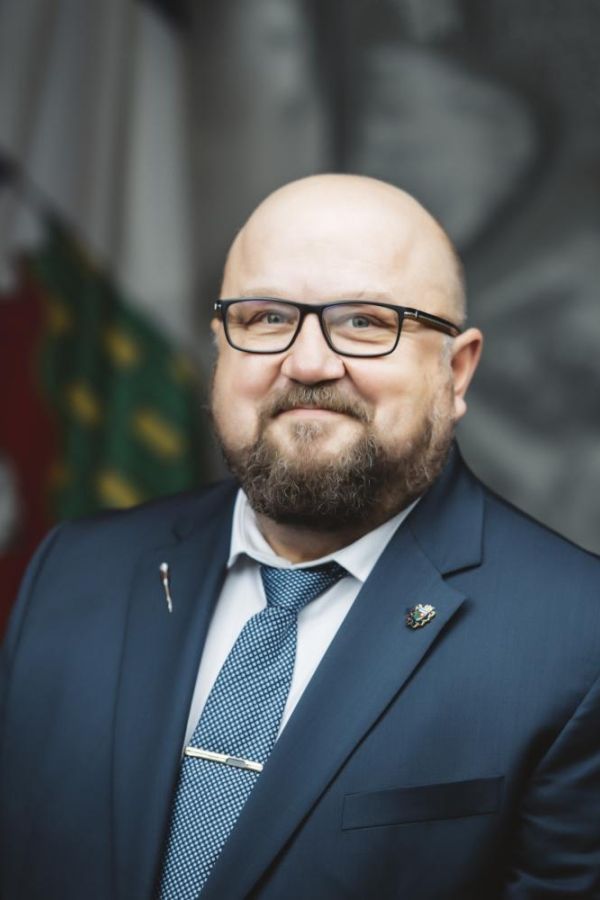
Mr. Speaker, Inuvik and indeed the entire Mackenzie Delta and Beaufort Delta regions rely on the Dempster Highway for vital supplies, from groceries to building supplies, fuel, and many other needed products.

Mr. Speaker, for the month of January the Dempster Highway was closed 18 days, 18 days where no transport trucks were able to deliver to its customers. Furthermore, Mr. Speaker, as of February 20th, the Dempster Highway was closed for an additional nine days. Once again, trucking companies that serviced the needs of my community could not deliver. Product was being spoiled, product sat on the highway, sat at the border, and on and on.

Mr. Speaker, not only does this cause a major disruption in the supply chain where grocery store shelves are empty, building projects can be delayed, and the community runs the risk of vital fuel shortages in the coldest months of the year. Mr. Speaker, we've seen that this year, and it also, Mr. Speaker, can cause serious safety issues.

I spoke with trucking companies that service the region. Most drivers work on a contract basis, and if the road is closed there are no trips to make. The experienced drivers, then, Mr. Speaker, go elsewhere. We have seen this year significantly more incidents of transport truck accidents on the Dempster Highway than we've seen in many, many years.

The maintenance on the vehicles have increased significantly due to the condition of the highway. If this continues, we run the risk of companies having to increase trucking fees which, of course, inevitably will be passed on to the customer, or even worse, Mr. Speaker, choosing not to run the highway at all.

This is not a capacity issue, Mr. Speaker. On the Northwest Territories side, our model of maintaining the road by local contractors seems to be working. We have contractors that are local, have local knowledge that have been out removing snow quickly after snowstorms to get the Dempster Highway open.

Mr. Speaker, someone has to be the voice for trucking companies and the customers they serve. We must work with our sister territory to ensure these costly closures are dealt with in a timely manner. We have to ensure when winter storms happen, and we know they will, that action to reopen the road is dealt with in a much more timely manner. In a normal season, Mr. Speaker, there are 15 transport trucks per day traveling on that highway, and at times up to 20 trucks per day traveling on that highway. That's a lot of goods and services, Mr. Speaker, coming off that highway.

Finally, Mr. Speaker, this certainly adds to the discussion of building the Mackenzie Valley Highway, our own highway maintained solely by our own contractors, carrying products to service more of our communities, and that's not to mention, Mr. Speaker, the commerce that will also stay in our territory. I will have questions for the Minister of Infrastructure later today.

Speaker: MR. SPEAKER

Thank you, Member from Inuvik Boot Lake. Members' statements. Member from the Sahtu.

Member’s Statement 909-20(1): Internal Trade Barriers

Thank you, Mr. Speaker. Mr. Speaker, I rise today to discuss an issue of significant economic importance to the Northwest Territories and to all of Canada: Efficiencies from internal trade barriers.

Mr. Speaker, a recent international monetary fund report reveals that Canada could increase its real GDP by approximately 7 percent, roughly $210 billion, if we fully eliminated the internal trade barriers between provinces and territories, Mr. Speaker. This is not a small matter. These barriers currently equate to about 9 percent tariff nationally. With the costs concentrated primarily in services, which make up a majority of the inter-provincial trade, certainly, Mr. Speaker, a professional approach to Canada cost efficiencies in support of domestic economic growth.

Most concerning, Mr. Speaker, is that barriers in critical sectors like healthcare services, education, amount to 40 percent tariff equivalent. The IMF notes that smaller provinces and territories face costs that are multiples higher in sectors like health, retail trade, and professional services.

I want to acknowledge the progress made by the committee on internal trade in 2025 chaired by our very own Minister Cleveland. Parties removed 30 percent of the party-specific exceptions under the Canadian Free Trade Agreement, signed the Canadian Mutual Recognition Agreement on the sales of goods and services, Yellowknife, and developed a labour mobility action plan with concrete measurables. However, Mr. Speaker, as a small jurisdiction, the Northwest Territories stands to gain significantly from full trade elimination on barriers. The report shows smaller provinces -- excuse me there, Mr. Speaker. Can I seek unanimous consent to conclude my statement? Mahsi.

---Unanimous consent granted

Thank you, colleagues. The report shows smaller provinces could see changes of up to 40 percent points in the GDP per worker. Mr. Speaker, the opportunity is now; the prize is large. IMF says turning 13 economies into one is no longer an aspiration; it is an economic imperative. Mahsi.

Speaker: MR. SPEAKER

Thank you, Member from the Sahtu. Members' statements. Member from Dehcho.

Member’s Statement 910-20(1): Social Passing

Mahsi, Mr. Speaker. [Translation] INSERT* [Translation Ends].

Thank you, Mr. Speaker. I just mentioned that this month is languages month.

Mr. Speaker, today I want to address an issue that has significant implications for student success in the Northwest Territories - the practice of peer group placement in our education system.

Peer group placement occurs when a student who has not met most grade-level expectations is advanced to the next grade with their peers, supported by an education program plan designed to meet their learning needs. However, advancing students before they have developed essential foundational skills can create long-term challenges. Students who move ahead without the necessary competencies often begin the next school year at a disadvantage. If these gaps are not addressed, they can widen over time, affecting academic progress, confidence, and overall engagement. Students who repeatedly feel unprepared may withdraw, experience frustration, or lose trust in their own abilities. This loss of confidence can follow them into post-secondary education, where expectations are higher and greater independence is required.

Without strong foundational skills, students may struggle to keep up, relying on upgrading, or leave their programs before completion. These challenges can also extend into the workplace, limiting the careers they feel prepared to pursue, making it harder to meet job requirements or advance within their chosen field.

It is important to note that peer group placement is not used in grades 10 to 12. By the end of grade 9, students must be prepared for high school, where progression depends on meeting course outcomes rather than age. This underscores the need for strong early intervention and thoughtful support through the junior kindergarten to grade 9 years. Mr. Speaker, our children deserve an education system that prepares them for success at every stage.

Ensuring students are ready academically, socially, developmentally, is essential for both their futures and future of the Northwest Territories. Mahsi, Mr. Speaker. I will have questions for the Minister of ECE.

Speaker: MR. SPEAKER

Thank you, Member from the Dehcho.

Colleagues, before I go any further to Member statements, I'd like to recognize the Grand Chief from the Tlicho, Mr. Jackson Lafferty, former Member, former Minister, and former Speaker of the House. So welcome to the House.

Members' statements. Member from Tu Nedhe-Wiilideh.

Member’s Statement 911-20(1): Action Plan for United Nations Declaration on the Rights of Indigenous Peoples Implementation Act

Thank you, Mr. Speaker. Last week, my colleague from Range Lake tabled the Standing Committee on Public Accounts Review of the Auditor General's Report, Audit of Protected and Preserved Areas in the Northwest Territories. One part of the report caught my attention:
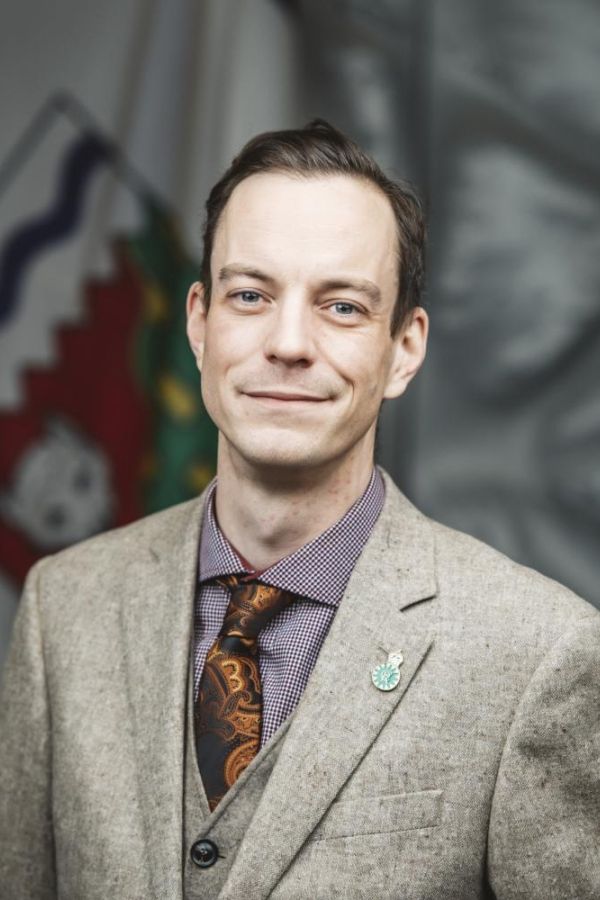
UNDRIPIA came into force on October 6, 2023, and required, in collaboration and cooperation with Indigenous governments or organizations of the NWT and the executive council, a co-development action plan to achieve the objectives of the declaration within two years. The committee noted that this legislative timeline has passed, that no action plans was tabled, and that the required public engagement did not occur.

I was at the previous Assembly when Bill 85 was passed, and it was meant to be a proudly historic moment, a landmark initiative by our government to align itself with comprehensive far-reaching international rights. The UNDRIP Implementation Act was intended as a major step forward in the territory's history which, since division with Nunavut, has struggled to create a new model of governance its people have long called for. At the time, my constituents told me that they wanted action, not words.

They have heard a soaring rhetoric about rights, reconciliation, and cooperation from their government for decades. Every day is in session when we ask for progress, the government simply tells us how dedicated they are to upholding treaty rights and implementing UNDRIP, the TRC Calls to Action, and the MMIWG Calls for Justice. Based on those words alone, you might think this is the most progressive government in the country.

But words don't get my constituents timely medical care. Words don't fund schools. Words don't solve housing crises. Words don't create jobs or bring economic opportunities to their communities or a seat for them at the table to determine economic development. When it comes to action on all fronts, this government has failed the Premier's 50-year vision for the North. It is more like a 50-year reversal back in time to when we were helplessly dependent on Ottawa.

My people are used to failure and disappointment from their territorial government but do not consent to it. Today my communities want more on how the Premier will intend to honour the treaties. Thank you, Mr. Speaker. I will have questions for the Premier at the appropriate time. Thank you.

Speaker: MR. SPEAKER

Thank you, Member from Tu Nedhe-Wiilideh. Members' statements. Member from Great Slave.

Member’s Statement 912-20(1): Vets Without Borders

Thank you, Mr. Speaker. After raising the questions in the House with the Minister of MACA, as well as asking written questions, I had several folks reach out to speak with me about animal welfare programs offered to NWT communities. Most Yellowknifers are familiar with NWT SPCA and the services that they offer. NWT SPCA, the Tlicho Animal Rescue Society, the Hay River Animal Shelter, and Fort Smith Animal Shelter are all compassionate advocates and champions for animal welfare and work to re-home, spay, neuter, and treat hundreds of stray dogs and other pets each year.
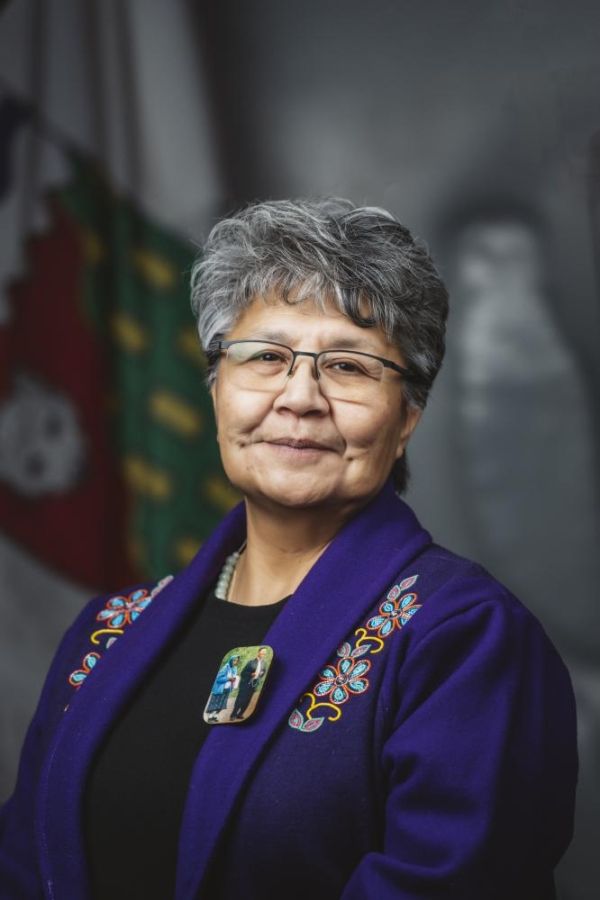
A group that may have less familiarity in my constituency but is more well-known in some smaller communities, is Vets Without Borders. With their northern animal health initiative and community animal health worker program, vets travel to the NWT to support communities that have limited access to veterinary services. Vets Without Borders provides not only travel vet clinics for vaccination and deworming but can also assist interested municipalities and bylaw officers with capacity building. Vets Without Borders can provide them with telehealth supports, educational supports, teaching of pet first aid, and training for lavex vaccinators to prevent disease outbreak. Rabies and dog bites can be costly to our human health system, Mr. Speaker.

Mr. Speaker, across the North, passionate animal lovers are doing much-needed work to assist animals on pathways to new adoptive homes. Vets Without Borders is assisting animals and communities where they are at. Animal welfare has many facets, and some facets could be supported with in-kind government work. With some targeted support for communities, we can lessen downstream impacts on our animal shelters. I will have questions for the Minister of MACA at the appropriate time. Thank you.

Speaker: MR. SPEAKER

Thank you, Member from Great Slave. Members' statements. Member from Yellowknife North.

Member’s Statement 913-20(1): Private Contract Paramedics

Mr. Speaker, many things about health care keep me up at night. One concern I haven't spoken about yet is the department's growing focus on integrating private contracted paramedics into both small community health centres and our hospital emergency departments.

To be clear, paramedics do difficult, important work. Their specialty is in responding to emergency events and stabilizing patients for transport to take them to other medical professionals with broader scope. In the NWT, paramedics have mainly been working for municipalities with ambulance services, like Yellowknife, working for mines or with firefighting crews to support remote operations, or else working for private companies that run medivacs.

Two things are new that concern me: The push to give paramedics new roles in order to plug nurse vacancies and the shift towards privatization of our core health care functions.

Now, one of this Minister's top three priorities is to create the small community model of care, and this budget proposes adding a new full-time manager position devoted to that work. The problem is that model seems to revolve around expanding the role of private paramedics in primary care. Now, let's remember that paramedics specialize in acute care and transport, so why would we turn to them for the everyday care people need in small community health centres, everything from health promotion and screenings, to pre- and post-natal care, to chronic disease management. The explanation given is that right now we cannot recruit enough community health nurses or emergency room nurses to fill all the shifts, so we need to contract these paramedics for hire as helpers so the nurses don't burn out. Well, who could argue with that? Except why is the alternative to paramedics having nobody? Why aren't we focused on the need to hire more community health nurses when they're the ones with the skill sets we need most?

We have a health recruitment unit, we heard today. Reportedly, it's doing great, smashing its targets in hiring both indeterminate and casual RNs and community health nurses. Are they all leaving so soon? The shift towards filling gaps with private paramedics seems more like a short-sighted move of desperation than a long-term strategy we should pour more resources into. Mr. Speaker, I ask for unanimous consent to conclude my statement.

---Unanimous consent granted

Thank you, Mr. Speaker. I will simply conclude by saying I will have more to say in the coming days about my concerns with the increasing privatization of primary care through paramedics. Thank you, Mr. Speaker.
Speaker: MR. SPEAKER

Thank you, Member from Yellowknife North. Members' statements. Member from Monfwi.

Member’s Statement 914-20(1): Child and Family Services

Thank you, Mr. Speaker. Mr. Speaker, [Translation] this item that I'm going to talk about is regarding relative and how relatives and families work together and respecting each other.  Mr. Speaker, this issue that I'm talking about is our ancestors' knowledge.  So that is important.  Our ancestors' knowledge is very important, and we're supposed to work with this with our children.  So this child and family services, that's the issue I want to talk about [Translation Ends]. family services, Mr. Speaker.

Mr. Speaker, family unity, responsibility, respect, and care for one another are core principles that have sustained our people for generations. When we speak about children and family services, those values might guide us. No dispute that child safety must always come first. When a child is in danger, the government has a duty to act, but we must also look honestly at why so many families are reaching crisis in the first place.

Too often, Mr. Speaker, housing shortages, overcrowding, poverty, trauma, and limited access to local supports are major contributing factors.

Mr. Speaker, these are systemic challenges, not simply individual failures. When parents do not have stable housing or access to mental health, addictions and family supports in their own communities, they are being asked to succeed without the tools they need.

Mr. Speaker, when a child must be removed from their parents, that is already a serious and disruptive change. When that removal also means that child must leave their home communities because there is no local placement available, the impact is even greater. The separation from family is compounded by separation from culture, language, school, and community supports.

If we are serious, Mr. Speaker, about reconciliation and about honouring Indigenous values, we must address both prevention and capacity. We must strengthen families before crisis occurs. And we must ensure that when children are in care, they can remain connected to their home communities. Mr. Speaker, our children deserve stability, protection, and the opportunity to grow up surrounded by their culture, their language, and their people. I will have questions for the Minister of Health and Social Services. Thank you.

Speaker: MR. SPEAKER

Thank you, Member from Monfwi. Members' statements. Member from Yellowknife Centre.

Member’s Statement 915-20(1): Cost of Living

Thank you, Mr. Speaker. For most Northerners, the cost of living isn't just a challenge; it's actually a crisis. It's a financial impossibility some days from the grocery aisle to the heating bills. Mr. Speaker, Northerners clearly shoulder some of the heaviest burdens across Canada, and I think people are getting tired of the tried-and-true excuses of inaction when it comes to geography and climate change as the backstop of why inaction seems to happen.

Mr. Speaker, since 2023, this government has talked extensively about its affordability challenges, and yet residents are still asking. Show us some results, Mr. Speaker. Northerners deserve much more than rehearsed talking points and fingers pointing, Mr. Speaker.

Well, the government will list endless amounts of subsidies and things they do, but the people on the ground don't see results. They see band-aids for just such a few.

Mr. Speaker, the everyday person doesn't want incremental tweaks; they want to see something in their wallet. Insufficient or invisible rhetoric, Mr. Speaker, won't fill a belly, Mr. Speaker, and it definitely won't keep the lights on. Mr. Speaker, they deserve concrete action now to lower costs and, Mr. Speaker, this crisis can't wait any longer.

Mr. Speaker, the government has been in power, again since 2023, so as the mandarins behind the scenes pull the actual policy levers and make the decisions, Mr. Speaker, everyday families are waiting to see meaningful results. Mr. Speaker, we can list inefficient programs, but the fact is people want to see delivered relief.

Mr. Speaker, I am going to suggest why doesn't this government finally come to terms and let go of the NWT payroll tax. Mr. Speaker, that gluttony could end. Did you know if you made $35,000 a year, you pay $700 annually in payroll tax? Just imagine if you made as much as the NWT senior envoy. That'd be 10 times the amount of the everyday person, Mr. Speaker. Mr. Speaker, 2 percent. Mr. Speaker, that's a lot of local money, whether it's in Yellowknife or a regional centre or a small community, that's disposable income for families going to stores, helping kids, etcetera.

Mr. Speaker, you know, like the old saying, if you build it they will come. Mr. Speaker, the government's motto is if you give us money, they'll find ways to spend it. Mr. Speaker, the government could find a way to do this, Mr. Speaker. I will tell you right now I don't know if it's going to take Moses to part their payroll red tax sea but, Mr. Speaker, we need to see some action. Mr. Speaker, I am going to finish with set our people payroll tax free.

Speaker: MR. SPEAKER

Thank you, Member from Yellowknife Centre. Members' statements.

Member’s Statement 916-20(1): Celebration of Life for Christine Holman

Today, I am honoured to celebrate the remarkable life of Christine Holman, a woman whose presence touched every life she encountered with warmth, wisdom, and grace. Christine lived fully and loved deeply, leaving a legacy not only in the memories she created but also in the kindness she shared so freely with others.

Born with a generous spirit and boundless curiosity, Christine approached life with a quiet but steady strength. She found joy in simple moments - a morning cup of coffee, a walk through the community, or a conversation that lingered long after the day ended. Her laughter had a way of instantly brightening a room, and her compassion reminded those around her that love, in its truest form, is an everyday act.

Christine dedicated herself to her family and friends, always leading with empathy and faith. She believed in the power of listening, of showing up, and of finding beauty in imperfection. Her home was a place of comfort and acceptance, where everyone felt welcome and valued.

Beyond her kindness, Christine also embodied resilience. Through life's challenges, she met hardship with courage and grace, showing us that strength and hope can coexist even in difficult times. She never stopped learning, growing, or inspiring others to do the same.

I knew this amazing soul as a neighbour, a sounding board, and someone who was always willing to share her ideas in meaningful ways. When she said she wanted to chat with me, I knew I could expect wisdom and insight. I will miss her deeply.

Her family would often joke that Christine made it a point to support every community fundraiser even if she didn't particularly enjoy playing bingo. She would buy her cards, dab away as the numbers were called, and laugh all the same.

On a more serious note, she was very proud of her Metis heritage and of serving as a Ranger, symbolized by the colour of her coffin, Ranger Red. Remembrance Day was especially important to her; she took great pride in participating in the parade and the laying of wreaths.

As we celebrate Christine's life, we remember her not with sorrow alone but with gratitude for the love she gave, the lessons she shared, and the joy she left behind. May her memory remind us to cherish one another, live gently, and carry forward her remarkable light in our own lives.

After a long battle with cancer, Christine passed away. Her sons and her partner would like to thank everybody for the well wishes and kind stories.

Recognition of Visitors in the Gallery

Thank you, Mr. Speaker. I would like to recognize a bunch of beautiful ladies there from my riding, starting with my Auntie Cathy Bolton, Marie Speakman, and -- there's so many up there to remember. Lucy Ann Menacho, Rena Chapple, and MaryAnn Vital. Mahsi cho. Welcome.

Speaker: MR. SPEAKER

Recognition of visitors in the gallery. Member from Tu Nedhe-Wiilideh.