Debates of March 6, 2026 (day 90)

Date
March
6
2026
Session
20th Assembly, 1st Session
Day
90
Speaker
Members Present
Hon. Caitlin Cleveland, Mr. Edjericon, Mr. Hawkins, Hon. Lucy Kuptana, Hon. Jay MacDonald, Hon. Vince McKay, Mr. McNeely, Ms. Morgan, Mr. Morse, Mr. Nerysoo, Ms. Reid, Mr. Rodgers, Hon. Lesa Semmler, Hon. R.J. Simpson, Mr. Testart, Hon. Shane Thompson, Hon. Caroline Wawzonek, Mrs. Weyallon Armstrong, Mrs. Yakeleya
Topics
Statements

Prayer or Reflection

Please be seated. I'd like to thank Jonas Lafferty for the opening prayer.

Colleagues, before we start, I am going to do my ruling today. It's been a very challenging thing to look at this ruling and I had to do a lot of work across Canada to come up with this decision.

Colleagues, I am prepared to deliver my ruling on the point of order raised by the Member for Thebacha on February 27th. I want to start by stating that this is a lengthy ruling. Following my ruling, I will be sending the question of Private Member's bills to the committee on procedures and privileges for further study.

First off, I will address public statements some Members made after I reserved my decision. When a matter is reserved and before me for a decision, it is inappropriate for Members to debate the issue publicly. It can be seen as an attempt to influence my decision.

I further need to remind all Members that allowing debate on a topic is the prerogative of the Speaker. If a Member is rising on a point of order, they should be prepared to speak to it in full and be prepared for a situation where no debate is allowed.

Again, raising a point of order is leaving a decision with the Speaker. It is not a time to seek public support for political gain as the procedures of this House should not be weaponized in this manner.

Members, I must express that I expect a higher standard from all of you. It is my sincere hope that we continue to work collaboratively within our consensus system to make decisions that truly enhance the lives of the residents of the Northwest Territories.

I want to first recognize the work of the Member from Range Lake. I know that this is an important topic for the Member. I also wish to recognize that the government House leader and any Member can and should seek procedural clarity on the variety of matters that are reviewed by this House and its committees; however, I must also convey my disappointment that we find ourselves in this position today.

I have listened carefully to both sides, each acknowledging that this bill holds great importance and that much of its content is commendable. Yet, rather than uniting in cooperation, we have arrived at this point of division. I hope you take these words to heart and reflect on how we move forward in the final 18 months of our time as Members of the 20th Legislative Assembly. There is so much work left to do, and we need to do it working together.

Moving on, I have reviewed the debate that occurred on February 27th. I have also done extensive research on the purpose of Bill 29, as well as the parliamentary processes and expectations of Private Members' bills both in the Northwest Territories and in other jurisdictions throughout Canada and the Commonwealth. In my review, it has become evident this is an area of parliamentary procedure that is extremely nuanced and does not provide for simple rulings.

The staff of the Office of the Clerk were able to gather data from jurisdictions across the country and the Commonwealth alongside a review of the history of our own Private Members' bills to provide me with detailed information for consideration of this matter. I want to make it clear that this is a very challenging ruling. I reflect again on the additional challenges to my office in ruling on this when Members issue public statements before I have ruled.

A different Speaker may have come to a different conclusion than myself and have been justified to do so. In my ruling, I tried to capture both the conventions of our Assembly alongside my own interpretation of our rules. I wish to first highlight that a point of order differs from a point of privilege, Rule 1.7(3), noting that a Member may always raise a point of privilege at the earliest opportunity. Ideally, a point of order is raised at the earliest possible opportunity however, this is not required. A point of order can be raised as additional information comes to light or during debate.

A Private Member's bill does not obtain the level of review and scrutiny that a government bill has during drafting, and government cannot rise on a point of order during a committee's review of a Private Member's bill. Although second reading is an appropriate time to rise on a point of order for a bill, it is not the only time available to do so.

Rule 1.2(i) defines a Private Member's bill as a bill introduced by a Member who is not a Minister "which do not involve the appropriation of public funds or the imposition of any tax."

Rule 8.5(1) further provides that the Assembly may not adopt or pass any bill for the appropriation of public revenue except for a purpose recommended to the Assembly by the Commissioner in the session in which the bill is proposed.

The Member for Thebacha's point of order is related specifically to the definition of "Private Member's Bills" in Rule 1.2(i). The question before me is not whether Bill 29 contains an expressed appropriation clause. It does not. The question is whether Bill 29 nevertheless involves the appropriation of public funds in a manner that renders it inadmissible as a Private Member's bill, according to the definition in our rules.

In assessing that question, I have considered our rules, the Northwest Territories Act, and persuasive authorities from other Canadian jurisdictions, including the House of Commons.

Bill 29 amends the Workers' Compensation Act to expand presumptive coverage for certain classes of workers. It:

Extends presumptive PTSD coverage to a class of workers not previously defined in the Act;

For firefighters, it aims to broaden cancer coverage;

Reduce latency periods; and

Expand presumptive coverage for heart disease and heart injury.

The evidence before the Assembly establishes that the coming into force of Bill 29 would result in:

An immediate insurance liability estimated at approximately $4.3 million; and

Ongoing increased annual costs through higher assessment rates applied to the Government of the Northwest Territories.

However, Bill 29 does not:

Contain an appropriation clause;

Authorize the withdrawal of funds from the consolidated revenue fund;

Fix a specific sum payable from public revenue; or,

Direct that money be paid out of the consolidated revenue fund.

Members have argued that the test is not whether a bill has financial implications. Many Private Member's bills have financial implications. It has been argued that the test is whether the bill itself provides the authority to withdraw money from the consolidated revenue fund. By this limited scope, one might view the bill as in order because there is no direct line item that appropriates funds. Nevertheless, there is full agreement that the implementation of Bill 29 will have financial consequences.

The Workers' Protection Fund is financed primarily through employer assessments and operates separate from the consolidated revenue fund. There are interpretations from the Speaker's rulings in other jurisdictions that a bill affecting an appropriation of public funds does so immediately upon enactment. Accordingly, because the legislation in question does not direct a transfer of money from the consolidated revenue fund into the Workers' Protection Fund and would require additional action from the government to authorize that transfer, one could conclude that Bill 29 does not constitute an appropriation of public funds. However, I reiterate that the definition of a Private Member's bill in Rule 1.2(i) is not limited to whether Bill 29 is an appropriation bill but whether it involves the appropriation of public funds.

Further, if it is argued that Bill 29 does not provide the authority to compel appropriations then future Private Members' bills could compel government spending on a variety of matters all because they are presenting something that is not in itself an appropriation bill.

It should also be argued that the insurance liability and increased assessment costs incurred by the Government of the Northwest Territories arise from a policy decision rather than Bill 29 itself. The Workers' Compensation Act authorizes the governance council to establish the rate or basis for calculating the assessments to be paid by the employer. The governance council has adopted a policy model establishing that the full liability associated with presumptive coverage for firefighters be borne by the Government of the Northwest Territories. On this basis, it can be argued that the resulting financial obligations fall on the government because of that policy choice, not because of the bill before us. Again, I present these arguments to reflect on how this bill itself does not appropriate.

These are not incidental or administrative adjustments. They alter the scope, objects, and conditions of entitlement under the Act. They extend benefits to a broader class of persons and ease the qualifications required to receive compensation. This has been established in the House of Commons as sufficient to be considered a "new and distinct" expense.

Again, the evidence before the Assembly establishes that the coming into force of Bill 29 would result in:

An immediate insurance liability estimated at approximately $4.3 million; and

Ongoing increased annual costs through higher assessment rates applied to the Government of the Northwest Territories.

These amounts are separate from and in addition to any current appropriations. This is not a case of incidental implementation costs that may be absorbed within existing departmental budgets. It is a substantive expansion of statutory entitlements that creates a new financial obligation.

In referencing Bill 8 during the debate on this point of order, which was a Private Member's bill passed by this Assembly, it was stated that an appropriation was required to fulfill the obligations of that bill. This is incorrect. Bill 8 did not compel a supplementary appropriation. However, an additional piece of legislation which increased the revolving fund for the student financial assistance program was brought forward. No appropriation bill was required.

In reviewing other Private Member's bills adopted throughout our Assembly's history, there is little evidence that they required an additional or separate appropriation in order to be enacted. Some of these Private Members' bills contemplated charges on private industry rather than government. Some were policy changes, or authorized government departments to develop new regulations for industries or professions. However, no additional appropriations were necessary to carry out this work.

If the effect of these bills was to increase the workload of a department, the incidental costs incurred could be addressed through the usual budget process.

I wish to also discuss the Commissioner's recommendation.

The Member for Range Lake noted that a bill similar to Bill 29 might require a Royal recommendation in other jurisdictions. The Member was referring to the practice in the House of Commons of including a message from the Governor General recommending that Parliament appropriate the funds necessary to defray the expenses listed in an appropriation bill or for the purposes set out in a bill that authorizes new charges against the consolidated revenue fund.

In the Northwest Territories Legislative Assembly, a similar "Commissioner's recommendation" is included as a preamble to appropriations bills. This recommendation is not included in other bills, including other public bills such as the Workers' Compensation Act, and this practice in the Northwest Territories differs from the practice of the House of Commons in that respect.

Despite this difference, the criteria applied in the House of Commons to determine whether a bill touches on the financial initiative of the Crown is still critical in determining whether a bill introduced in the Legislative Assembly appropriates public funds and therefore whether it would be inadmissible as a Private Member's bill. The absence of a Commissioner's recommendation does not, in itself, render a Private Member's bill procedurally in order.

In summary, I find that Bill 29 creates a new and distinct financial obligation resulting in a real and unavoidable expenditure of public funds; compels the government to spend money in order to meet statutory entitlements; imposes a fixed coming into force date that binds the executive to incur those expenditures, and therefore involves the appropriation of public funds within the meaning of Rule 1.2(I). Accordingly, Bill 29 does not meet the definition of a Private Member's bill.

There is a valid point of order. Bill 29 is not in order and will not proceed. The bill will be removed from the orders of the day.

Members, this ruling should not stop us as Members from working together. Members on both sides of this House need to advance our shared priorities. We need to stop being adversarial and focus on working together. That is what the residents of the Northwest Territories expect of us. Thank you, colleagues.


Ministers’ Statements

Minister’s Statement 199-20(1): International Women’s Day 2026

Mr. Speaker, I rise today to acknowledge International Women's Day, held on March 8th, to celebrate women's social, cultural, and political achievements throughout history and across nations. International Women's Day also provides the opportunity to showcase commitments towards gender equality, raise awareness of the gaps that persist, and highlight initiatives that promote gender equity. The 2026 theme for International Women's Day is Give to Gain, encouraging generosity and collaboration to advance gender equality.

This theme emphasizes the power of mutual support, and supporting women through resources, time, and mentorship. Give to Gain emphasizes the importance of giving attention and effort to gender equity to gain long-term equality. Contributing to women's advancement helps create a more supportive and interconnected world. When women thrive, we all rise.

Mr. Speaker, gender inequality remains deeply entrenched in our society despite decades of effort. Progress has been hard won in areas like economic participation, political representation, and combating gender-based violence. We need collective action to protect these gains and to prevent backsliding on women rights, access to equitable services, advancement in the workplace, in educational spaces and in society.

The young women and girls of today will be the leaders of tomorrow. We need to support them so they can reach their full potential. Providing better access for women to education, suitable housing, health care, employment, and child care not only supports women but it benefits society by helping to build a sustainable economy and strengthened support networks. When we address the gaps along the social service continuum, we do our part to ensure all women and girls can achieve their full potential.

Mr. Speaker, we recognize that women face ingrained societal hurdles, systemic barriers and gender-based discrimination. These obstacles perpetuate a cycle of gender inequality.

We must work together to develop and implement strategies to prevent violence against women and girls. We must dismantle systems that disadvantage women, and we must keep updating our policies and programs so they truly support to promote the advancement of women in leadership positions. We must ensure that services are equitable and that we remain committed to keeping women and girls safe in the Northwest Territories. This work is ongoing, but I believe we can continue to make meaningful progress.

Give to Gain is a global call to action. It is an invitation to contribute what you can, whether that is your support, your time, or your knowledge. It highlights how personal commitment, paired with coordinated efforts, can meaningfully elevate and amplify the focus on gender equality.

I thank all women across the Northwest Territories for their invaluable contributions to our communities, our families, and our workplaces today and every day. Women have always given to gain, and they continue to do so in a million unseen ways. This translates into strong families, connected communities, and healthy environments. I encourage everyone to give strategically on this International Women's Day and make targeted contributions to women's events, causes, services, and gender equity advocacy.

When women thrive, again we all rise. I invite each Member of the Legislative Assembly to join me in recognizing International Women's Day 2026. Quyananni, Mr. Speaker.

Speaker: MR. SPEAKER

Thank you, Minister responsible for the Status of Women. Ministers' statements. Minister of Infrastructure.

Minister’s Statement 200-20(1): Road Safety and the Drive Safe Campaign

Mr. Speaker, in the fall of 2024 our government launched the Drive Safe campaign to strengthen road safety awareness across the Northwest Territories. Today, I am pleased to provide an update on the work and how it continues to support safe communities and travel for Northerners.

There are nearly 27,000 licensed drivers in the Northwest Territories. Our roads connect communities, support essential services, and enable the movement of goods, fuel, and supplies. Many of these roads include long isolated stretches, limited services, and sometimes challenging conditions that demand careful planning and responsible driving.

Mr. Speaker, since its launch, the Drive Safe campaign has evolved into a year-round program that reflects how people travel in the North. Seasonal mini-campaigns focusing on winter driving, winter road resupply, back-to-school safety, new driver and youth safety, impaired and distracted driving, wildlife on the highway, ATV and snowmobile safety, and the importance of getting home safe.

This approach recognizes a simple reality. Road safety in the NWT looks different than it does elsewhere, and the conditions can change quickly at any time of year. Wind, snow, ice, fog, wildfire smoke, winter roads made of packed snow, ice, and gravel roads all affect how safely people can travel. These risks exists year-round and require drivers to plan ahead, slow down, stay alert, and adjust to the conditions in front of them.

Mr. Speaker, road safety is not something the government can deliver on its own.

While our government is responsible for maintaining infrastructure, providing timely information and supporting enforcement and education, every driver has a responsibility to be prepared before they travel. That means checking road and weather conditions before heading out, planning fuel and rest stops, carrying emergency supplies, and driving with caution.

As part of this work, we continue to promote DriveNWT.ca as the trusted source for road and highway information. DriveNWT.ca provides up-to-date details on road conditions, winter roads and ice crossings, construction zones, weight restrictions, closures, and weather impacts. This tool helps support safer decision-making for anyone travelling on our highways.

Mr. Speaker, public education remains a critical part of keeping people safe on our roads and highways. The Drive Safe campaigns bring together GNWT departments, enforcement partners, and community organizations to deliver one consistent message throughout the year. This coordination ensures that road safety messaging is clear, recognizable, and relevant, whether it is aimed at experienced drivers, commercial operators, youth, or new drivers.

One way we are supporting safer driving is by reaching youth and new drivers early, recognizing that habits form early on in life. One example is a keychain provided to new drivers that uses humour to deliver a serious message about making safe choices behind the wheel. These kinds of tools are designed to stay top of mind and spark conversations about responsibility and risk.

In the North, the consequences of unsafe driving can be especially severe due to distance, isolation, and limited access to emergency services. That is why our messaging continues to focus on everyday choices: planning ahead, staying focused, driving sober, slowing down, watching for pedestrians and cyclists, and wearing a seatbelt every time.

Mr. Speaker, road safety is a shared responsibility. By preparing before we travel and driving with care, we reduce collisions, protect our communities, and ensure our roads continue to serve as safe and reliable lifelines across the Northwest Territories. Because at the end of the day, there is a lot on the line, and we all want the same thing: to get home safe. Thank you, Mr. Speaker.

Members’ Statements

Member’s Statement 983-20(1): International Women’s Day

Thank you, Mr. Speaker. Once again, I wish to rise and recognize that this Sunday, March 8th, is International Women's Day. I am proud to represent the Northwest Territories as its Commonwealth woman parliamentarian and mark this day annually.

Last year, I asked all of us to recommit what positive and lasting action looks like for northern women, girls, and gender diverse folks across our territory. We do continue to make progress, but I do not think we have collectively met the high bar I want us to set yet when it comes to sustainable support for eliminating gender-based violence for instance. We have not begun to address trauma in a meaningful way. Trauma often manifests as people acting out in unhealthy ways, including violent acts. That violence disproportionately affects women, girls, and gender diverse folks. I see caregivers, who are overwhelmingly women, burnt out, whether they work in daycare, nursing, or administrative support. Across Canada, gender diverse folks are on edge as legislation is proposed and enacted that erodes their rights. But I also want to focus on the positive, Mr. Speaker.

On February 9th, I tabled a letter from YWCA-NWT to the Premier and several Ministers seeking funds to keep two safe homes operating for women and families fleeing violence. With the Members for Nahendeh, Sahtu, Yellowknife North, and Frame Lake, we wrote to Cabinet to urge them to support this critical service for Fort Good Hope and Fort Simpson. I am happy to say that Cabinet found the funds for 2026-2027 to support these two safe homes and that EIA will work with YWCA-NWT to try to find sustainable funding for safe homes and other crucial programs.

I see the work of this government to make programs and services more welcoming for gender diverse folks. I know the Minister responsible for the Status of Women conducts her work in a heartful, compassionate way, and doesn't shy away from the hard work ahead that she does on behalf of all northern women and girls. I am proud to stand in this House with seven furiously passionate women who work hard for women, families, girls, and gender diverse folks 365 days a year:

The Member for Monfwi,

The Member for Dehcho,

The Member for Nunakput,

The Member for Yellowknife North,

The Member for Yellowknife South,

The Member for Kam Lake.

Thank you all. I seek unanimous consent to conclude my statement, Mr. Speaker. Thank you.

---Unanimous consent granted

Thank you, Mr. Speaker. Thank you, colleagues. Once again, I won't ever let an International Women's Day pass without calling for supporting action, not just words, and with sustainable funding and capacity for organizations on the front lines. Thank you, Mr. Speaker.

Speaker: MR. SPEAKER

Thank you, Member from Great Slave. Members' statements, Member from Tu Nedhe-Wiilideh.

Member’s Statement 984-20(1): Thank You to Support System

Mr. Speaker, as this long legislative session comes to close, I want to thank everyone who supports us in this chamber: my colleagues, our dedicated staff, my constituents, and especially my family who supports me, makes everything I do possible.

I want to start by thanking my wife, my family, our puppies Leo, Rocky, and Sophie, as well as my extended family and relatives.

I want to thank all my colleagues, our Speaker, and the clerk's office. I want to thank all my constituents, local leaders, for bringing forward their issues and concerns from Dettah, N'dilo, Lutselk'e, and Fort Resolution.

I want to thank my constituent assistant Taylor Pagotto and Warren Delorme. I want to thank all those Legislative Assembly staffs from the library research team to Members services and public affairs for making work run smoothly.

Mr. Speaker, I want to say a big mahsi cho to all the translators here today. I want to say mahsi cho for being here for us and supporting us, especially Jonas Lafferty and Mary Rose Sundberg.

Also, the Legislative Assembly technician for their hard work bridging our proceedings to the people in our Indigenous languages.

I want to wish all the NWT Arctic Winter Games athletes good luck as they head to Whitehorse, Yukon, and especially those from Dettah, N'dilo, Lutselk'e, and Fort Resolution. Safe travels, have fun, and stay safe.

It's getting close to the springtime so enjoy the spring weather and all the spring carnivals and festivals happening throughout the NWT. The Yellowknives Dene First Nation Spring Carnival is from March 20th to 22nd, 2026, and the Fort Resolution Spring Carnival is from March 16th to March 22nd, 2026. Come out and enjoy yourself, bring the family and kids.

Mr. Speaker, in closing I would like to say keep safe, watch out for one another, offer support to each another and have a safe trip home. And I want to God bless all my colleagues. Mahsi.

Speaker: MR. SPEAKER

Thank you, Member from Tu Nedhe-Wiilideh. Members' statements. Member from Mackenzie Delta.

Member’s Statement 985-20(1): Daylight Savings Time

Thank you, Mr. Speaker. Mr. Speaker, I rise today to speak about the practice that many residents across the Northwest Territories revisit and question each year, the ongoing use of daylight savings time. Twice each year residents across the territory adjust their clocks forward in the spring and back again in the fall. While this may appear to be a minor change, it can disrupt daily routines, affect sleep patterns, and create challenges for many people. Families, workers, and elders often feel the effects as they adapt to shift in time. For shift workers, parents with young children, and those already managing busy schedules, even a one-hour change can be difficult and may influence overall well-being, safety, and productivity.

Mr. Speaker, the Northwest Territories differs greatly from the southern regions where daylight savings time was first introduced to better align daylight with daily activities. In the North, we already experience significant seasonal shifts in daylight. During the winter months, daylight hours are very limited, while in the summer the sun remains visible late into the evening. Adjusting clocks does little to change these natural patterns.

Daylight savings time was originally introduced to conserve energy and make better use of daylight during working hours; however, in today's world, with modern technology, changing work habits, and new energy practices, many experts agree that these benefits are now minimal and no longer relevant. What remains is a system that disrupts routines twice a year while offering very little practical advantage.

Across North America, many jurisdictions are taking note of these concerns. Several are reviewing the practice of it or considering this elimination in favour of consistent, year-round time. Residents are seeking stability and predictability in their daily routines.

Mr. Speaker, while residents of the Northwest Territories -- Mr. Speaker, I seek unanimous consent to conclude my statement.

---Unanimous consent granted

Thank you, Mr. Speaker. Mr. Speaker, while residents of the Northwest Territories are resilient and adaptable, that does not justify continuing a practice that offers little benefit in our northern context. It is time to seriously consider ending the twice-yearly clock changes and adopting permanent consistent time that better reflects the needs of our territory. Thank you, Mr. Speaker.

Speaker: MR. SPEAKER

Thank you, Member from Mackenzie Delta. Recognition of visitors in the gallery -- Sorry, Members' statements. Oh my goodness. Member for Monfwi.

Member’s Statement 986-20(1): International Women’s Day

Thank you, Mr. Speaker. Mr. Speaker, this weekend people around the world will gather to celebrate International Women's Day. Today, I recognize and honour the women across the Northwest Territories and special acknowledgment to the Tlicho women and girls in my region.

Women are at the heart of our communities as mothers, grandmothers, daughters, sisters, aunties, and cousins. They help shape the lives of those around them and carry forward the knowledge and traditions that connect our people.

Mr. Speaker, mothers in particular, carry a tremendous responsibility. They care for their families, often placing the needs of others before their own. Through their everyday actions, they show their children how to care for themselves and for others so that one day they can grow into great mothers and fathers. When their families and communities need the most, a mother's strength never wavers.

Mr. Speaker, one example of that strength is Ashley Wedzin. Yesterday, this House heard about the life of her son Kevin Netsiza's journey and that challenges their family face. Through it all, Ashley never gave up on her son or her family.

Mr. Speaker, I would also like to recognize the women who sit here in this House: the MLAs, the administrative staff, and interpreters. I have tremendous respect for them. They work hard to be here and continue to work tirelessly for the people of the Northwest Territories. I am proud to sit beside them and work with them.

Mr. Speaker, as we honour women today, we must also remember the missing and murdered Indigenous women and girls whose absence continues to be deeply felt by their families and loved ones. Mr. Speaker, in their memories and in honour of all women, we recognize the strength and leadership women bring to our families and communities. Happy International Women's Day. Thank you.

Speaker: MR. SPEAKER

Thank you, Member from Monfwi. Members' statements. Member from Yellowknife North.

Member’s Statement 987-20(1): Celebrations in march

Mr. Speaker, the month of March holds a number of opportunities to celebrate. As we've heard, this Sunday we will celebrate International Women's Day.

Now women and girls come in all sorts of forms and sizes, come from different backgrounds with different cultures and languages and values even, but our power comes from finding the things we have in common and fighting for each other's rights and dignity. At the end of March, we will observe National Indigenous Languages Day, and it's also the International Month of La Francophonie, French-speaking people around the world.

Almost 11 percent of NWT residents and 17 percent of Yellowknifers speak French fluently. For about 4 percent of our population, French is their first language. [Translation] This afternoon, the federation of the -- for the Francophone community will raise the Francophone at the Chateau de Neige that be taking place is to celebrate the vitality of the Francophone community, the diversity and the pride of Francophone such as me, because this is a community that enriches our community as a whole. These contributions that are important include musical productions and artistic productions, for example, the incredible -- for the original production that was presented last night at Top Knight titled Histoires d’entre nos lèvres, so Stories Between Our Lips. I would like to congratulate Marjalaine Jarvais and Aida Servi for their creative work. It pays tribute to women's lives and their experiences. [Translation Ends].

Mr. Speaker, Happy International Women's Day. Let's take time this month to appreciate the Indigenous language speakers and the French language speakers amongst us. And I wish everyone safe travels as folks head home or to the Arctic Winter Games or to their other holidays. Thank you. Merci.

Speaker: MR. SPEAKER

Thank you, Member from Yellowknife North. Members' statements. Member from Inuvik Boot Lake.

Member’s Statement 988-20(1): Jamboree Season

Thank you, Mr. Speaker. Mr. Speaker, as many have said in this House, spring is just around the corner and for the folks in my region, that means that it is Jamboree season. Everything kicks off, Mr. Speaker, on April 2nd with the Mad Trapper Jamboree in Aklavik; then the Muskrat Jamboree in Inuvik from April 10th to the 13th; Peel River Jamboree in Fort McPherson April 17th to the 19th; Tsiigehtchic, the Mackenzie Jamboree from April 24th to the 26th; and finally, the Beluga Jamboree on April 24th to the 27th in Tuktoyaktuk.

I just want to give a big shout out to all the organizers for these events. It's an opportunity to celebrate culture, games, and of course my favourite, the food. And I encourage if you are visiting any of these regions or up in the Beaufort Delta or Mackenzie Delta to please come out, enjoy, meet some great people, and participate in some fun games and enjoy the sunshine and the weather.

Also, safe travels. It's been a bit of a grind for us these past few weeks obviously, as many have said, so safe travels to my colleagues as you go back to your home communities and see your loved ones and get a little rest before we get back at it again. Thank you, Mr. Speaker.

Speaker: MR. SPEAKER

Thank you, Member from Inuvik Boot Lake. Members' statements. Member from the Deh Cho.

Member’s Statement 989-20(1): Spring Carnival Season

Mahsi, Mr. Speaker. [Translation] My name is Sheryl Yakeleya from the Deh Cho. All of us that we are here, we're all working for the people of Deh Cho. Although it's very cold outside, we're given a very beautiful day today.

[Translation ends].

Mr. Speaker, I want to thank my family and constituents and everyone here for all the support we've been given during the time here. As the days grow longer and the warmth of the spring begins to return, communities across the Northwest Territories are again preparing for one of our most cherished traditions, spring carnival season. This time of year brings Northerners together to celebrate culture, community, and the enduring spirit that defines life across our territory.

In the coming weeks, residents will have the opportunity to participate in a wide range of festivities. Among those is the Bison Jamboree in Fort Providence from March 21st to the 29th, a long-standing community celebration featuring events such as sports, poker rallies, snowmobile races, sliding parties, bingos, talent shows, and traditional competitions like tea boiling, snowshoe races, and log sawing contests.

Farther north, the Inuvik Muskrat Jamboree will take place, one of the Arctic's longest-standing spring carnival celebrations, complete with traditional games, skidoo races, dog mushing, and cultural contests judged by local elders.

Across the territory, additional events from the Beaver Tail Jamboree to the Mad Trapper Rendezvous to Wood Buffalo Frolics, all around there is a vibrant and diverse carnival season that brings people together in the spirit of fun, tradition, and northern resilience. These festivals are spaces where culture is celebrated, where our communities gather, and where the past and present meet.

I encourage all Northerners to participate in these celebrations, whether by attending events, supporting local vendors, volunteering, or simply gathering with friends and family to enjoy the return of spring. Our carnivals are more than festivities. They are a reflection of who we are as Northerners: strong, connected, and proud of our heritage.

As we welcome the new season, let us come together to honour our traditions, support our communities, and celebrate the arrival of spring carnivals across the Northwest Territories. And I want to wish safe travels to all my colleagues here that have to travel home. Until we meet again. Mahsi, Mr. Speaker.

Speaker: MR. SPEAKER

Thank you, Member from the Dehcho. Members' statements. Member from the Sahtu.

Member’s Statement 990-20(1): Readiness for Opportunities for the Northwest Territories

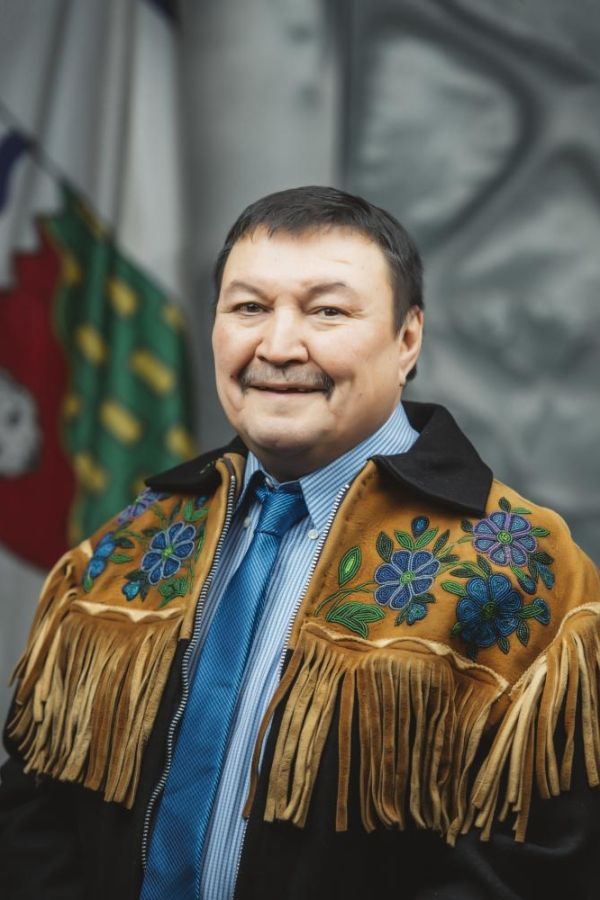
Thank you, Mr. Speaker. It gives me proud feelings of wearing my traditional jacket given to me by my late uncle, Chief Charlie Barnaby, who was a leader for 16 years in our home community and has emphasized the need of working together.

Mr. Speaker, as we close this sitting, I want to speak about significant economic opportunities on the horizon for the Northwest Territories and the critical importance of being ready to seize those opportunities.

We are at a pivotal point. Major federal investments could transform our economy, strengthen our communities, but opportunity without preparation is just potential left unrealized. Mr. Speaker, we must develop a comprehensive economic readiness plan that ensures Northerners benefit from these investments. I highlight bullet point number one:

Arctic infrastructure fund;

Dual airport expansion;

Military homes;

YZF improvements;

Three advanced mineral industry developments;

The Tlego'hli self-government;

The Mackenzie Valley Highway.

Additionally, Mr. Speaker, the Arctic Energy Security Corridor has been confirmed as one of Canada's most abundant regions for mineral exploration with potential for lithium, cobalt, copper, zinc, gold, and diamonds. The 2025 mineral potential study identified 1,721 mineral showings containing 19 different critical minerals across our territory.

Mr. Speaker, these aren't just federal announcements happening to us. They're opportunities we must actively prepare for. We need an economic readiness plan that addresses our infrastructure deficit, workforce development needs. Mr. Speaker, I seek unanimous consent to conclude my statement. Mahsi.

---Unanimous consent granted

Thank you, colleagues. Mr. Speaker, before I close I want to wish all of our athletes competing at the Arctic Winter Games in Whitehorse the very best of luck and enjoyment.
Finally, as this is our last day of our sitting, I wish to wish all my colleagues safe travels home to their communities and families. Mahsi.

Speaker: MR. SPEAKER

Thank you, Member from the Sahtu. Members' statements. Member from Frame Lake.

Member’s Statement 991-20(1): International Women’s Day

Thank you, Mr. Speaker. Mr. Speaker, in the late 1800s, society and politics were significantly different from how they are today. It would be decades until women won the right to vote and serve in politics, and the first feminist thinkers and writers were planting the seeds of thought which would grow into a transformative global movement.

In 1893, Matilda Joslyn Gage shared a bold and prophetic vision. She wrote that during the ages no rebellion has been of like importance with that of women against the tyranny of church and state. None has had as far-reaching effects. We note its beginning. Its progress will overthrow every existing form of these institutions. Its end will be a regenerated world.

While I acknowledge we are still in the process of building it some 130 years later, to mark International Women's Day this weekend I would like to reflect briefly upon my own experiences as a beneficiary of the regenerated world that Gage imagined.

Throughout my career, I have had the privilege of working with and being mentored by women who I have looked up to. The majority of my supervisors and co-workers over the years have been women, and this trend continued when I enrolled in a conflict management program led by two incredible women who greatly influenced my thinking and continue to guide my work to this day. During my first leadership experience on city council, I worked with several women who showed me what effective leadership looked like in practice and continue to do so in the respective roles they have grown into now. And, of course, I now have the privilege of working in the 20th Legislative Assembly with another group of strong women colleagues whose leadership and influence is integral to our successes as a group. When I think of who I look to for advice and mentorship, who is most effective and influential, or, to be frank, who is stepping up and doing the lion's share of heavy lifting, it is more often than not the women of this Assembly who come to mind.

So I think it is appropriate today to acknowledge and celebrate their contributions to our territory and celebrate what the gender equality movement has built for all of us who benefit from its legacy. Thank you to the incredible group of women advisers and staff who support us, our many women interpreters, and our women MLAs. Without you, our work would be severely diminished and I am so grateful to be a politician in a time when we can stand and work together. Thank you, Mr. Speaker.

Speaker: MR. SPEAKER

Thank you, Member from Frame Lake. Members' statements. Member from Range Lake.

Member’s Statement 992-20(1): Private Members Bills

Thank you, Mr. Speaker. I was going to give a different statement but given your ruling, which I support 100 percent, I just wanted to comment on some of the processes we use in our Assembly to move issues forward that are important to our constituencies.

I have moved two Private Member's bills forward in my time in this Assembly, and in both cases I shared the principles of those bills with Members of the government. I shared it with my colleagues as well, and I tried to work as collaboratively as possible. For the most recent decision -- or the most recent legislative initiative, both debates around the issue were not adversarial. They were supportive of the issue at hand, and they looked to find common ground.

Over the course of nine months, there were many conversations between the sponsor and the Minister responsible, the committee chairs, and all Members on the process of the bill. There were no surprises with this. There were no gotcha moments. This was put on the table. So although I am disappointed, Mr. Speaker, I just wanted to speak to your comments on finding ways to work together; I thought we were doing that. So if there is a way that we can work better together, I am all game. But we have to keep working together and it can't just be -- it can't just be dictated by who holds the purse strings. We have to find ways to support our residents. We have to find better ways to support our residents, and we can't take so long to do it. And, repeatedly, we see that that is a hold-up. And I wish I could be celebratory of a budget passed and bills passed. Those things are still happening. But when I see the dire need that's out there, when I hear the stories from constituents, telling them everything's fine, we're making progress on stuff, just hurry up and wait, it's falling on deaf ears. And if we have to wait another 9 months, 12 months, 10 months, to see process, to see results in delivery, people aren't going to wait for us. They're going to leave.

So although I hear your message of working together, this Member's trying. This Member's trying to do everything in his ability to do it, and it might not meet the needs of people I am trying to work with, but we are trying. And I hope we can get this done, this issue done, and other issues done that are important because it's so important that we take care of people who put their lives on the line for us every day to keep our communities safe. And I will continue to advocate for them, and I will do so later today. Thank you, Mr. Speaker.

Speaker: MR. SPEAKER

Thank you, Member from Range Lake. Members' statements. Member from Yellowknife Centre.

Member’s Statement 993-20(1): Consensus Government

Mr. Speaker, colleagues, and most importantly, Northerners today, Mr. Speaker, as always of course, our system of consensus government at times can be a source of pride and on occasion we look to the parliamentary traditions and Indigenous values to guide us as we get to our outcome. While the Assembly operates with sometimes good consensus and sometimes less good consensus, we do our best to get there without an adversarial way but, unfortunately, winner takes all sometimes is the end result.

Right now, we use first-past-the-post system to elect MLAs to this chamber, despite the fact that the majority may not even be voting for those particular folks. In our territory we do appreciate, unlike other areas, the collective values of our voices, the voices of our people. We spend a lot of time trying to do that. I wouldn't imply other jurisdictions don't but I would say we spend an important amount of time to do this. And, Mr. Speaker, even the CEO of elections, with respect to voting, has consistently advocated for better ways to vote so we get people involved, modernize our system. That's why I am advocating again to adopt the preferential ballot system. It's time we make some technical changes. But we wouldn't be making changes to the House. We would just be making changes to how you get to the House, Mr. Speaker.

The fundamental values of democracy are decided by this 19 people, these folks. But it's time to bring into the conversation the people at the dinner tables, the coffee shops, you know, on the streets, wherever we go, even the hockey pits where people or parents are sitting there watching their kids play hockey.

Mr. Speaker, holding a public plebiscite, we could hold a non-binding plebiscite. We could have the courage to ask the people what do they really think. Imagine that, getting out there, getting direct democracy. Yukon held a plebiscite. 56 percent of the people voted for change. The party in power said thanks, but no thanks. But at least, I have to admire, they risked asking the question. And to us, I'd say be bold. Don't fear the fact that we might get their opinion. Be excited that they share it with us. Thank you, Mr. Speaker.

Speaker: MR. SPEAKER

Thank you, Member from Yellowknife Centre. Member for Thebacha.

Member’s Statement 994-20(1): Reflections

Mr. Speaker, as we come to the close of what has truly been a marathon sitting of this Assembly, I would like to take a moment to express my sincere gratitude.

First and foremost, I want to thank my wife and my family. Like the families of every Member in this House, they make the real sacrifice so that we can be here doing the work for the people of the Northwest Territories. Time away from home is never easy and their patience, understanding, and encouragement make it possible for me to serve the residents of Thebacha and all Northerners. I know every Member here shares the same appreciation for the support of their loved ones.

I also need to thank the constituents of Thebacha and my constituency assistant Sarah Morris who is back in Fort Smith holding down the fort.

I would also like to recognize and thank all Members of the Legislative Assembly. While we may not always agree on every issue, we all come here with the same purpose: to do our best for the people we represent. The long hours, the debates, the committee work, the difficult decisions are all part of that responsibility, and I respect the dedication that each Member brings to this chamber.

I want to extend my sincere appreciation to the public service and to the staff of the Legislative Assembly. Much of the work that keeps this institution functioning happens behind the scenes. Your professionalism, participation, and commitment ensures that Members are able to do our jobs effectively.

I would also like to take this time to make a special thank you to our interpreters. Your work is essential to this Assembly. You help ensure that our proceedings are accessible and respectful of the many languages of the Northwest Territories, and your dedication during these long days and late evenings has not gone unnoticed.

Mr. Speaker, sessions like this remind us that governing is truly a team effort, from Members to staff to interpreters to the families who support us at home. It takes all of us working together.

Before I conclude, I would like to highlight an exciting weekend happening back home in Fort Smith. The community is gathering for the annual winter carnival, the Wood Buffalo Frolicks. Mr. Speaker, I seek unanimous consent to conclude my statement.

---Unanimous consent granted

Thank you, Mr. Speaker. This is always a wonderful event that brings residents together to celebrate the season, enjoy outdoor activities, and strengthen the strong sense of community that Fort Smith is known for. At the same time, the Joel Tetso Memorial Hockey Tournament will also be taking place. This tournament not only brings great hockey to the community but also honours the memory of Joel Tetso and continues to bring people together through sport, friendship, and community spirit. To every participating volunteer who organized these events, I wish you a safe and successful weekend. Mr. Speaker, with that, again, I'd like to thank everyone in this House. Mahsi, Mr. Speaker.

Speaker: MR. SPEAKER

Thank you, Member from Thebacha. I am being a little sentimental today. Members' statements. Member from Inuvik Twin Lakes.

Member’s Statement 995-20(1): International Women’s Day

Mr. Speaker, on Sunday, International Women's Day, we honour the strength, courage, and spirit of women everywhere. As an Indigenous woman, and as many Indigenous women, we grew up learning that we are the strongest when we help each other. Our elders teach us when we give our time, our support, and our kindness, we gain something important in return.

This year's theme, Give to Gain, is a reminder of that lesson. To the young women and the girls across the Northwest Territories, you matter. You carry the strength of your families, your ancestors. You carry languages, stories, traditions, that are powerful and important. Your dreams and goals are worth following. When you give encouragement to a young woman, you help build her confidence. When you share what you know, you help your community grow. When you take care of yourself, you show others that they can take care of themselves too. These are always ways of giving and each one helps us gain pride, courage, and stronger connection to who you are.

Today, we honour women who came before us: our mothers, our grandmothers, our aunties, knowledge-keepers, and community leaders. They faced many challenges, but they kept going. Their strength lives inside of all of us.

I'd also like to thank my own grandmother Esther Semmler, my great-grandmothers Agnes Semmler and Winnie Cockney, and many other strong women in my community that were able to give me the support that I needed, teach me the lessons that I needed to learn, and help me mold into the person that I am today.

As you move forward, remember this: You are capable, you are worthy, and you have a place in this world. Keep learning, keep trying, keep supporting one another. When you rise, our whole North rises with you. Thank you, Mr. Speaker.

Speaker: MR. SPEAKER

Thank you, Member from Inuvik Twin Lakes.

Member’s Statement 996-20(1): Arctic Winter Games

Colleagues, today, I want to celebrate the incredible journey of athletes from the Nahendeh riding as they prepare to represent our community, region and territories at the Arctic Winter Games. This event is more than an international competition - it is a celebration of who we are as Northerners: strong, resilient, and proud of where we come from.

For athletes from outside the big centres, the games offer not only the thrill of sport but the opportunity to represent our community, region, and territory on a truly global stage.

Each athlete standing before us carries a story of dedication and heart. Their path began at home on the frozen syne, in the gyms, and in the community rinks where dreams first took shape. Their hours of practice, their sacrifices, and their determination reflects the spirit that binds us all together. I look at how they carry with them the spirit of where they came from - the after-supper practices, the teamwork built in gyms, and the support of neighbours who cheer from the stands. Their dedication reminds us that every great accomplishment begins at home with communities that believe in our youth and invest in their dreams.

As they step onto the international stage, they do not stand alone. They carry with them the support, hope, and pride of every single one of us.

The Arctic Winter Games are about more than medals and athletic excellence. They are about connection and fostering friendships - a rare chance for young people from across the circumpolar world to meet, learn, and share their cultures. The friendships built there reminds us that we are part of something much larger - a northern family defined by unity, respect, and perseverance.

To Mia Hardisty, Gombee Joses, Ember Sibbeston, Payton Bennett, Blake Speed and Taagacho Jose, believe in yourselves. Trust in your training, your teammates, and the people who helped you get here. Compete with courage, lift others up, and embrace every moment of this incredible experience. You remind us that everything is possible when we come together as a community that believes in our youth.

On behalf of everybody here, congratulations on reaching this milestone. Your efforts remind us that when one of us succeeds, our whole community shines a little brighter.

I would be remiss if I do not recognize two Team NWT coaches from Fort Simpson: Shannon Cazon, one of the Dene games coaches, and Val Gendron, one of the speed skating coaches. Thank you for helping our youth.