


Jane Weyallon Armstrong

Député de Monfwi

Circonscription électorale de Monfwi

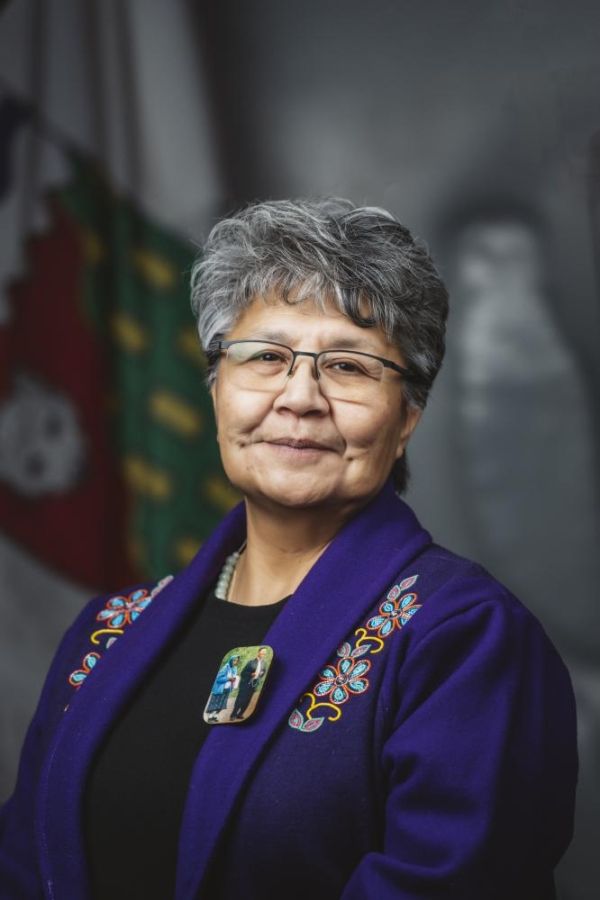
Jane Weyallon Armstrong a été élue députée de la circonscription de Monfwi à la 20e Assemblée législative des Territoires du Nord-Ouest. Jane Weyallon Armstrong a été élue à la 19e Assemblée lors d’une élection partielle pour représenter la circonscription de Monfwi. 

Elle est née à Fort Rae, aux Territoires du Nord-Ouest. Résidant actuellement à Behchoko, aux Territoires du Nord-Ouest, son parcours a laissé une trace indélébile dans sa collectivité. 

Ayant été présidente de l’Association des femmes autochtones de 2019 à 2021, Jane Weyallon Armstrong a collaboré avec les membres du conseil d’administration sur le rapport final de l’Enquête nationale sur les femmes et les filles autochtones disparues et assassinées. Son engagement pour la cause a joué un rôle majeur dans la résolution de problèmes cruciaux. 

La riche participation de Jane Weyallon Armstrong à la gouvernance de la collectivité comprend des rôles tels que conseillère à l’administration communautaire de Behchoko (2009-2013, 2017-2021, juin et juillet 2021) et membre de l’assemblée du gouvernement tłı̨chǫ (gouvernement de consensus) de 2009 à 2013. En outre, elle a siégé à l’Office d’examen des répercussions environnementales de la vallée du Mackenzie de 2020 à 2021. 

Avec une carrière de plus de 25 ans au Conseil scolaire de division des Dogrib (aujourd’hui l’Agence de services communautaires tłįchǫ), Jane Weyallon Armstrong a eu une incidence positive sur la vie d’élèves du secondaire issus de diverses collectivités. Ses fonctions de directrice de résidence, puis de coordonnatrice, d’agente de liaison et de responsable des services aux étudiants et d’aide à la transition après les études ont mis en évidence son dévouement à l’éducation et au développement de la collectivité. 

Jane Weyallon Armstrong a fait ses études secondaires à l’École Sir John Franklin à Yellowknife, et résidait à l’Akaitcho Hall. Elle a décroché un baccalauréat ès arts avec une majeure en politique et une mineure en études autochtones à l’université de la Saskatchewan. En 1994, elle a obtenu un diplôme de travailleuse sociale au Collège Aurora, au Campus Thebacha, et en 1992, un diplôme d’assistante sociale auprès des enfants et des jeunes au Mount Royal College. Jane Weyallon Armstrong a élevé sa fille avec son conjoint et se réjouit aujourd’hui d’être la fière grand-mère d’un petit-fils. Elle s’intéresse à la couture et à la lecture et participe à diverses activités culturelles. Son engagement de longue date en tant que bénévole pour des événements de collecte de fonds et des sorties scolaires souligne son dévouement pour le bien-être de la collectivité.

Committees
Jane Weyallon Armstrong
Monfwi
Bureau

Yellowknife NT X1A 2L9
Canada

P.O. Boîte
1320

Déclarations dans les débats

Debates of , 19th Assembly, 2nd Session (day 109)

Thank you. Okay, I just heard about the housing shortage as well. Housing shortage, I know that we want Yellowknife, we want the GNWT decentralize the jobs to the communities, to the outlying regions to the right now, is there any commitment from the GNWT to transfer most of these jobs that was taken from the communities, take it back to the communities, and let the community run the program and services? I just wanted to ask the Minister if there is a commitment from the GNWT to decentralize these most of these jobs that were moved from the small communities to Yellowknife. Thank you.

Debates of , 19th Assembly, 2nd Session (day 109)

During the COVID19 pandemic, the GNWT identified a list of public housing units that could be available for isolating individuals.

Can the Minister of Health and Social Services commit to reviewing this list with the Minister of Housing to determine where vacant units in the Tlicho regions and other regions may be repurposed to provide safe shelter for community residents? Thank you.

Debates of , 19th Assembly, 2nd Session (day 109)

Okay, can the Minister of Health and Social Services commit to reviewing the need for a sobering shelter in the Tlicho communities? Thank you.

Debates of , 19th Assembly, 2nd Session (day 109)

Thank you, Mr. Speaker. Today I am going to be talking on mental health. Mr. Speaker, the pandemic has been a challenging time for all of us and now we go into the endemic stage. How are people going to move ahead?

Mr. Speaker, the biggest challenge in the Tlicho region are poor mental health, high rates of addictions and substance abuse, lack of housing, and unacceptable housing conditions. These were major issues before the pandemic and we know that isolation and other limitations imposed through COVID only worsen the situation.

Mr. Speaker, over half, like 56 percent, of residents in the...

Debates of , 19th Assembly, 2nd Session (day 103)

Can you repeat that again?

Debates of , 19th Assembly, 2nd Session (day 103)

It was not considered emergency even though the pipe has been there for over 50 years and full of asbestos, people in that area are drinking from that so you don't consider that emergency? It's you know, that's I don't agree with that. So I think that should have been considered as emergency because it's impacting people's health. So, yeah, anything that's with that contained like, that was built over 50 years ago and not regularly maintained and full of asbestos is an emergency. Thank you.

Debates of , 19th Assembly, 2nd Session (day 103)

Thank you. And this water and sewer services funding to provide funding to support community government, so that's 19. How is that being allocated too as well, to the community? Because I would like to get answer for that first please.

Debates of , 19th Assembly, 2nd Session (day 103)

Okay, how is this fund being allocated? Is it based on per capita or infrastructure? There's a community government funding.

Debates of , 19th Assembly, 2nd Session (day 103)

Thank you. Can the Minister describe what kind of traumainformed support services are available to people under probation? Thank you.

Debates of , 19th Assembly, 2nd Session (day 103)

Thank you. Well, some of this is going to be written questions tomorrow.

Okay, so the Hay River correctional centre was to transition to the therapeutic community model in the spring of 2021. This is a very positive step in providing rehab programming. Can the Minister explain how the results of this program will be evaluated and what are their plans to expand this to other correctional facilities?