


Jane Weyallon Armstrong

Député de Monfwi

Circonscription électorale de Monfwi

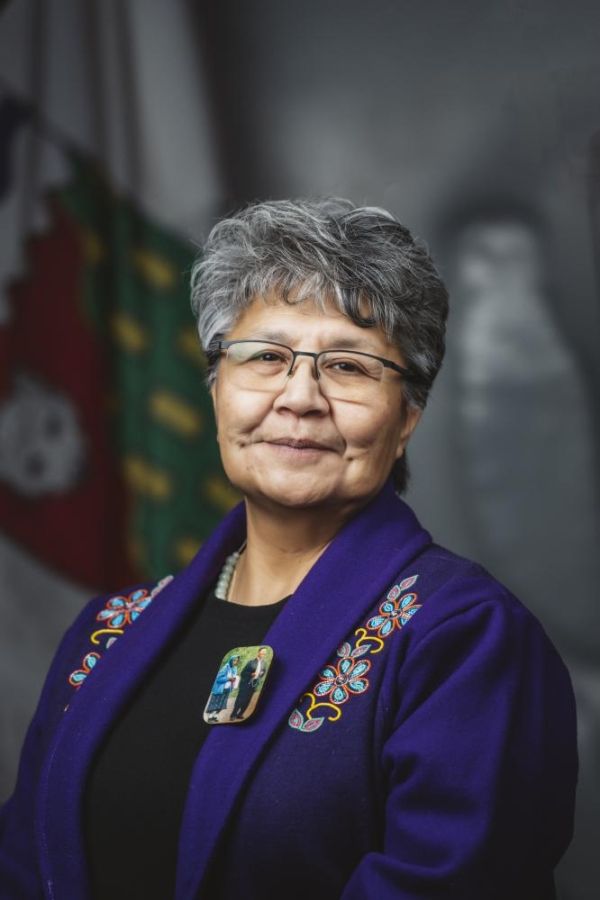
Jane Weyallon Armstrong a été élue députée de la circonscription de Monfwi à la 20e Assemblée législative des Territoires du Nord-Ouest. Jane Weyallon Armstrong a été élue à la 19e Assemblée lors d’une élection partielle pour représenter la circonscription de Monfwi. 

Elle est née à Fort Rae, aux Territoires du Nord-Ouest. Résidant actuellement à Behchoko, aux Territoires du Nord-Ouest, son parcours a laissé une trace indélébile dans sa collectivité. 

Ayant été présidente de l’Association des femmes autochtones de 2019 à 2021, Jane Weyallon Armstrong a collaboré avec les membres du conseil d’administration sur le rapport final de l’Enquête nationale sur les femmes et les filles autochtones disparues et assassinées. Son engagement pour la cause a joué un rôle majeur dans la résolution de problèmes cruciaux. 

La riche participation de Jane Weyallon Armstrong à la gouvernance de la collectivité comprend des rôles tels que conseillère à l’administration communautaire de Behchoko (2009-2013, 2017-2021, juin et juillet 2021) et membre de l’assemblée du gouvernement tłı̨chǫ (gouvernement de consensus) de 2009 à 2013. En outre, elle a siégé à l’Office d’examen des répercussions environnementales de la vallée du Mackenzie de 2020 à 2021. 

Avec une carrière de plus de 25 ans au Conseil scolaire de division des Dogrib (aujourd’hui l’Agence de services communautaires tłįchǫ), Jane Weyallon Armstrong a eu une incidence positive sur la vie d’élèves du secondaire issus de diverses collectivités. Ses fonctions de directrice de résidence, puis de coordonnatrice, d’agente de liaison et de responsable des services aux étudiants et d’aide à la transition après les études ont mis en évidence son dévouement à l’éducation et au développement de la collectivité. 

Jane Weyallon Armstrong a fait ses études secondaires à l’École Sir John Franklin à Yellowknife, et résidait à l’Akaitcho Hall. Elle a décroché un baccalauréat ès arts avec une majeure en politique et une mineure en études autochtones à l’université de la Saskatchewan. En 1994, elle a obtenu un diplôme de travailleuse sociale au Collège Aurora, au Campus Thebacha, et en 1992, un diplôme d’assistante sociale auprès des enfants et des jeunes au Mount Royal College. Jane Weyallon Armstrong a élevé sa fille avec son conjoint et se réjouit aujourd’hui d’être la fière grand-mère d’un petit-fils. Elle s’intéresse à la couture et à la lecture et participe à diverses activités culturelles. Son engagement de longue date en tant que bénévole pour des événements de collecte de fonds et des sorties scolaires souligne son dévouement pour le bien-être de la collectivité.

Committees
Jane Weyallon Armstrong
Monfwi
Bureau

Yellowknife NT X1A 2L9
Canada

P.O. Boîte
1320

Déclarations dans les débats

Debates of , 20th Assembly, 1st Session (day 76)

Well, you know, the disability fund, 229, it says funding to support organization that provide increase independence and reduce barriers for residents living with disabilities within the NWT.

I know at one time we -- like, in Tlicho region, we don't have any programs. I know it's probably associated with another department. But at one time, we had -- well, I will just use an example, like, friendship centre. They had a program for people with disabilities and, you know, a program where they went every day, went to school, and from what I heard from people there before and after is that they...

Debates of , 20th Assembly, 1st Session (day 76)

So we are on page 208 and 209? Okay, I have a question for page 204, grants and contribution and transfers. But go to page 209.

Okay, disabilities and respite and seniors fund, the contribution for that -- those programs. You know, it's low, and it looks like it's been low for many years, and I -- there's no increase. I just wanted to ask the Minister why, why the budget remain the same when I believe this supports all the regions. Is that -- this fund goes -- this program is -- are being distributed to other small communities as well?

Debates of , 20th Assembly, 1st Session (day 75)

Yes, thank you, Mr. Speaker. Mr. Speaker, I am talking about the homeownership initiative program, the policy, not the repair program.

With that in mind, what steps will the Minister take to ensure that eligibility decisions for the homeownership initiative align with the written policy, and will previously denied applicants and/or applications be reviewed if they were screened using criteria not specified in the program policy? Thank you.

Debates of , 20th Assembly, 1st Session (day 75)

Thank you. Thank you, Mr. Speaker. Mr. Speaker, my questions are for the Minister responsible for Housing.

Mr. Speaker, I have constituents -- and it's not only in my region. It's in other regions as well -- that have recently been denied eligibility for the homeownership initiative program on the basis that they exceeded the core need income threshold. Why have these applicants been deemed ineligible for exceeding this threshold when the homeownership initiative policy makes no reference to this requirement? Thank you.

Debates of , 20th Assembly, 1st Session (day 75)

Thank you, Mr. Speaker. Mr. Speaker, I am aware in all the NWT but the auditor general's report did mention Tlicho region with the highest need. We're in housing crisis. I am going based on the report that's before us.

So with that in mind, Mr. Speaker, the homeownership program is intended to help residents achieve stability yet many homes are in poor conditions and require costly repairs that low income families cannot afford. What changes will the Minister make to ensure this program supports success instead of setting people up for failure. Thank you.

Debates of , 20th Assembly, 1st Session (day 75)

Thank you, Mr. Speaker. Mr. Speaker, the auditor general's report on housing in the Northwest Territories confirms what our communities have been saying for years, the system is broken. In the Tlicho region, this crisis is severe. Overcrowding is rampant and it is not just uncomfortable; it is harming our children's education and increasing the number of children in care. It also contributes to illness, mental health challenges, family violence, and wear and tear on homes creating unsafe conditions and costly emergency repair. These pressures ripple through the community, increasing...

Debates of , 20th Assembly, 1st Session (day 75)

Thank you. Okay, there's a decrease for the upcoming fiscal year to Aging with Dignity Funding Agreement. It was down in 2025-2026 and then with the revised estimate, and then now with a -- in the main estimate, it's down a bit to 3.6. Aging with Dignity Funding Agreement, that's very important, especially for people living in small communities in long-term care, etcetera. So if the Minister can explain, is that -- is it due to that -- because of the federal announcement?

Debates of , 20th Assembly, 1st Session (day 75)

Are we still on revenue summary? When we receive money, it's good, you know. But I see here in the budget there are some -- I don't know if it's sunsetted because it didn't say, you know, agreement to work with -- I see there's quite a few agreements -- agreement was signed with other -- with Canada. So agreement to work together to improve health care for Canadians, there's nothing in the budget for upcoming fiscal year. There's quite a few of those too. Even with First Nation and Inuit Community Care Agreement, there's nothing allocated. So I just wanted to ask the Minister if the Minister...

Debates of , 20th Assembly, 1st Session (day 75)

Well, it's good the program is being reviewed, the policy is being reviewed, because it's the policy. I like the program. I understand about all the program that's available to help homeownership or to have more homeownership.

Given that the homeownership initiative policy is a policy that does not identify the core need income threshold as an eligibility requirement, what internal direction or guidance led to its use in assessing applicant eligibility? Thank you, Mr. Speaker.

Debates of , 20th Assembly, 1st Session (day 75)

Thank you, Mr. Speaker. Mr. Speaker, the auditor general's report shows that housing issues have persisted for over a decade with little progress. How will the Minister ensure accountability and deliver a clear, measurable plan to address overcrowding, improve housing quality, and prevent this crisis from continuing for another generation. Thank you.