


Jane Weyallon Armstrong

Député de Monfwi

Circonscription électorale de Monfwi

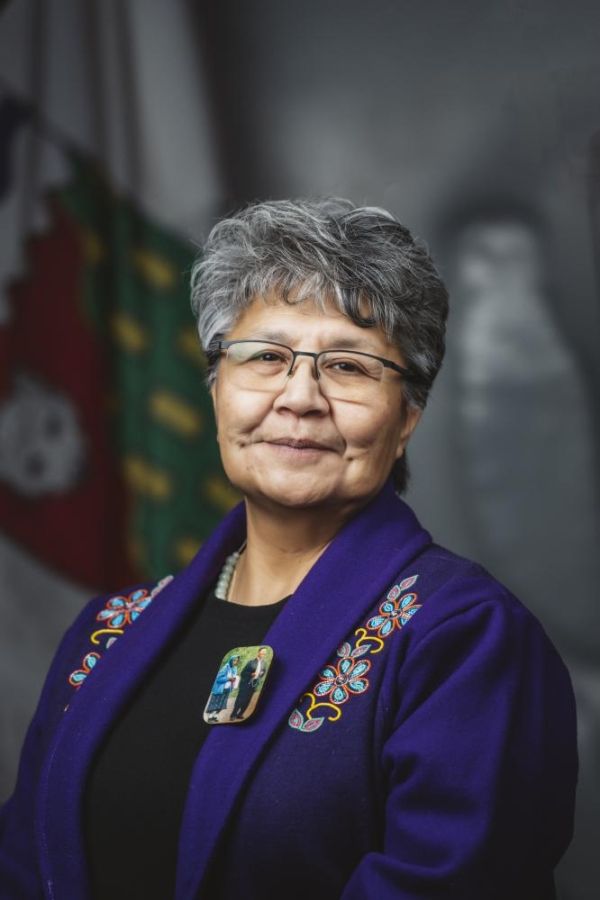
Jane Weyallon Armstrong a été élue députée de la circonscription de Monfwi à la 20e Assemblée législative des Territoires du Nord-Ouest. Jane Weyallon Armstrong a été élue à la 19e Assemblée lors d’une élection partielle pour représenter la circonscription de Monfwi. 

Elle est née à Fort Rae, aux Territoires du Nord-Ouest. Résidant actuellement à Behchoko, aux Territoires du Nord-Ouest, son parcours a laissé une trace indélébile dans sa collectivité. 

Ayant été présidente de l’Association des femmes autochtones de 2019 à 2021, Jane Weyallon Armstrong a collaboré avec les membres du conseil d’administration sur le rapport final de l’Enquête nationale sur les femmes et les filles autochtones disparues et assassinées. Son engagement pour la cause a joué un rôle majeur dans la résolution de problèmes cruciaux. 

La riche participation de Jane Weyallon Armstrong à la gouvernance de la collectivité comprend des rôles tels que conseillère à l’administration communautaire de Behchoko (2009-2013, 2017-2021, juin et juillet 2021) et membre de l’assemblée du gouvernement tłı̨chǫ (gouvernement de consensus) de 2009 à 2013. En outre, elle a siégé à l’Office d’examen des répercussions environnementales de la vallée du Mackenzie de 2020 à 2021. 

Avec une carrière de plus de 25 ans au Conseil scolaire de division des Dogrib (aujourd’hui l’Agence de services communautaires tłįchǫ), Jane Weyallon Armstrong a eu une incidence positive sur la vie d’élèves du secondaire issus de diverses collectivités. Ses fonctions de directrice de résidence, puis de coordonnatrice, d’agente de liaison et de responsable des services aux étudiants et d’aide à la transition après les études ont mis en évidence son dévouement à l’éducation et au développement de la collectivité. 

Jane Weyallon Armstrong a fait ses études secondaires à l’École Sir John Franklin à Yellowknife, et résidait à l’Akaitcho Hall. Elle a décroché un baccalauréat ès arts avec une majeure en politique et une mineure en études autochtones à l’université de la Saskatchewan. En 1994, elle a obtenu un diplôme de travailleuse sociale au Collège Aurora, au Campus Thebacha, et en 1992, un diplôme d’assistante sociale auprès des enfants et des jeunes au Mount Royal College. Jane Weyallon Armstrong a élevé sa fille avec son conjoint et se réjouit aujourd’hui d’être la fière grand-mère d’un petit-fils. Elle s’intéresse à la couture et à la lecture et participe à diverses activités culturelles. Son engagement de longue date en tant que bénévole pour des événements de collecte de fonds et des sorties scolaires souligne son dévouement pour le bien-être de la collectivité.

Committees
Jane Weyallon Armstrong
Monfwi
Bureau

Yellowknife NT X1A 2L9
Canada

P.O. Boîte
1320

Déclarations dans les débats

Debates of , 19th Assembly, 2nd Session (day 166)

I don't want to get into it, but I will do it later, okay.

Will the Minister of health commit to a medical policy review to ensure that residents who access care outside of the NWT, especially in urgent situations that require hospitalizations or treatments that are unavailable in the NWT, can qualify for medical travel? Thank you.

Debates of , 19th Assembly, 2nd Session (day 166)

Thank you, Mr. Speaker. Mr. Speaker, we need more programs and services in small communities. Indeed, the health care systems needs to be improved, especially in small communities. If it was okay, then all these things would not be necessary.

Can the Minister explain if any review of the medical travel policy is underway to allow for more flexibility in these circumstances for the residents of the NWT? Thank you.

Debates of , 19th Assembly, 2nd Session (day 166)

Thank you, Mr. Speaker. Mr. Speaker, the health care system is failing our Indigenous population from access to quality and timely care. Our residents face systemic barriers, and more work is needed to break through the red tape to improve accessibility to programs and services. Many community members in my region travel to Yellowknife to get health care services. I am disappointed to hear from constituents who travelled to Yellowknife who feel their concerns are not taken seriously. I have also heard concerns that some people have been told they cannot book appointments in Yellowknife.

Mr...

Debates of , 19th Assembly, 2nd Session (day 165)

Thank you, Mr. Speaker. Mr. Speaker, it is my understanding that a person with a disability may receive extra funding to pay for things related to the disability; however, I am concerned still around the reporting requirements oh, okay. I thought sorry about that. Those with disability. Is the government looking to make this less burdensome on residents? I know they ask for utility bills, rent, disability assessment form, disability benefit from the federal government, notice of assessment from previous tax year; how often is all of this required? Thank you.

Debates of , 19th Assembly, 2nd Session (day 165)

Thank you, Mr. Speaker. Mr. Speaker, this is not the first time I have spoken in this House about the administrative burden with income support program. The government creates such an onerous process for residents that it becomes challenging to access resources.

Mr. Speaker, today I would like to talk about people who are unable to work because of a disability.

Mr. Speaker, we have many people across the NWT that receive disability benefits but also access programs and services through income support. Mr. Speaker, there should be a more streamlined way for these individuals to access benefits...

Debates of , 19th Assembly, 2nd Session (day 165)

Thank you, Madam Chair. Madam Chair, yes, what I would like to see in this is that more consultation with the Indigenous government as well. Not only with the public government but with the Indigenous government, especially those with the Aboriginal selfgovernment that they have in place. So I would like to see more of that in this because this is important, especially with to lands and resources. So I know that this is important for the people who settled their land claims already. And it's just that I would like to see this the codrafting be done with the Indigenous government, not just...

Debates of , 19th Assembly, 2nd Session (day 165)

Thank you, Madam Chair. Madam Chair, I know I'm grateful, thankful that, you know, Indigenous government were involved in drafting this Bill 74 to its current form. And it's good to see two sides of government working together, the GNWT and the Indigenous government technical working group developing this draft.

I know this is very this is important for the Indigenous people, especially people living in the area that deals with the lands and resources. So I know that it's respecting the rights of the people living in the area, especially Tlicho and other Indigenous people in the NWT therefore...

Debates of , 19th Assembly, 2nd Session (day 165)

Thank you, Mr. Speaker. It's good to hear that. Good positive change.

Will the Minister commit to review the income support policy to reduce administrative burden for elders and people with disabilities? And then he touched base on some of them already too. So that's good.

Debates of , 19th Assembly, 2nd Session (day 165)

Thank you, Mr. Speaker. Mr. Speaker, I would like to acknowledge today our grand chief, our Tlicho Grand Chief Jackson Lafferty, to the House, to the Legislative Assembly. I would like to welcome him. Thank you.

Debates of , 19th Assembly, 2nd Session (day 165)

Thank you, Madam Chair. Madam Chair, I know, indeed, we do need expert, but what just happened in Northwest Territories, how can an expert let 4 million hectares of land burn? In the past, a lot of people have said, even the veteran firefighters have said the same thing, and elders have said, in the past government used to pick up all kinds of people on the street to fight fires, and it was those people, because of them, our community is still here. A lot of them, it happened all over. And that was the only jobs that a lot of our Indigenous people had at that time. It's not like before. We...