


Jay Macdonald

Député de Thebacha

Ministre de l’Environnement et du Changement climatique
Ministre de la Justice
Leader du gouvernement à l’Assemblée

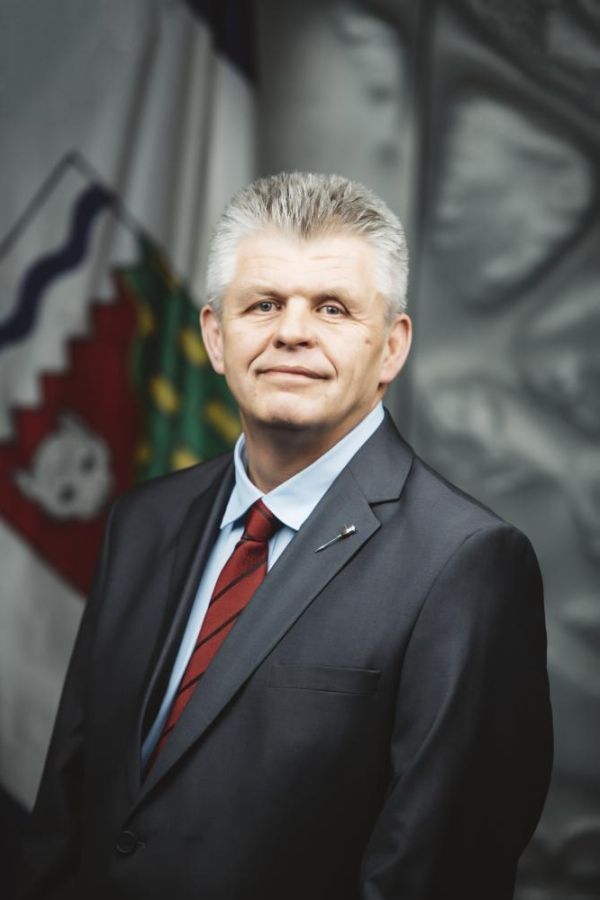
Jay Macdonald a été élu député de la circonscription de Thebacha à la 20e Assemblée législative des Territoires du Nord-Ouest. M. Macdonald a été élu au Conseil exécutif de la 20e Assemblée.

M. Macdonald est né le 26 juin 1964 à Hay River, aux Territoires du Nord-Ouest. En tant que Métis, il a des racines profondes dans le Nord canadien, et son parcours a été marqué par diverses expériences qui ont enrichi sa vie personnelle et professionnelle.

La famille de M. Macdonald s’est installée à Fort Smith en 1970. Il a exploité avec succès son petit atelier de réparation de moteurs, fournissant des services essentiels à la collectivité et s’imposant comme un entrepreneur fiable. Simultanément, il s’est plongé dans les subtilités de la gestion des installations de loisirs, en supervisant les activités de l’aréna et du terrain de golf de la ville.

Pendant les 13 années où il a occupé le poste de directeur des services de gestion forestière à la Division de l’environnement et de la conservation du gouvernement des Territoires du Nord-Ouest, M. Macdonald a fait preuve d’un engagement inébranlable en faveur de l’environnement. Le rôle qu’il a joué pendant 12 ans en tant que coordonnateur du programme de parent d’accueil pour le Programme de leadership de l’Arctique de l’Ouest témoigne de son engagement envers la jeunesse. Pendant cinq ans, il a été parent d’accueil afin d’offrir un environnement stimulant aux élèves de Lutsel Ke qui fréquentent l’école secondaire PWK. Cette expérience a permis de mettre en évidence sa compassion, et a contribué de manière significative à l’épanouissement scolaire et personnel des élèves dont il s’occupait. S’appuyant sur son expertise de compagnon-technicien de petits équipements. 

M. Macdonald a passé 13 ans à la tête d’une concession Polaris et a servi d’instructeur pour l’entretien des petits équipements, la gestion du carburant d’aviation et les disciplines logistiques dans le cadre du Système de commandement d’intervention. Son engagement envers la collectivité va au-delà de ses fonctions professionnelles. En tant que bénévole dévoué, il a été président et entraîneur de l’équipe de hockey mineur de Fort Smith, et s’est efforcé d’encourager les jeunes et de leur inculquer les valeurs du travail d’équipe et de l’esprit sportif. Il a exercé ses talents d’entraîneur sur la scène nationale en dirigeant l’équipe des TNO lors des championnats nationaux de hockey autochtone.

En tant que représentant de la Nation des Métis de Fort Smith au sein du conseil d’administration de l’association scolaire de district locale, M. Macdonald a contribué à l’élaboration de politiques pédagogiques qui reflètent les besoins particuliers de la collectivité. En outre, il a été membre du conseil d’administration et président de la Commission de l’apprentissage et de la qualification professionnelle des métiers et professions des Territoires du Nord-Ouest, rôle lui ayant permis de militer en faveur de la reconnaissance et de la promotion des métiers spécialisés. L’engagement de M. Macdonald en faveur du bien-être de la collectivité est également confirmé par sa participation à diverses activités et événements locaux. Qu’il s’agisse d’être entraîneur au niveau amateur ou d’une autre forme de bénévolat, il a toujours œuvré à la création d’un tissu communautaire dynamique et cohésif.

En dehors de ses engagements professionnels et communautaires, M. Macdonald a une vie de famille bien remplie. Marié à Karen, il est fier papa de trois enfants et grand-père attentionné de trois petits-enfants. Pendant ses temps libres, il s’adonne à des passe-temps qui reflètent son amour du plein air et des vastes paysages nordiques comme le golf, la pêche et le jardinage.
Committees

Jay Macdonald
Thebacha
Bureau

Yellowknife NT X1A 2L9
Canada

P.O. Boîte
1320
Ministre de l'Environnement et du Changement climatique
Ministre

Déclarations dans les débats

Debates of , 20th Assembly, 1st Session (day 45)

Thank you, Mr. Speaker. Mr. Speaker, as I stated in the earlier question regarding the same issue, we continue to have regular engagement with Minister's office at ECCC in Ottawa. We have been working closely with the partners' table to ensure that all of the work that is required to advance, to be prepared to receive the money when it gets to the parliamentary appropriation that is required continues. Thank you, Mr. Speaker.

Debates of , 20th Assembly, 1st Session (day 45)

Thank you, Mr. Speaker. Mr. Speaker, there are a number of challenges with the proposed bulk block land transfer. It is under the -- there's a couple of pieces of legislation that govern that type of transaction, one being federal, one being territorial, and there's a requirement under that legislation for a complete survey which has a significant cost. This has been one of the barriers. But as I stated in my earlier answer, the department is continuing conversations with the city. Our deputy minister met with the city representative last week, and I believe they're meeting again this week and...

Debates of , 20th Assembly, 1st Session (day 45)

Thank you, Mr. Speaker. Mr. Speaker, the NWT Climate Change Strategic Framework describes an overarching climate change goals for the territory and was developed in partnership with our partners across the territory as well as through engagement with the general public and the public at large. Much of this work certainly involves, you know, engaging with the NWT climate change council, NWT climate change advisory groups, NWT climate change youth steering committee, and other collaborative mechanisms. You know, for the students, I think continuing their advocacy which they showed, you know...

Debates of , 20th Assembly, 1st Session (day 45)

Thank you, Mr. Speaker. Mr. Speaker, I'd like to start by acknowledging MLA Reid and MLA Morgan and the students and staff at Sir John and St. Pat's high school for the opportunity to go in and have discussions of the climate change action plan with them.

As we've done our engagement as ECC, some of the key comments that we've received, and which have been independently evaluated through a process that we're using, have said that our actions need to be more measurable, and this is certainly something that we feel is a critical path forward for us as a department. So what we've committed to...

Debates of , 20th Assembly, 1st Session (day 45)

Thank you, Mr. Speaker. Mr. Speaker, as we were moving this process through our legislature, unfortunately parliament was prorogued by the federal government, and this has delayed the process. Thank you, Mr. Speaker.

Debates of , 20th Assembly, 1st Session (day 45)

Thank you, Mr. Speaker. Mr. Speaker, the private equity money is a matching sum dependent solely on the commitment from the federal government. Thank you, Mr. Speaker.

Debates of , 20th Assembly, 1st Session (day 45)

Thank you, Mr. Speaker. Mr. Speaker, those discussions are still ongoing. Thank you, Mr. Speaker.

Debates of , 20th Assembly, 1st Session (day 45)

Thank you, Mr. Speaker. Mr. Speaker, to date, there has only been one request for a block land transfer, and that was from the city of Yellowknife. The Department of Environment and Climate Change has been in constant contact with the city and have been discussing the issue to find a path forward. Thank you, Mr. Speaker.

Debates of , 20th Assembly, 1st Session (day 45)

Thank you, Mr. Speaker. Mr. Speaker, as a department, we're certainly committed to the plain language approach. I think it's critical that the members of our public in the Northwest Territories have the ability to read and interpret this information.

Right now, currently, each of the annual reports for the last five years has a preface that is a summary in a plain language format. It's a short, plain language summary. We are also -- we've already produced plain language materials that explain the priority, risk, and opportunities facing the territory when it comes to climate change risk, and we...

Debates of , 20th Assembly, 1st Session (day 43)

Thank you, Mr. Speaker. Mr. Speaker, the importance of plain language was the theme of the what we heard engagement throughout. And, you know, this is very important feedback for us in that we're considering the changes and improvements to the planned climate actions. We take this responsibility to communicate with the public in a clear, concise manner that everyone can understand very seriously. And to that end, already through the engagement process we have taken some opportunities to change how we were doing things. And the department worked closely with the local graphic artists to create...