


Jay Macdonald

Député de Thebacha

Ministre de l’Environnement et du Changement climatique
Ministre de la Justice
Leader du gouvernement à l’Assemblée

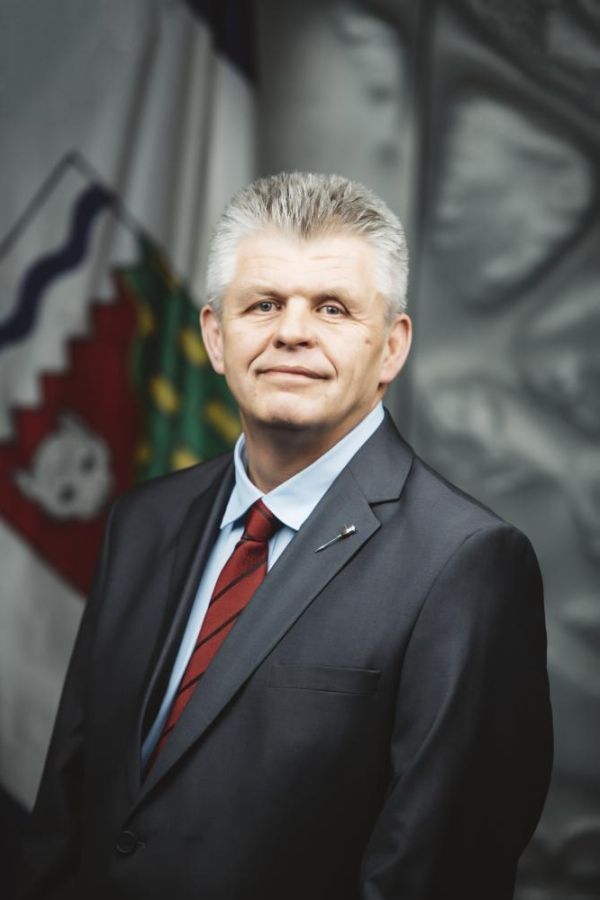
Jay Macdonald a été élu député de la circonscription de Thebacha à la 20e Assemblée législative des Territoires du Nord-Ouest. M. Macdonald a été élu au Conseil exécutif de la 20e Assemblée.

M. Macdonald est né le 26 juin 1964 à Hay River, aux Territoires du Nord-Ouest. En tant que Métis, il a des racines profondes dans le Nord canadien, et son parcours a été marqué par diverses expériences qui ont enrichi sa vie personnelle et professionnelle.

La famille de M. Macdonald s’est installée à Fort Smith en 1970. Il a exploité avec succès son petit atelier de réparation de moteurs, fournissant des services essentiels à la collectivité et s’imposant comme un entrepreneur fiable. Simultanément, il s’est plongé dans les subtilités de la gestion des installations de loisirs, en supervisant les activités de l’aréna et du terrain de golf de la ville.

Pendant les 13 années où il a occupé le poste de directeur des services de gestion forestière à la Division de l’environnement et de la conservation du gouvernement des Territoires du Nord-Ouest, M. Macdonald a fait preuve d’un engagement inébranlable en faveur de l’environnement. Le rôle qu’il a joué pendant 12 ans en tant que coordonnateur du programme de parent d’accueil pour le Programme de leadership de l’Arctique de l’Ouest témoigne de son engagement envers la jeunesse. Pendant cinq ans, il a été parent d’accueil afin d’offrir un environnement stimulant aux élèves de Lutsel Ke qui fréquentent l’école secondaire PWK. Cette expérience a permis de mettre en évidence sa compassion, et a contribué de manière significative à l’épanouissement scolaire et personnel des élèves dont il s’occupait. S’appuyant sur son expertise de compagnon-technicien de petits équipements. 

M. Macdonald a passé 13 ans à la tête d’une concession Polaris et a servi d’instructeur pour l’entretien des petits équipements, la gestion du carburant d’aviation et les disciplines logistiques dans le cadre du Système de commandement d’intervention. Son engagement envers la collectivité va au-delà de ses fonctions professionnelles. En tant que bénévole dévoué, il a été président et entraîneur de l’équipe de hockey mineur de Fort Smith, et s’est efforcé d’encourager les jeunes et de leur inculquer les valeurs du travail d’équipe et de l’esprit sportif. Il a exercé ses talents d’entraîneur sur la scène nationale en dirigeant l’équipe des TNO lors des championnats nationaux de hockey autochtone.

En tant que représentant de la Nation des Métis de Fort Smith au sein du conseil d’administration de l’association scolaire de district locale, M. Macdonald a contribué à l’élaboration de politiques pédagogiques qui reflètent les besoins particuliers de la collectivité. En outre, il a été membre du conseil d’administration et président de la Commission de l’apprentissage et de la qualification professionnelle des métiers et professions des Territoires du Nord-Ouest, rôle lui ayant permis de militer en faveur de la reconnaissance et de la promotion des métiers spécialisés. L’engagement de M. Macdonald en faveur du bien-être de la collectivité est également confirmé par sa participation à diverses activités et événements locaux. Qu’il s’agisse d’être entraîneur au niveau amateur ou d’une autre forme de bénévolat, il a toujours œuvré à la création d’un tissu communautaire dynamique et cohésif.

En dehors de ses engagements professionnels et communautaires, M. Macdonald a une vie de famille bien remplie. Marié à Karen, il est fier papa de trois enfants et grand-père attentionné de trois petits-enfants. Pendant ses temps libres, il s’adonne à des passe-temps qui reflètent son amour du plein air et des vastes paysages nordiques comme le golf, la pêche et le jardinage.
Committees

Jay Macdonald
Thebacha
Bureau

Yellowknife NT X1A 2L9
Canada

P.O. Boîte
1320
Ministre de l'Environnement et du Changement climatique
Ministre

Déclarations dans les débats

Debates of , 20th Assembly, 1st Session (day 67)

Mr. Speaker, so the encampments within the boundaries of the city are also partially a responsibility of the city, and there are certain bylaws that happen within the city that are relevant to the city that would need to also be adhered to. Environment and Climate Change officers look specifically to the areas in which are under our purview. And certainly these periodic inspections are just that, they're periodic, and it's not the intent of the department to be doing daily inspections to a point where it's harassment type of activity. So, you know, we engage when required and try and ensure...

Debates of , 20th Assembly, 1st Session (day 67)

Yes, thank you, Mr. Speaker. Mr. Speaker, you know, I appreciate the position of the Member, and I think it's a really good point to raise. Many of the recommendations, you know, the work that's done on a lot of these are ongoing over long periods of time and have other contributing factors that sort of, you know, impact our ability to sometimes complete within the window of the audit, so within that five-year window, and they may be continually ongoing through time. Certainly, I see a lot of value in, you know, as you say what we have total control over as the GNWT, you know, in providing a...

Debates of , 20th Assembly, 1st Session (day 66)

Thank you, Mr. Speaker. I wish to table the following three documents: Annual Report on the Activities of the Rental Officer 2024-2025; Department of Justice Corrections Service Annual Report 2024-2025, and Territorial Police Service Agreement Annual Report (2024-2025). Thank you, Mr. Speaker.

Debates of , 20th Assembly, 1st Session (day 66)

Mr. Speaker, I move, seconded by the honourable Member from Kam Lake, that Bill 22, Legislation Act, be read for the third time. And, Mr. Speaker, I request a recorded vote. Thank you, Mr. Speaker.

Debates of , 20th Assembly, 1st Session (day 65)

Thank you, Madam Chair. I am here today to present Bill 22, Legislation Act. The purpose of Bill 22 is to replace the Statutory Instruments Act with a more modern Legislation Act that clearly sets out the territorial regulation-making process, as well as provisions related to the making of statutes. This is in line with trends across the country to replace this type of legislation with more modernized Acts.

The territorial approach to oversight of the regulation-making process dates from 1971 and has remained largely unchanged. The definition of statutory instrument used in the current...

Debates of , 20th Assembly, 1st Session (day 65)

Thank you, Mr. Speaker. Mr. Speaker, I don't have a specific distance per se to this question. There are a number of factors that would play into the preplanning, if you will, of trigger points. So there's weather, there's wind, there's drought levels, there's moisture, duff moisture codes. There's a number of contributing factors that would be taken into account as they determine what those trigger points are, whether it's a recommendation for an evacuation alert or a notice or an actual evacuation. So those things will vary depending on the specific location. Like I said, the specific level...

Debates of , 20th Assembly, 1st Session (day 65)

Thank you, Mr. Speaker. Mr. Speaker, after the 2023 after-action review, there was 25 recommendations that were received by the department, all of which were accepted in principle. So some of the major points I'd like to raise here, work that's ongoing has increased:

We've increased the number of fire crews, aircraft equipment available across the NWT.

We're mobilizing crews and aircraft earlier in the season to complete training ahead of the earlier start to the wildfire season.

We're conducting aerial surveys and thermal imaging to detect and address holdover fires at the beginning of the...

Debates of , 20th Assembly, 1st Session (day 65)

Thank you, Mr. Speaker. Mr. Speaker, within the wildfire management policy, there's a number of criteria that are looked at and every fire that is detected, a new fire gets some form of action. So there's -- some of the factors that come into play are location of the fire, available resources, proximity to values, proximities to communities. So as these fires start on the landscape, the fire experts within the department take a look at the current situation. They go out, a fire assessment is done. That information is then taken and put into an initial action plan which is used to determine...

Debates of , 20th Assembly, 1st Session (day 65)

Mr. Speaker, the territory's 2025 wildfire season was a challenging one. With 201 wildfires and nearly 1.4 million hectares burned, this was one of the most active wildfire seasons in Northwest Territories' history.

I want to acknowledge the tireless dedication, personal sacrifice, and incredible teamwork of our staff. Wildfire crews showed up day after day to protect our territory. These efforts deserve the recognition and appreciation of this House. Fire seasons in the NWT used to last 8 to 10 weeks each summer. But with climate change in recent years, we have seen crews and fire personnel...

Debates of , 20th Assembly, 1st Session (day 65)

Yes, please.