


Jane Weyallon Armstrong

Député de Monfwi

Circonscription électorale de Monfwi

Jane Weyallon Armstrong a été élue députée de la circonscription de Monfwi à la 20e Assemblée législative des Territoires du Nord-Ouest. Jane Weyallon Armstrong a été élue à la 19e Assemblée lors d’une élection partielle pour représenter la circonscription de Monfwi. 

Elle est née à Fort Rae, aux Territoires du Nord-Ouest. Résidant actuellement à Behchoko, aux Territoires du Nord-Ouest, son parcours a laissé une trace indélébile dans sa collectivité. 

Ayant été présidente de l’Association des femmes autochtones de 2019 à 2021, Jane Weyallon Armstrong a collaboré avec les membres du conseil d’administration sur le rapport final de l’Enquête nationale sur les femmes et les filles autochtones disparues et assassinées. Son engagement pour la cause a joué un rôle majeur dans la résolution de problèmes cruciaux. 

La riche participation de Jane Weyallon Armstrong à la gouvernance de la collectivité comprend des rôles tels que conseillère à l’administration communautaire de Behchoko (2009-2013, 2017-2021, juin et juillet 2021) et membre de l’assemblée du gouvernement tłı̨chǫ (gouvernement de consensus) de 2009 à 2013. En outre, elle a siégé à l’Office d’examen des répercussions environnementales de la vallée du Mackenzie de 2020 à 2021. 

Avec une carrière de plus de 25 ans au Conseil scolaire de division des Dogrib (aujourd’hui l’Agence de services communautaires tłįchǫ), Jane Weyallon Armstrong a eu une incidence positive sur la vie d’élèves du secondaire issus de diverses collectivités. Ses fonctions de directrice de résidence, puis de coordonnatrice, d’agente de liaison et de responsable des services aux étudiants et d’aide à la transition après les études ont mis en évidence son dévouement à l’éducation et au développement de la collectivité. 

Jane Weyallon Armstrong a fait ses études secondaires à l’École Sir John Franklin à Yellowknife, et résidait à l’Akaitcho Hall. Elle a décroché un baccalauréat ès arts avec une majeure en politique et une mineure en études autochtones à l’université de la Saskatchewan. En 1994, elle a obtenu un diplôme de travailleuse sociale au Collège Aurora, au Campus Thebacha, et en 1992, un diplôme d’assistante sociale auprès des enfants et des jeunes au Mount Royal College. Jane Weyallon Armstrong a élevé sa fille avec son conjoint et se réjouit aujourd’hui d’être la fière grand-mère d’un petit-fils. Elle s’intéresse à la couture et à la lecture et participe à diverses activités culturelles. Son engagement de longue date en tant que bénévole pour des événements de collecte de fonds et des sorties scolaires souligne son dévouement pour le bien-être de la collectivité.

Committees
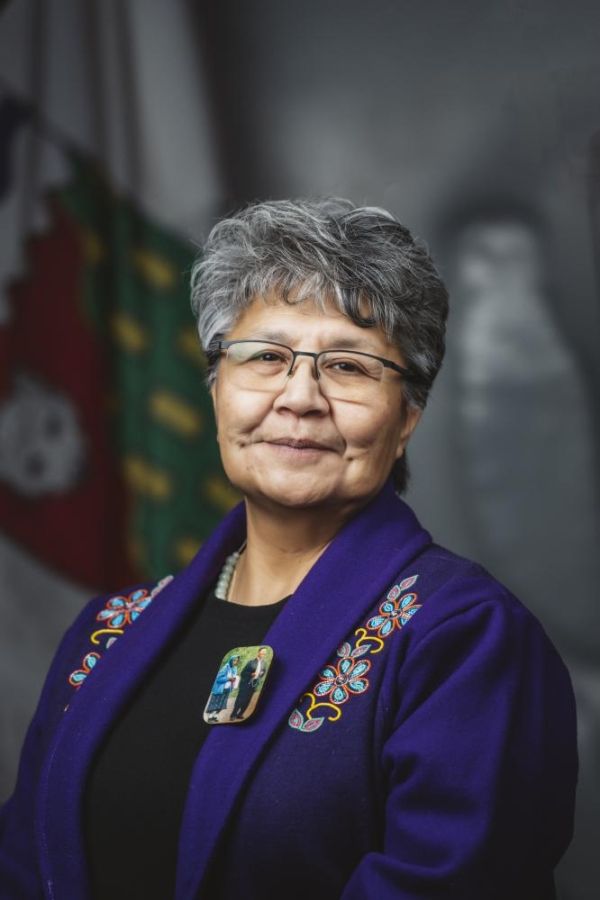
Jane Weyallon Armstrong
Monfwi
Bureau

Yellowknife NT X1A 2L9
Canada

P.O. Boîte
1320

Déclarations dans les débats

Debates of , 19th Assembly, 2nd Session (day 124)

Why doesn't the Minister listen to the will of the people, is what I said. This is what the people want. And at the same time, can she provide the data on the number of injuries and death related to drugs and alcohol since 2013. So this is all related to the territorial treatment facility in the Northwest Territories. So that's what I was asking for, thank you and that is not my second question, so I am just replying to her. I still have two more questions, thank you.

Debates of , 19th Assembly, 2nd Session (day 124)

Thank you, Madam Speaker. Madam Speaker, this is part of my question, okay. We all know Indigenous people in the Northwest Territories are struggling with alcohol and substance abuse, grief, loss, violence, and intergenerational trauma from colonization, residential school and systemic racism. Many want to go to treatment but are turning to alcohol and drugs to cope because the NWT does not have a territorialbased treatment facility. The overwhelming majority of the NWT residents want, a territorialbased treatment facility. Why doesn't the territory have a treatment facility located in the...

Debates of , 19th Assembly, 2nd Session (day 124)

Thank you. Another one, too, is that I know that they mentioned quite a few times that tourism is, you know, is important and that's what we need. So I'm just wondering if ITI, you know, wants to promote tourism, especially in the North, and in Tlicho region we don't have anything. So I know and they're building you know, I know there's visitors centres quite a few places, especially in the larger centres. And Tlicho region, Behchoko is the largest Dene community in the Northwest Territories. What we need in the Tlicho region is a visitors centre. But I know that in the past a while ago...

Debates of , 19th Assembly, 2nd Session (day 123)

Thank you, Madam Chair. Yes, it would have been nice to have seen the numbers since the formula is based on per capita and needs. And, you know, like I've said it before, in my region alone, you know, like we have a lot of aging infrastructure. Our water pipes need to be replaced. So we have a lot of buildings that are aging that needs attention as well. And it would be nice to see, you know, the numbers, how much money is going spend going to be spent in my region based on per capita. There's over 2,000 people in my region alone, and in Behchoko alone is 1,900. And the smallest community is...

Debates of , 19th Assembly, 2nd Session (day 123)

Thank you. Thank you, Mr. Speaker. Well, with that in mind that she just mentioned, you know, to have a relationship with the Indigenous government, then what I would like to see this government do, then, is transfer the 14 units that the Tlicho government are asking for, I would like to see that happen. You know, if they're going to continue have a good working relationship with the Indigenous government. So the federal government seems interested in supporting housing stocks being transferred to Indigenous governments. Is the GNWT receiving assistance in facilitating these transfers? Thank...

Debates of , 19th Assembly, 2nd Session (day 123)

It's also arrears for housing public unit. So can the Minister commit to working with integrated service delivery to ensure that low income families at risk of evictions are fast tracked to the support and services they need, which includes access to legal aid programs, financial plan, and childcare, career and employment support, healthy living and healthy choices. Thank you.

Debates of , 19th Assembly, 2nd Session (day 123)

Yes, I understand about that being part of a community government council, yes, I do I do understand about how that we can you know, how to how to spend the money, where to spend the money. But I'm just saying that right now that in my region we have major infrastructure issues. And it's even to change the waterline that's aging especially in Edzo that's connected to the school, you know, that's going to cost, like, over $10 million. And I don't know like, that's why I'm saying it would be nice to see the numbers, like, how much money will be allocated to my region. And it says here...

Debates of , 19th Assembly, 2nd Session (day 123)

Due to housing crisis, what we need is action. Mr. Speaker, how can this Assembly help the Government of the Northwest Territories transfer housing properties to the Indigenous government faster? Thank you.

Debates of , 19th Assembly, 2nd Session (day 123)

Mr. Speaker, this is regarding the bilateral agreement. So Mr. Speaker, many of our Indigenous governments have a keen interest in increasing the housing stock of their regions and communities. In its new mandate, the Northwest Territories Housing Corporation commits to pursuing government to government relations with Indigenous government as she mentioned. This is a welcomed change towards developing bilateral relationships. Most of our Indigenous government are very interested in taking responsibility and taking over housing assets from the GNWT. I want to ask the Minister, what is the...