


Jane Weyallon Armstrong

Député de Monfwi

Circonscription électorale de Monfwi

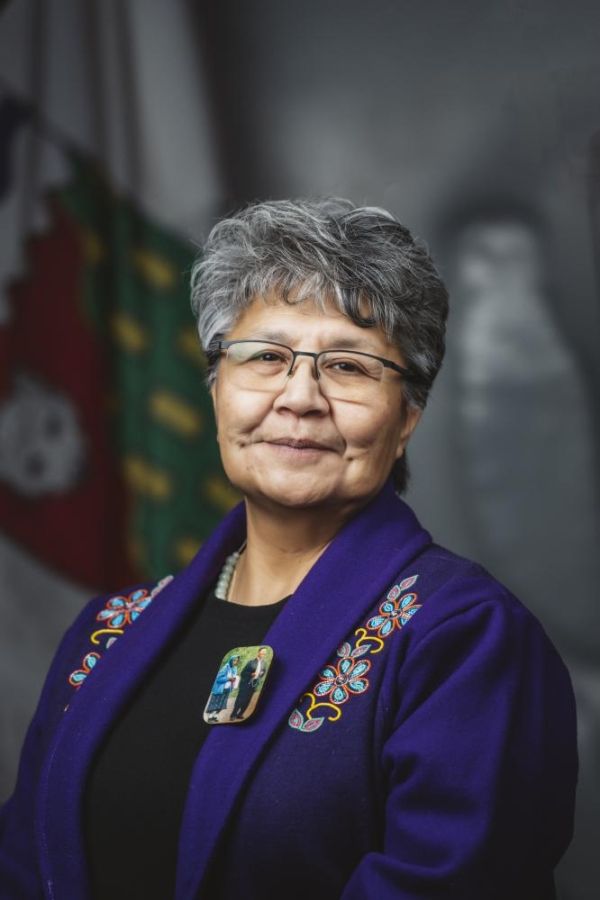
Jane Weyallon Armstrong a été élue députée de la circonscription de Monfwi à la 20e Assemblée législative des Territoires du Nord-Ouest. Jane Weyallon Armstrong a été élue à la 19e Assemblée lors d’une élection partielle pour représenter la circonscription de Monfwi. 

Elle est née à Fort Rae, aux Territoires du Nord-Ouest. Résidant actuellement à Behchoko, aux Territoires du Nord-Ouest, son parcours a laissé une trace indélébile dans sa collectivité. 

Ayant été présidente de l’Association des femmes autochtones de 2019 à 2021, Jane Weyallon Armstrong a collaboré avec les membres du conseil d’administration sur le rapport final de l’Enquête nationale sur les femmes et les filles autochtones disparues et assassinées. Son engagement pour la cause a joué un rôle majeur dans la résolution de problèmes cruciaux. 

La riche participation de Jane Weyallon Armstrong à la gouvernance de la collectivité comprend des rôles tels que conseillère à l’administration communautaire de Behchoko (2009-2013, 2017-2021, juin et juillet 2021) et membre de l’assemblée du gouvernement tłı̨chǫ (gouvernement de consensus) de 2009 à 2013. En outre, elle a siégé à l’Office d’examen des répercussions environnementales de la vallée du Mackenzie de 2020 à 2021. 

Avec une carrière de plus de 25 ans au Conseil scolaire de division des Dogrib (aujourd’hui l’Agence de services communautaires tłįchǫ), Jane Weyallon Armstrong a eu une incidence positive sur la vie d’élèves du secondaire issus de diverses collectivités. Ses fonctions de directrice de résidence, puis de coordonnatrice, d’agente de liaison et de responsable des services aux étudiants et d’aide à la transition après les études ont mis en évidence son dévouement à l’éducation et au développement de la collectivité. 

Jane Weyallon Armstrong a fait ses études secondaires à l’École Sir John Franklin à Yellowknife, et résidait à l’Akaitcho Hall. Elle a décroché un baccalauréat ès arts avec une majeure en politique et une mineure en études autochtones à l’université de la Saskatchewan. En 1994, elle a obtenu un diplôme de travailleuse sociale au Collège Aurora, au Campus Thebacha, et en 1992, un diplôme d’assistante sociale auprès des enfants et des jeunes au Mount Royal College. Jane Weyallon Armstrong a élevé sa fille avec son conjoint et se réjouit aujourd’hui d’être la fière grand-mère d’un petit-fils. Elle s’intéresse à la couture et à la lecture et participe à diverses activités culturelles. Son engagement de longue date en tant que bénévole pour des événements de collecte de fonds et des sorties scolaires souligne son dévouement pour le bien-être de la collectivité.

Committees
Jane Weyallon Armstrong
Monfwi
Bureau

Yellowknife NT X1A 2L9
Canada

P.O. Boîte
1320

Déclarations dans les débats

Debates of , 20th Assembly, 1st Session (day 70)

Thank you, Mr. Speaker. Mr. Speaker, when I’m speaking I'm not only speaking for my region, but I'm speaking for the rest of the Northwest Territories. So there's a lot of people that are in the same situation. I know that.

So with all the recommendation made -- or with accepting all the recommendation, Mr. Speaker, will the Minister commit to exploring a policy that allows long-term tenants in market rental unit, especially in small communities with no housing market, to transition into homeownership through a formal transfer of ownership? Thank you.

Debates of , 20th Assembly, 1st Session (day 70)

Thank you, Mr. Speaker. Mr. Speaker, it is good to hear Housing NWT will accept all recommendation made in housing audit. Mr. Speaker, I assume accepting recommendation means commitment as well. With that in mind, Mr. Speaker, many of my constituents have asked about the possibility of having ownership of their market rental unit transferred to them. Has Housing NWT conducted any assessments or consultation with residents in small communities to determine interest or readiness for ownership transfer of market rental units? And if not, will the Minister commit to initiating this engagement...

Debates of , 20th Assembly, 1st Session (day 70)

Thank you, Mr. Speaker. Mr. Speaker, in my region market rental unit, despite the condition of the unit, tenants are paying $1,900 monthly in rent. So I want to ask the Minister what step is Housing NWT taking to support homeownership in communities where private housing market are limited or nonexistent and how will the department ensure that Northerners in these areas are not left behind in housing policy decisions? Thank you, Mr. Speaker.

Debates of , 20th Assembly, 1st Session (day 70)

Thank you, Mr. Speaker. Indeed housing did fail our people, especially in small communities. Mr. Speaker, across the NWT, many residents live in market rental units owned by Housing NWT. These homes have provided shelter and stability for many families, but the dreams of homeownership is not possible. It is unreachable for many.

Mr. Speaker, in communities where there is little to no housing market, residents cannot buy a house. There is no house listing, no private developers, and no banks offering mortgages. Yet these same residents have been paying rent, maintaining the house, and...

Debates of , 20th Assembly, 1st Session (day 69)

Executive summary: Mr. Speaker, the Standing Committee on Social Development presents this Report on committee Project: Housing as a Human Right, to advise the Government of the Northwest Territories on how to implement the right to adequate housing through updates to territorial laws and policies. The report outlines committee's study, public engagement, findings, and positions on key legislative and policy updates needed to advance housing rights in the Northwest Territories (NWT). The report puts forward 44 recommendations to guide the GNWT's response which will strengthen housing policy...

Debates of , 20th Assembly, 1st Session (day 69)

Thank you, Mr. Speaker. Mr. Speaker, your Standing Committee on Social Development is pleased to provide its Report on Housing as a Human Right and commends it to the House.

Mr. Speaker, I move, seconded by the Member for Mackenzie Delta, that the remainder of Committee Report 29-20(1), Standing Committee on Social Development's Report on Housing as a Human Right, be deemed read and printed in Hansard in its entirety. Thank you, Mr. Speaker.

ED: the link for Committee Report 29-20(1), Standing Committee on Social Development's Report on Housing as a Human Right can be found here.

Debates of , 20th Assembly, 1st Session (day 69)

Thank you, Mr. Speaker. Mr. Speaker. In many of our communities in Tlicho region and the rest of the NWT, landfills are not adequately engineered to protect people or the environment. They lack basic safeguards such as contaminant liners, designated waste zones, and proper leachate management. In some cases, waste is deposited directly on the land just a short distance from creeks, lakes, or wetlands, with no barriers to protect against runoff or groundwater contaminations.

Mr. Speaker, this is not just a technical oversight. This is a public health risk.

Improperly managed dumps attract...

Debates of , 20th Assembly, 1st Session (day 69)

Thank you. Yeah, with the community expanding, we will -- they will definitely need some form of transportation for the students. So that's about it, Mr. Chair. Thank you.

Debates of , 20th Assembly, 1st Session (day 69)

Thank you, Mr. Chair. Okay, looking at the education project listing for the schools, I don't see Whati school on here on this project. There are other schools in Tlicho region that are on there with some repair. But Whati school was built to accommodate elementary students in the early '80s. Now it's accommodating high school students. Because of that, classes are -- classroom space are limited. And I know that they need more classroom space for young family, once -- for young families that are moving back with the young kids. Because now it's even -- I think we need to focus on doing...

Debates of , 20th Assembly, 1st Session (day 69)

Thank you. Can the Minister explain if financial or technical support is available to communities, especially small and remote communities, to upgrade their landfill infrastructure to include liners? Thank you.