


Jay Macdonald

Député de Thebacha

Ministre de l’Environnement et du Changement climatique
Ministre de la Justice
Leader du gouvernement à l’Assemblée

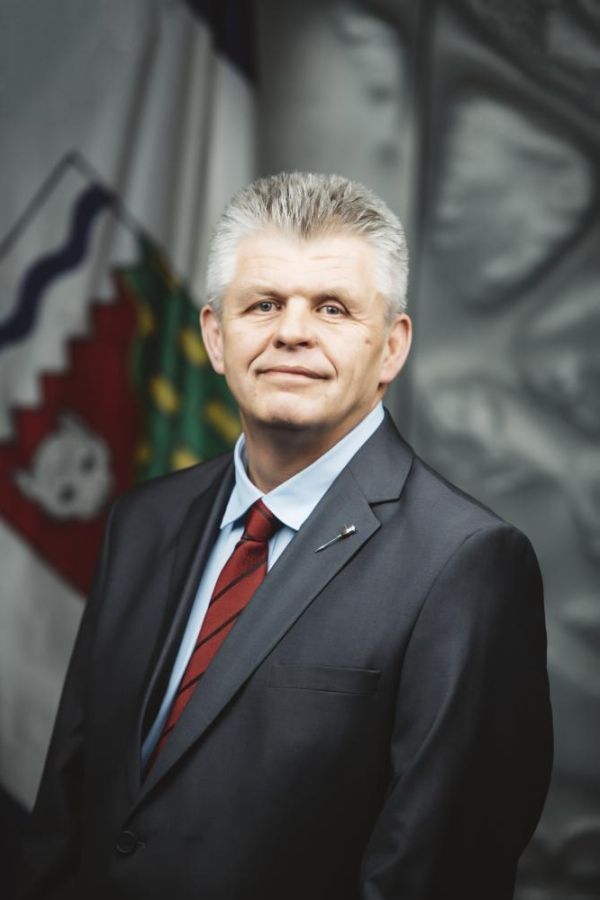
Jay Macdonald a été élu député de la circonscription de Thebacha à la 20e Assemblée législative des Territoires du Nord-Ouest. M. Macdonald a été élu au Conseil exécutif de la 20e Assemblée.

M. Macdonald est né le 26 juin 1964 à Hay River, aux Territoires du Nord-Ouest. En tant que Métis, il a des racines profondes dans le Nord canadien, et son parcours a été marqué par diverses expériences qui ont enrichi sa vie personnelle et professionnelle.

La famille de M. Macdonald s’est installée à Fort Smith en 1970. Il a exploité avec succès son petit atelier de réparation de moteurs, fournissant des services essentiels à la collectivité et s’imposant comme un entrepreneur fiable. Simultanément, il s’est plongé dans les subtilités de la gestion des installations de loisirs, en supervisant les activités de l’aréna et du terrain de golf de la ville.

Pendant les 13 années où il a occupé le poste de directeur des services de gestion forestière à la Division de l’environnement et de la conservation du gouvernement des Territoires du Nord-Ouest, M. Macdonald a fait preuve d’un engagement inébranlable en faveur de l’environnement. Le rôle qu’il a joué pendant 12 ans en tant que coordonnateur du programme de parent d’accueil pour le Programme de leadership de l’Arctique de l’Ouest témoigne de son engagement envers la jeunesse. Pendant cinq ans, il a été parent d’accueil afin d’offrir un environnement stimulant aux élèves de Lutsel Ke qui fréquentent l’école secondaire PWK. Cette expérience a permis de mettre en évidence sa compassion, et a contribué de manière significative à l’épanouissement scolaire et personnel des élèves dont il s’occupait. S’appuyant sur son expertise de compagnon-technicien de petits équipements. 

M. Macdonald a passé 13 ans à la tête d’une concession Polaris et a servi d’instructeur pour l’entretien des petits équipements, la gestion du carburant d’aviation et les disciplines logistiques dans le cadre du Système de commandement d’intervention. Son engagement envers la collectivité va au-delà de ses fonctions professionnelles. En tant que bénévole dévoué, il a été président et entraîneur de l’équipe de hockey mineur de Fort Smith, et s’est efforcé d’encourager les jeunes et de leur inculquer les valeurs du travail d’équipe et de l’esprit sportif. Il a exercé ses talents d’entraîneur sur la scène nationale en dirigeant l’équipe des TNO lors des championnats nationaux de hockey autochtone.

En tant que représentant de la Nation des Métis de Fort Smith au sein du conseil d’administration de l’association scolaire de district locale, M. Macdonald a contribué à l’élaboration de politiques pédagogiques qui reflètent les besoins particuliers de la collectivité. En outre, il a été membre du conseil d’administration et président de la Commission de l’apprentissage et de la qualification professionnelle des métiers et professions des Territoires du Nord-Ouest, rôle lui ayant permis de militer en faveur de la reconnaissance et de la promotion des métiers spécialisés. L’engagement de M. Macdonald en faveur du bien-être de la collectivité est également confirmé par sa participation à diverses activités et événements locaux. Qu’il s’agisse d’être entraîneur au niveau amateur ou d’une autre forme de bénévolat, il a toujours œuvré à la création d’un tissu communautaire dynamique et cohésif.

En dehors de ses engagements professionnels et communautaires, M. Macdonald a une vie de famille bien remplie. Marié à Karen, il est fier papa de trois enfants et grand-père attentionné de trois petits-enfants. Pendant ses temps libres, il s’adonne à des passe-temps qui reflètent son amour du plein air et des vastes paysages nordiques comme le golf, la pêche et le jardinage.
Committees

Jay Macdonald
Thebacha
Bureau

Yellowknife NT X1A 2L9
Canada

P.O. Boîte
1320
Ministre de l'Environnement et du Changement climatique
Ministre

Déclarations dans les débats

Debates of , 19th Assembly, 2nd Session (day 99)

Thank you, Madam Chair. So as the Minister mentioned, there are a number of art specific funding programs that the department delivers through the culture and heritage division. Those programs include support for northern performers, arts organizations operating contributions, heritage centres contribution programming, and Indigenous cultural organization contributions. As well, there is the arts council and it has funding that is provided through the council, makes the decision with regional representation I should say, about which projects should be approved during two intakes each fiscal...

Debates of , 19th Assembly, 2nd Session (day 99)

Thank you, Madam Chair. I just believe those are year over year changes to that funding to actuals. Thank you.

Debates of , 19th Assembly, 2nd Session (day 99)

Thank you, Madam Chair. So as the Minister indicated, the Prince of Wales Centre has not received an increase of funding. But to maybe expand on that comment about the revenue study.

This is meant to be the final component of a more comprehensive planning study to look at the museum. The Member may recall that ECE embarked on with the assistance of Infrastructure and a contractor, an analysis of the mid life retrofit for the Prince of Wales, and the initial figures that came back were significant, 160 to $170 million required. We revised those numbers down to look at a more realistic...

Debates of , 19th Assembly, 2nd Session (day 99)

Thank you, Madam Chair. So to specifically answer the Member's questions, the early learning and childcare funding and the Indigenous languages funding are distinct. So a licensed program offering childcare would not be accessing the types of programs and services offered for Indigenous languages. But with that being said, as the Minister mentioned, the existing early learning and childcare funding that the department has includes funding grants for cultural and language programming as well as other activities such as training. And there is what's known as an early learning framework which is...

Debates of , 19th Assembly, 2nd Session (day 99)

Thank you, Madam Chair. To be honest, not a huge amount of interdepartmental work on that issue has occurred in the past but it is an area of opportunity.

One of the things that the Indigenous Languages and Education Secretariat has done of late is establish a new committee across government with all departments. So Indigenous language coordinators in each department now have a form to meet regularly with ILE staff, share information, provide feedback on initiatives, and to move the needle forward in terms of the ability of departments and agencies to provide services. Thank you, Madam Chair.

Debates of , 19th Assembly, 2nd Session (day 99)

Thank you, Madam Chair. It's always a bit difficult predicting when we can conclude formal negotiations with the federal government but we're actually optimistic that we'll be able to complete this fiscal year. And as the Minister I think mentioned when responding to a previous question, we're looking for a threeyear extension to the existing Indigenous languages agreement. Thank you, Madam Chair.

Debates of , 19th Assembly, 2nd Session (day 99)

Thank you, Madam Chair. Luckily with the recent conclusion of collective bargaining with the Northwest Territories Teachers Association, so my what I think I believe the Minister is speaking about has been addressed. So, for example, there is a provision within the collective agreement for a language bonus for Indigenous language instructors. So that's been increased. I think it's a little over $6,000 per year now.

As well, in the table, the certification and the salary grid for teachers, the parties agreed to remove the initial step which was one year or less of experience. So Indigenous...

Debates of , 19th Assembly, 2nd Session (day 99)

Thank you, Madam Chair. So the numbers for the heritage centres are.

In Fort Smith, at the Northern Anthropological and Cultural Society, 198,000;

In Norman Wells, at the Historical Society, it's 118,000;

At the Hay River Museum Society is 60,000;

The Yellowknife Historical Society is 60,000; and

The Fort Simpson Historical Society is 55,000.

Thank you, Madam Chair.

Debates of , 19th Assembly, 2nd Session (day 99)

Thank you, Madam Chair. In that case, that money is provided primarily for support for training of early childhood educators working within licensed programs. Thank you, Madam Chair.

Debates of , 19th Assembly, 2nd Session (day 99)

Thank you, Madam Chair. So the mentor apprentice program is in its second year of operation, which is still considered a pilot. So after one year, it was expanded based on feedback and a program evaluation that was conducted. So as I mentioned earlier, there are now six Indigenous governments and six languages being supported through that program. So there is an annual allocation right now of $300,000 for that program, and that program is an annual intake where ECE provides support for mentors and apprentices to come together. So those funding provides for training supports and information for...