


Kate Reid

Députée de Great Slave

Kate Reid a été élue députée de la circonscription de Great Slave à la 20e Assemblée législative des Territoires du Nord-Ouest.

Mme Reid est née à Oshawa (Ontario) en 1981 et habite Yellowknife depuis 1989. Elle est titulaire d’un baccalauréat en journalisme de l’Université métropolitaine de Toronto (2003) et d’une maîtrise en sciences de l’information de l’Université de Toronto (2009).

À la fin de sa maîtrise, elle a rejoint les Archives des TNO, où elle a travaillé près de dix ans. C’est là qu’a germé sa passion pour la préservation et le partage des histoires qui peignent le portrait de notre territoire et de son gouvernement. En 2018, Mme Reid a pris un poste au ministère de l’Environnement et des Ressources naturelles et, dans le cadre de ses fonctions, elle s’est concentrée sur les questions de conservation et de développement durable dans les domaines législatif et politique, et ce, jusqu’à son élection comme députée.

Mme Reid a été présidente de la YWCA des TNO de 2021 à 2023 et de la section locale 40 du Syndicat des travailleurs du Nord en 2019 et de 2021 à 2023. Son leadership s’étend au domaine culturel, Kate Reid ayant été directrice de Folk on the Rocks, le festival de musique bien-aimé de Yellowknife, qui existe depuis longtemps. En outre, elle a contribué à des événements communautaires tels que NWT Pride, Yellowknife Pride et l’ancien spectacle d’art, Burn on the Bay.

En dehors de sa vie professionnelle, Kate Reid est mariée et trouve réconfort et inspiration dans toute une gamme de passe-temps; elle affectionne particulièrement la musique, l’art, le burlesque, le drag, le cinéma, l’haltérophilie et les voyages.


Committees
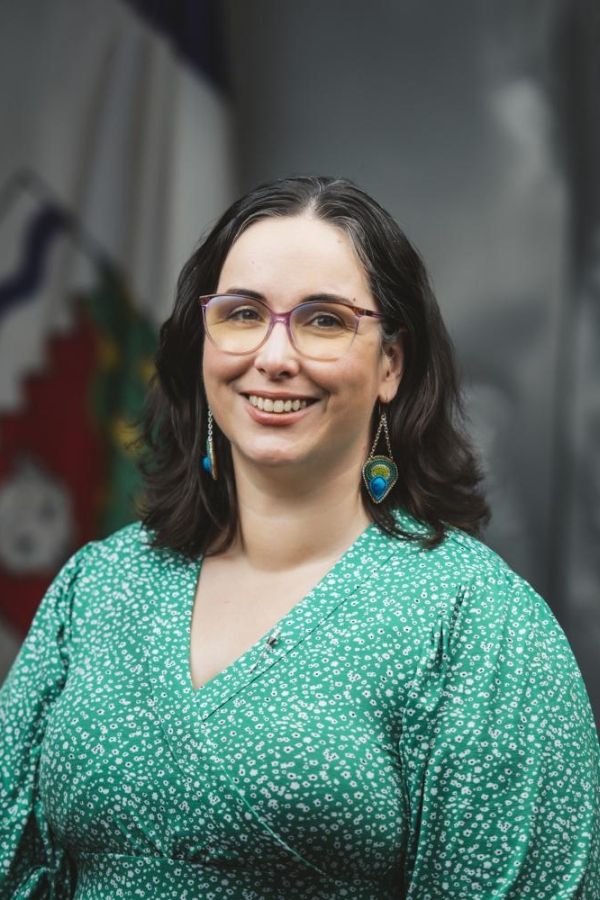
Kate Reid
Great Slave
Bureau

Yellowknife NT X1A 2L9
Canada

P.O. Boîte
1320
Extension
12186

Déclarations dans les débats

Debates of , 20th Assembly, 1st Session (day 18)

Thank you, Mr. Chair. This is more of, again, a business plan question. On page 22 no, that's not true. That's not the entire 89 of the business plan, it speaks to EIA's federal engagement approach. I'm curious what work intergovernmental affairs has done thus far on the federal engagement approach for the 20th Assembly and what timelines we're looking at to see that here in this House? Thank you, Mr. Chair.

Debates of , 20th Assembly, 1st Session (day 18)

Thank you, Mr. Chair. So in EIA's business plan under departmental highlights page 87, there is a piece around the communications functional review. So the description of this review is almost identical to the last one done in 2014, which was known as the likely report. And I'm going to argue here today that, you know, the reason that communications doesn't get better is no one really wants to fully implement the recommendations that are in that report, and departments want to continue to do what they are doing, namely, preferring to keep control of their message. And so we continue to ask, we...

Debates of , 20th Assembly, 1st Session (day 18)

Thank you, Mr. Speaker. And thank you to the Minister for that clarity.

Mr. Speaker, can the Minister confirm although I did hear her say a little bit about this in an earlier answer, so I'll reframe my question on the fly. Can the Minister confirm how local nurses are being able to be or will be able to be trained in labour and delivery. Thank you, Mr. Speaker.

Debates of , 20th Assembly, 1st Session (day 18)

Thank you, Mr. Speaker. Mr. Speaker, in a very real way, people are our health care system, and how the dedicated professionals who make up the system are compensated and treated is a major factor in the NWT's health care crisis. I stand with nurses and all workers to have fair and sustainable wages and benefits. To have a resourceful, sustainable, and thriving community, we need to be healthy, and we desperately need health care workers to be proud to work in the NWT health care system that treats them with respect and values their contributions. Nurses, and all our health care workers, are...

Debates of , 20th Assembly, 1st Session (day 18)

I'm all right for now, thank you, Mr. Chair.

Debates of , 20th Assembly, 1st Session (day 18)

Thank you, Mr. Chair. Can the Minister speak to whether his Cabinet will be using the Arctic and Northern Policy Framework again in this Assembly? Thank you, Mr. Chair.

Debates of , 20th Assembly, 1st Session (day 18)

Thank you, Mr. Chair. And I'd be happy to talk to the Minister more fulsomely about this with suggestions. I hope he comes to committee and chats with us about it. But I really, really, really stress that, you know, in the scoping of how you want to go out on an RFP for this that you really take a really careful look at that report, talk to your communicators, find out what's working first before you spend a whole heck ton of money and time on something that will probably give you the same results. Thank you, Mr. Chair.

Debates of , 20th Assembly, 1st Session (day 18)

Thank you, Mr. Speaker, and thank you to the Minister. That's really great to hear. And to, you know, echo my colleague from Monfwi's statement earlier today, it's really good to hear that this Minister's supporting things over time and getting us there, and I hope she can get us there as quickly as possible. So to that end, is the Minister's department willing to invest further in training local NWT health care workers to increase their skill sets? Thank you, Mr. Speaker.

Debates of , 20th Assembly, 1st Session (day 18)

Wow, okay. Thank you, Mr. Speaker. Mr. Speaker, my questions today are also for the Minister of Health and Social Services. Could the Minister please confirm if the majority of need for agency nurses is in obstetrics? Thank you, Mr. Speaker.

Debates of , 20th Assembly, 1st Session (day 17)

Thank you, Mr. Speaker. And I will do my best to not break your rules today, but I'm going to go back to what I was asking the Minister of Health and Social Services yesterday.

My first question is whether or not the Department of Health and Social Services has asked Indigenous midwives about what would support the growth of midwifery in the territory, specifically in our smaller communities? Thank you, Mr. Speaker.